
Spherical Aluminum 6061 Powder for LPBF 3D Printing
Engineered for optimal performance in Laser Powder Bed Fusion (LPBF), our Spherical Aluminum 6061 Powder delivers exceptional flowability, high packing density, and consistent layer spreading for precision additive manufacturing. Featuring a controlled particle size distribution and low oxygen content, this aerospace- and automotive-grade alloy ensures dense, defect-free metal parts with superior mechanical strength, thermal conductivity, and corrosion resistance. Ideal for complex geometries and lightweight structural components, our gas-atomized Al6061 powder maximizes print repeatability and surface finish quality. Upgrade your industrial 3D printing workflow with reliable, high-purity aluminum alloy powder designed for demanding engineering applications.
|
Formula |
Aluminum 6061 |
|
Synonyms |
Aluminum 6061 spherical particles, Aluminum 6061 spherical powders, Aluminum 6061 Powder, Aluminum 6061 thermal spray powder, Aluminum 6061 gas atomized powder |
|
Appearance |
Silvery-gray powder, Spherical Powder |
|
Particle Size |
0-45 um, 45-105 um, can be customized upon request |
|
Melting Point |
582- 652 °C |
|
Density |
2.5-2.9 g/cm 3 |
|
Tap Density |
Approximately 2.7 g/cc |
|
Flow rate |
>25 s/50 g, indicating excellent flowability |
Description of Aluminum 6061 Spherical Powder
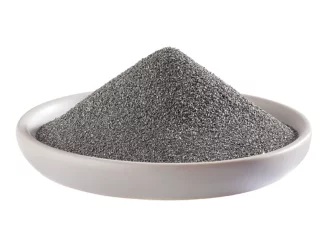
Aluminum 6061 spherical powder is made from the 6061 aluminum alloy, known for its strength and corrosion resistance. It has a spherical shape, which enhances its flowability and packing density, making it ideal for additive manufacturing and powder metallurgy applications. With a density of about 2.7 g/cm³ and a particle size ranging from microns to millimeters, this powder is used in 3D printing and thermal spray coatings. Its high strength-to-weight ratio and good workability make it suitable for various structural and coating applications.
Princeton Powder is a leading supplier of spherical Al6061 powder. We specialize in a comprehensive range of spherical powder products and possess extensive expertise in additive manufacturing (3D printing) industry. Aluminum 6061 powder is for sale at a competitive price.
Technical Specifications
| Parameter | Value |
|---|---|
| Product | Aluminum 6061 Spherical Powder — Gas-Atomized Al-Mg-Si Alloy Powder for Additive Manufacturing |
| Alloy System | 6061 (Al-Mg-Si-Cu), heat-treatable wrought alloy |
| Designations | UNS A96061 | EN AW-6061 | ISO AlMg1SiCu | AA6061 |
| CAS Reference | Alloy — no single CAS. Components: Al 7429-90-5 | Mg 7439-95-4 | Si 7440-21-3 | Cu 7440-50-8 |
| Nominal Composition | Si 0.40–0.80% | Fe ≤0.70% | Cu 0.15–0.40% | Mn ≤0.15% | Mg 0.80–1.20% | Cr 0.04–0.35% | Zn ≤0.25% | Ti ≤0.15% | Al balance |
| Particle Size Grades | 0–15 µm (fine) | 0–25 µm (MIM) | 15–53 µm (LPBF) | 20–63 µm (LPBF, coarser) | 45–105 µm (DED) | 45–150 µm (cladding / cold spray) |
| Morphology | Spherical, gas atomized (nitrogen or argon), sphericity ≥90% |
| Apparent Density | 1.3–1.5 g/cm³ |
| Tap Density | 1.8–2.1 g/cm³ |
| Hall Flow | 25–45 s/50 g |
| Oxygen Content | ≤500 ppm |
| Melting Range | 582–652 °C (solidus–liquidus) |
| Theoretical Density | 2.70 g/cm³ |
| Thermal Conductivity | 167 W/m·K (wrought T6); as-built AM typically 100–130 W/m·K |
| Coefficient of Thermal Expansion | 23.6 µm/m·°C (20–100 °C) |
| Elastic Modulus | 69 GPa |
| As-Built Tensile (reported) | UTS 250–300 MPa | YS 150–230 MPa | Elongation 5–12 |
| After T6 (reported) | UTS up to ~320 MPa | YS ~280 MPa |
| Process Compatibility | LPBF (with parameter development), DED, cold spray, laser cladding, MIM, powder metallurgy |
| Manufacturing Process | Melt → gas atomization → solidify → sieve / classify → blend → QA → package |
| Key Applications | Aerospace & defense lightweight structures, automotive & motorsport, repair & coating, MIM parts |
| Related Products | AlSi10Mg powder, pure spherical aluminum powder, aluminum-based alloy powder |
Chemical Composition
Chemical Composition (wt%) | |||||||||
Item | Si | Fe | Cu | Mn | Mg | Cr | Zn | Ti | Al |
| 6061 Aluminum Alloy | 0.66 | 0.16 | 0.26 | 0.06 | 0.90 | 0.08 | 0.04 | 0.04 | Bal. |
Oxygen: 500 ppm
Particle Size distribution
0-15μm, 15-53μm, 45-105μm, 45-150μm. (Various particle sizes can be customized)
Applications
Aerospace and Defense Lightweight Structures
6061 is the wrought aluminum alloy most aerospace drawings already specify, which makes it the path of least resistance when a bracket, housing, or structural node moves from machining to additive manufacturing. Typical parts include unmanned-aircraft and drone airframes, satellite brackets, antenna mounts, payload housings, and heat sinks where the design needs thin walls and internal channels that cannot be machined.
For these parts, specify the 15–53 µm cut for LPBF or 45–105 µm for DED. Because LPBF of standard 6061 is crack-sensitive, aerospace programs commonly use one of three routes: a Zr-modified 6061 chemistry, a parameter set developed for the specific machine and layer thickness, or a DED process where the larger melt pool and slower solidification are more forgiving. We supply the standard chemistry and will state clearly which route the powder is intended for.
Automotive, Motorsport and Thermal Management
In automotive and motorsport, 6061 powder is used for suspension uprights, brake calipers, cooling jackets, cold plates, and custom fixtures — parts that benefit from integrated cooling channels and from an alloy that can be machined, anodized, and welded after printing. The alloy’s 167 W/m·K thermal conductivity in the T6 condition makes it attractive for heat-transfer components, and its machinability keeps post-processing cost down.
Use 15–53 µm or 20–63 µm for LPBF and 45–105 µm for DED-based cladding and repair. Where a team is new to 6061 on LPBF, a practical route is to qualify the powder on the actual machine with a small parameter matrix before committing to production — the powder chemistry is consistent lot to lot, so once the parameters are set they transfer with the powder.
Repair, Laser Cladding and Cold Spray
This is where 6061 powder is most forgiving and most under-used. Because DED, laser cladding, and cold spray do not rely on a thin powder bed, the hot-cracking constraint that limits LPBF is much less severe, and 6061 can be deposited directly onto a 6061 substrate with good metallurgical bonding. Typical work includes repairing worn or damaged aluminum castings and forgings, rebuilding shaft and housing surfaces, applying corrosion-resistant overlays, and adding features to an existing part.
Use 45–105 µm for laser DED and 45–150 µm for cold spray and high-rate cladding. Cold spray is a solid-state process: the particles deform and bond without melting, so there is no solidification cracking and very little oxidation — which is why it is the preferred repair route for heat-sensitive aluminum components. Tell us the process, nozzle, and carrier gas, and we will recommend the cut and flow specification.
Al6061 powder Reference
Sintering behaviour of Al-6061 powder produced by rapid solidification process
- Complex aluminium alloy components fabricated by powder metallurgy (P/M) offer the promise of a low cost and high strength-to-weight ratio, which meets the demands of the automotive sector. This paper describes the die compaction and sintering response of an atomised Al-6061 alloy powder containing Mg and Si produced by rapid solidification.
Aluminium alloy 6061 is a medium to high strength heat-treatable alloy with a strength higher than 6005A. It has very good corrosion resistance and very good weldability although reduced strength in the weld zone. It has medium fatigue strength.
7075 is notable for its high strength-to-weight ratio and improved strength over 6061. Because of this, 7075 is largely used in aerospace, marine and transportation industries. Any industry where high strength and light weight properties are critical, this alloy is preferred.
Aluminum 6061 powder is produced by atomizing molten aluminum alloy, where high-pressure gas or water rapidly cools the molten metal to form fine particles. The powder is then classified by size and shape to ensure uniformity. Finally, the powder is cleaned and packaged for use in applications like additive manufacturing or powder metallurgy.