
Medical-Grade Beta-Tricalcium Phosphate (β-TCP) Powder — Resorbable Bone Graft Substitute
Medical-grade beta-tricalcium phosphate (β-TCP, CAS 7758-87-4) is a synthetic, resorbable bioceramic powder with the chemical formula Ca₃(PO₄)₂ and a Ca/P molar ratio of 1.50. Unlike hydroxyapatite (HA, Ca/P 1.67) which persists indefinitely in the body, β-TCP resorbs at approximately 80× the rate of HA — achieving ~85% resorption within 6 weeks and complete replacement by host lamellar bone within 9 months — making it the material of choice for bone graft substitutes where the synthetic scaffold must degrade in sync with natural bone regeneration.
Our ISO 13485:2016 certified β-TCP powder is available in a comprehensive range of particle sizes — from nano (200–650 nm) for injectable pastes, to fine (1–5 µm) for coatings, micro (5–10 µm) for bone cements, 3D printing grade (6–40 µm) for additive-manufactured patient-specific implants, and granule form (100–600 µm) for direct bone void filling. Phase purity ≥98% with controlled heavy metals (≤50 ppm total) ensures biocompatibility for Class II/III medical devices. Custom particle size distributions, biphasic (HA/β-TCP) blends, and porosity optimization available — request a quote with your target specifications.
Technical Specifications
| Property | Specification |
|---|---|
| Chemical Name | Beta-Tricalcium Phosphate (β-TCP / β-Ca₃(PO₄)₂) |
| CAS Number | 7758-87-4 |
| Molecular Formula | Ca₃(PO₄)₂ |
| Molecular Weight | 310.18 g/mol |
| Ca/P Molar Ratio | 1.50 (distinguishes β-TCP from HA at 1.67) |
| Phase Purity | ≥98% β-TCP (medical grade); up to >99% (research grade) |
| Crystal Structure | Rhombohedral (β-whitlockite, space group R3c) |
| Particle Sizes | Nano (200–650 nm), Fine (1–5 µm), Micro (5–10 µm), 3DP (6–40 µm), Granule (100–600 µm) |
| Resorption Rate (in vivo) | ~85% at 6 weeks; complete replacement by ~9 months (~80× faster than HA) |
| Biological Activity | Osteoconductive + Osteoinductive — supports MSC→osteoblast differentiation |
| Heavy Metals | ≤50 ppm total |
| Certification | ISO 13485:2016 (Medical Device Quality Management System) |
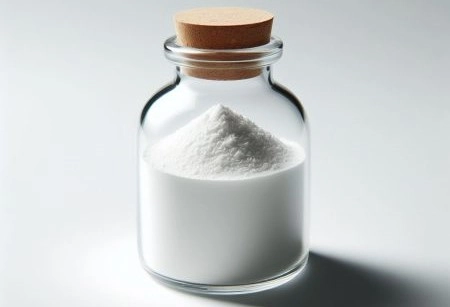
| Appearance | White fine powder or granules |
Particle Size Grades & Selection Guide
| Grade | Particle Size | Best For | Key Advantage |
|---|---|---|---|
| Nano β-TCP | 200–650 nm | Injectable bone pastes, drug delivery carriers, nanocomposite scaffolds | Ultra-high surface area (≥80 m²/g) for rapid ion release and cellular interaction |
| Fine β-TCP | 1–5 µm | Plasma-sprayed implant coatings, thin-film deposition | Uniform coating thickness, excellent adhesion to titanium/alloy substrates |
| Micro β-TCP | 5–10 µm (D50: 3–6 µm) | Bone cements, putty formulations, periodontal defect fillers | Optimal packing density for injectable cement viscosity and setting time control |
| 3D Printing β-TCP | 6–40 µm (spray-dried spherical) | Powder bed fusion (PBF), binder jetting, patient-specific implants | Spherical morphology ensures consistent powder spreading and flowability for AM |
| Granule β-TCP | 100–600 µm | Direct bone void filling, dental socket preservation, spinal fusion cages | Interconnected macroporosity (>100 µm) for vascular infiltration and bone ingrowth |
Custom Particle Size Tuning
We offer custom particle size distributions within and beyond the ranges above. Whether you need a bimodal distribution for optimized cement packing, a narrow D10–D90 spread for reproducible 3D printing, or a specific Ca/P ratio for biphasic (HA/β-TCP) blends, our manufacturing process supports precise tuning. Contact our technical team with your target PSD, phase purity, and application requirements for a feasibility assessment and quotation.
β-TCP vs. Hydroxyapatite (HA) — Choosing the Right Bone Graft Material
The fundamental difference between β-TCP and HA is their Ca/P ratio — 1.50 vs. 1.67 — which drives dramatically different resorption behavior. This comparison helps clinicians and device manufacturers select the optimal material for each clinical scenario:
| Property | β-TCP (Ca/P 1.50) | Hydroxyapatite (Ca/P 1.67) |
|---|---|---|
| Resorption Rate | Fast — ~85% at 6 weeks; complete in ~9 months | Very slow — ~5% at 6 weeks; persists years |
| Solubility (water, 37°C) | ~20 mg/L (~80× higher than HA) | ~0.25 mg/L |
| Osteoinductivity | Higher — favors MSC differentiation | Lower |
| Osteoconductivity | Good | Excellent |
| Compressive Strength | ~0.4 MPa (porous scaffold) | ~10.1 MPa (porous scaffold) |
| Best For | Non-load-bearing defects, rapid turnover sites, pediatric patients | Long-term structural support, coating for metal implants |
Clinical strategy: Biphasic calcium phosphate (BCP) blends combine HA and β-TCP (commonly 60/40 HA/β-TCP) to balance resorption rate with mechanical stability. The β-TCP/HA ratio is the primary lever for tuning scaffold degradation to match your specific clinical timeline. Contact our technical team to discuss your target Ca/P ratio and resorption profile.
Applications
Orthopedic Bone Graft Substitutes
The primary application of medical-grade β-TCP powder is as a synthetic, resorbable bone graft substitute in orthopedic surgery. A landmark 2024 clinical study (Yamaguchi et al., BMC Musculoskeletal Disorders, 106 patients) demonstrated that optimized-porosity β-TCP spacers (N-CP60) achieved 48% absorption at 18 months with 36.8 MPa compressive strength — significantly outperforming conventional β-TCP (29% absorption, 31.6 MPa). Our β-TCP granules (100–600 µm) with controlled porosity are engineered for: spinal fusion (PLIF/TLIF cages), high tibial osteotomy wedges, trauma bone void filling, non-union fracture treatment, and pediatric bone cyst repair (where complete scaffold resorption is essential for growing skeletons). The 80× faster resorption rate vs. HA makes β-TCP the preferred choice when the synthetic scaffold must fully degrade and be replaced by native bone.
Orthopedic Bone Graft Substitutes
The primary application of medical-grade β-TCP powder is as a synthetic, resorbable bone graft substitute in orthopedic surgery. A landmark 2024 clinical study (Yamaguchi et al., BMC Musculoskeletal Disorders, 106 patients) demonstrated that optimized-porosity β-TCP spacers (N-CP60) achieved 48% absorption at 18 months with 36.8 MPa compressive strength — significantly outperforming conventional β-TCP (29% absorption, 31.6 MPa). Our β-TCP granules (100–600 µm) with controlled porosity are engineered for: spinal fusion (PLIF/TLIF cages), high tibial osteotomy wedges, trauma bone void filling, non-union fracture treatment, and pediatric bone cyst repair (where complete scaffold resorption is essential for growing skeletons). The 80× faster resorption rate vs. HA makes β-TCP the preferred choice when the synthetic scaffold must fully degrade and be replaced by native bone.
Dental & Periodontal Regeneration
β-TCP powder and granules are extensively used in dental and maxillofacial surgery for: socket preservation (filling extraction sockets to prevent alveolar ridge resorption before implant placement), periodontal intrabony defect repair (β-TCP particles mixed with autologous blood/PRF form a moldable putty), sinus floor elevation (grafting the maxillary sinus to create adequate bone height for dental implants), and peri-implantitis treatment (filling bone defects around failing implants). The 6–9 month complete resorption timeline of β-TCP aligns well with dental implant osseointegration schedules — the graft material resorbs as the implant integrates, leaving only vital host bone. Our fine (1–5 µm) and micro (5–10 µm) powders are recommended for dental cement and putty formulations requiring smooth, injectable consistency.
3D-Printed Scaffolds & Tissue Engineering
Our 3D printing-grade β-TCP powder (6–40 µm, spray-dried spherical) is engineered for powder bed fusion (PBF) and binder jetting additive manufacturing of patient-specific bone implants. The spherical particle morphology ensures consistent powder spreading, uniform layer deposition, and reproducible print quality — critical for FDA 510(k) and CE-marked custom implants. Beyond AM, our nano β-TCP (200–650 nm) serves as the bioactive filler in electrospun PLLA/PGA composite scaffolds for maxillofacial defect repair (Nanomaterials, 2024), where sustained osteogenic marker expression (Runx2, LepR) was demonstrated at extended time points vs. conventional granules. For tissue engineering researchers and medical device startups, we supply R&D sample quantities (10–100 g) with full XRD, PSD, and ICP characterization data.
Why Choose Our β-TCP Powder for Medical Devices
- ISO 13485:2016 Certified Manufacturing: Full medical device quality management system — every lot is produced, tested, and released under ISO 13485, meeting FDA 21 CFR Part 820 and EU MDR 2017/745 quality requirements for Class II/III implantable device raw materials.
- ≥98% Phase Purity, Verified per Lot: XRD phase analysis confirming β-TCP (rhombohedral, space group R3c) with <2% α-TCP or HA contamination. Full ICP-OES trace element profile and heavy metal certification (≤50 ppm total) with every shipment.
- Five Particle Size Grades — One Supplier: Nano (200–650 nm), Fine (1–5 µm), Micro (5–10 µm), 3D Printing (6–40 µm spherical), Granule (100–600 µm). Custom PSD within and beyond these ranges — eliminates multi-vendor procurement complexity.
- Controlled Ca/P Ratio 1.50 ± 0.02: Stoichiometric β-TCP with precise Ca/P ratio control ensures predictable, repeatable resorption kinetics — critical for medical devices where degradation rate directly impacts clinical outcomes.
- Biphasic (HA/β-TCP) Blending Service: Custom HA/β-TCP ratios (e.g., 60/40, 70/30, 85/15) blended to your specification with homogeneity verified by XRD — enables tuning of scaffold resorption rate to match any clinical timeline.
- R&D to Production Scale: From 10 g research samples with full characterization data to 100+ kg production lots with batch-to-batch consistency documentation. Same technical support at every scale.
Ordering, Quality Documentation & After-sales Support
Every medical-grade β-TCP powder order includes complete quality documentation: XRD phase analysis report (confirming ≥98% β-TCP phase), ICP-OES Certificate of Analysis (Ca/P ratio, trace elements, heavy metals ≤50 ppm), laser diffraction PSD report (D10/D50/D90), SEM morphology imaging, and ISO 13485:2016 Certificate of Conformance. Standard lead time is 1–2 weeks for stock grades; custom particle sizes or biphasic blends require 3–4 weeks. All powder is packaged in vacuum-sealed, medical-grade containers with desiccant to maintain phase stability. We ship globally with full regulatory documentation for customs clearance (FDA, EU MDR, CFDA). Minimum order quantity (MOQ): 10 g for R&D samples; 100 g for standard medical-grade powder; 1 kg for granule grades. Rush orders and partial shipments available. Contact our medical device technical sales team or use the inquiry form below.
Frequently Asked Questions About β-TCP Powder
What is the difference between β-TCP and hydroxyapatite (HA)?
The fundamental difference is the Ca/P ratio: β-TCP = 1.50, HA = 1.67. This drives a dramatic difference in resorption rate — β-TCP resorbs ~80× faster than HA (~85% at 6 weeks vs. ~5% for HA). β-TCP is completely replaced by host bone within ~9 months, while HA persists for years or indefinitely. Clinically: choose β-TCP when the scaffold must fully degrade (pediatric patients, rapid-turnover bone sites); choose HA when long-term structural support is needed (coating on permanent implants). Biphasic (HA/β-TCP) blends offer intermediate resorption profiles.
What particle size of β-TCP should I use for my application?
Nano (200–650 nm) for injectable pastes and drug delivery — ultra-high surface area. Fine (1–5 µm) for plasma-sprayed implant coatings — uniform thickness. Micro (5–10 µm, D50 3–6 µm) for bone cements and putties — optimal packing density. 3D Printing grade (6–40 µm, spherical) for powder bed fusion and binder jetting AM. Granules (100–600 µm) for direct bone void filling — interconnected macroporosity for vascular infiltration. Not sure which grade suits your device? Contact our technical team with your target viscosity, setting time, or print parameters for a recommendation.
What quality certifications do you provide for medical device regulatory submissions?
Every order includes ISO 13485:2016 Certificate of Conformance, XRD phase analysis (≥98% β-TCP confirmation), ICP-OES Certificate of Analysis (Ca/P ratio 1.50 ± 0.02, trace elements, heavy metals ≤50 ppm), laser diffraction PSD report (D10/D50/D90), and SEM morphology imaging. We support Device Master File (MAF) submissions with full material characterization data packages. Additional testing (BET surface area, cytotoxicity ISO 10993-5, endotoxin LAL) available upon request.
How fast does β-TCP resorb in the body compared to other bioceramics?
β-TCP resorption follows this timeline: ~85% resorbed at 6 weeks (in vivo, rabbit model, Eggli et al.), complete replacement by host lamellar bone by ~9 months. This is approximately 80× faster than HA (only ~5% at 6 weeks) and faster than most biphasic calcium phosphate (BCP) formulations. The resorption mechanism involves both passive dissolution (β-TCP solubility ~20 mg/L vs. HA ~0.25 mg/L at 37°C) and active cell-mediated degradation by osteoclasts, phagocytes, and giant cells.
Can you produce biphasic (HA/β-TCP) custom blends?
Yes. We offer custom HA/β-TCP blending service at any ratio (commonly 60/40, 70/30, 85/15 HA/β-TCP). Each blend is XRD-verified for phase composition homogeneity. The β-TCP/HA ratio directly controls the resorption rate — higher β-TCP = faster resorption. For example, an 85/15 β-TCP/HA BCP showed the greatest resorbability in a 6-month dog periodontal defect model, while 60/40 HA/β-TCP provides a balanced profile for most clinical applications. Contact us with your target resorption timeline for a blend recommendation.
What is the MOQ and lead time for medical-grade β-TCP?
R&D samples: 10 g minimum, ship within 1 week with full characterization data. Standard medical-grade powder (all particle sizes): 100 g MOQ, ship within 1–2 weeks. Granule grades (100–600 µm): 1 kg MOQ, ship within 2 weeks. Custom particle sizes, biphasic blends, or non-standard specifications: 3–4 weeks. We ship globally with full regulatory export documentation. Contact our medical device sales team for a same-day quote — from research bench to production scale.
Research & Technical References
The following peer-reviewed clinical and preclinical research demonstrates β-TCP performance in bone regeneration applications. Our medical-grade β-TCP powder meets or exceeds the material specifications used in these studies.
Improved Absorbability, Osteoconductivity, and Strength of β-TCP Spacers — 106-Patient Clinical Trial
BMC Musculoskeletal Disorders (Springer Nature), 2024 — Yamaguchi et al. conducted a clinical evaluation of a next-generation β-TCP spacer (N-CP60, 60% porosity with optimized macro/micropore architecture) vs. conventional β-TCP (CP60) in 106 patients undergoing medial opening wedge high tibial osteotomy. The N-CP60 spacer achieved 48.0% absorption at 18 months vs. 29.0% for conventional β-TCP (p < 0.001), with higher compressive strength (36.8 MPa vs. 31.6 MPa, p < 0.01) and lower cracking incidence (75.5% vs. 91.2%, p = 0.0035). Practical takeaway: Pore architecture optimization can nearly double β-TCP resorption rate while improving mechanical strength — our custom porosity β-TCP granules are engineered to deliver the interconnected macroporosity (>100 µm) validated by this study for accelerated bone regeneration.
β-TCP Combined with Native Bone Proteins for Foot & Ankle Arthrodesis — 34-Patient Multi-Centre Study
International Orthopaedics (Springer Nature), 2025 — A prospective multi-centre clinical study evaluated β-TCP combined with osteoinductive native bone proteins (β-TCP–NBP) as an alternative to autograft in 34 patients undergoing ankle and hindfoot arthrodesis. At 6 months, 85.3% of joints achieved ≥25% osseous bridging on CT, with 52.9% achieving ≥50% bridging. AOFAS clinical scores improved from 60.4 to 73.5 at 12 months (p < 0.0001). Non-union rate was 5.9% — comparable to autograft. Practical takeaway: β-TCP plus osteoinductive proteins achieves fusion rates on par with autograft without donor-site morbidity — our high-purity β-TCP powder provides the consistent Ca/P 1.50 stoichiometry and phase purity needed for reproducible protein adsorption and osteoinductive signaling in combination products.
Calcium-to-Phosphorus Releasing Ratio Determines Osteoinductivity of Ca-P Bioceramics
BioMedical Engineering OnLine (BMC), 2023 — A systematic comparison of HA, BCP, and β-TCP bioceramics found that the Ca/P ion release ratio is the critical determinant of osteoinductivity. β-TCP demonstrated the highest osteoinductivity (MSC differentiation into osteoblasts and intramuscular ossification), ranking β-TCP > BCP > HA. Conversely, BCP showed the best osteoconductivity (osteoblast differentiation and calvarial defect repair). Practical takeaway: For medical devices where biological bone induction is the primary mechanism (not just passive scaffold support), β-TCP's unique Ca/P 1.50 dissolution profile provides a scientifically validated advantage over HA — our controlled-stoichiometry β-TCP ensures this ion release profile is consistent lot-to-lot.
Contact our medical device technical team for the full reference list and to discuss how our β-TCP powder specifications can support your 510(k), CE Mark, or PMA regulatory submission — including material characterization data packages for your Device Master File (MAF).
fluoride-free remineralizing toothpaste.Analytical Framework for Nanohydroxyapatite Evaluation by ICP-OES in Toothpaste Formulations
BMC Chemistry (Springer Nature), 2026 — Developed a validated ICP-OES methodology for quantifying hydroxyapatite-equivalent calcium and phosphorus in commercial toothpaste products. The study confirmed that accurate Ca/P ratio measurement is essential for verifying n-HA authenticity and concentration in finished formulations, with stoichiometric hydroxyapatite showing a Ca/P ratio of 1.67. Practical takeaway: Every lot of our n-HA powder ships with an ICP-OES Certificate of Analysis documenting the exact Ca/P ratio (target 1.67 ± 0.02) — enabling toothpaste manufacturers to verify active ingredient content and meet EU regulatory labeling requirements for hydroxyapatite concentration claims.
Ultrastructural Investigation of Remineralizing Toothpastes on Demineralized Enamel
Journal of Esthetic and Restorative Dentistry (Wiley), 2023 — SEM/EDX analysis of bovine enamel treated with NaF, NaF/SnF₂, NovaMin, and nano-HAP toothpastes. Nano-HAP-treated samples showed visible crystal deposit accumulation on enamel surfaces, confirming the physical deposition mechanism of hydroxyapatite remineralization (distinct from fluoride's chemical conversion mechanism). Practical takeaway: The physical deposition mechanism validated by this study means n-HA toothpaste efficacy depends directly on particle size and morphology — our precisely controlled 20–80 nm rod-shaped particles are engineered for optimal enamel penetration and surface deposition, providing the crystal deposit formation documented in this research.
Contact our technical team for the full reference list and to discuss how our nano-hydroxyapatite powder can meet your specific oral care formulation requirements — including particle size optimization for your target viscosity, dispersion, and bioavailability profile.