
Zinc Phosphide (Zn₃P₂) Powder
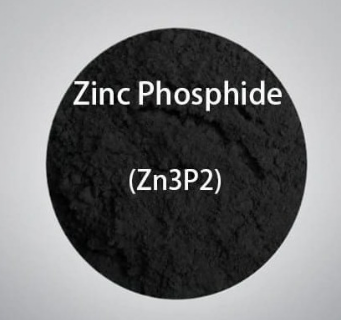
Zinc Phosphide (Zn₃P₂) Powder is a dark gray to black inorganic compound widely used as a semiconductor material and in specialized chemical applications. With high purity and controlled particle size, zinc phosphide is valued in photovoltaics, optoelectronics, and agricultural formulations.
Princeton Powder supplies high-purity Zinc Phosphide powder tailored for research laboratories, electronic industries, and chemical synthesis needs, available in multiple mesh sizes and customizable packaging.
Formula | Zinc Phosphide Zn₃P₂ Powder |
Morphology | irregular |
Appearance | Dark gray to black powder |
Particle Size | -325 mesh, can be customized |
Melting Point | 1,160 °C |
Density | 4.55 g/cm³ |
CAS Number | 1314-84-7 |
Purity | 99.99%-99.9999%, 4N-6N |
Description of Zinc Phosphide (Zn₃P₂) Powder
Zinc Phosphide (Zn₃P₂) Powder is a heavy, finely ground, crystalline gray-black powder that is practically insoluble in water and alcohol. Due to its unique chemical properties, zinc phosphide is widely used in agriculture, semiconductor research, and pest control formulations.
In pest management, zinc phosphide powder is often recommended as the rodenticide of choice because it is highly effective against rodents while showing minimal impact on non-target species. There is no true secondary poisoning, except possibly in dogs and cats. Predators and scavengers such as birds of prey, foxes, and other wildlife are generally unaffected because zinc phosphide does not accumulate in the rodent’s muscles or tissues.
Experimentally, several predators have been exposed to zinc phosphide through secondary ingestion, but only dogs and cats have shown susceptibility. This makes zinc phosphide a reliable, fast-acting, and cost-effective rodenticide in large-scale agricultural and industrial pest control applications.
In addition to its agricultural uses, zinc phosphide (Zn₃P₂) powder is gaining attention in photovoltaics and thin-film solar cell research because of its semiconducting properties, high absorption coefficient, and suitability for next-generation energy materials.
Main properties of Zinc Phosphide (Zn₃P₂) Powder
- High chemical purity and consistency
- Available in nano and micron powders
- Customizable particle size distribution for specific processes
- Stable packaging to minimize oxidation
- Produced under strict quality standards
Applications of Zinc Phosphide (Zn₃P₂) Powder
- Semiconductor Material: Used in thin-film solar cells, infrared detectors, and optoelectronic devices.
- Photovoltaics: A promising absorber material for high-efficiency solar cells.
- Agriculture: Active ingredient in rodenticides and pest control formulations.
- Chemical Research: Intermediate for phosphide-based compounds and advanced materials.
- Electronics: Thin-film deposition, coatings, and electronic ceramics.
Zinc Phosphide (Zn₃P₂) Powder Scholar Articles
Zinc–Phosphorus Clusters for Solution Synthesis of Zinc Phosphide Nanoparticles
Abstract: Synthesis of zinc phosphide (Zn3P2) nanoparticles is an emerging topic of investigation as Zn3P2 is a candidate material for the next generation solar cells. Despite the early discovery of its favorable electronic properties that are well-suited for photovoltaic applications, a major focus of synthetic strategy has been vapor/chemical deposition methods. Solution methods with greater control over size, crystal structure and composition at a lower
production cost, have been underdeveloped in comparison.
FAQ Zinc Phosphide Powder
What is Zinc Phosphide Powder used for?
It is primarily used in solar cell materials, optoelectronics, and rodenticides due to its semiconducting and pesticidal properties.
Is Zinc Phosphide toxic?
Yes, zinc phosphide is highly toxic and should be handled only by trained professionals with proper protective equipment.
What particle sizes are available?
We offer nano-sized, micron-sized, and standard mesh powders (-100, -200, -325 mesh) with custom sizing available.
Can Zinc Phosphide Powder be used in additive manufacturing?
While not commonly used in 3D printing, its semiconductor properties make it suitable for thin-film deposition and coating processes.
How is Zinc Phosphide Powder packaged?
It is vacuum-sealed or packed under argon to ensure stability during storage and transportation.