
Vanadium (V) Sputtering Target — 99.5%-99.95% Purity, Planar & Rotary PVD Targets for Thin-Film Deposition
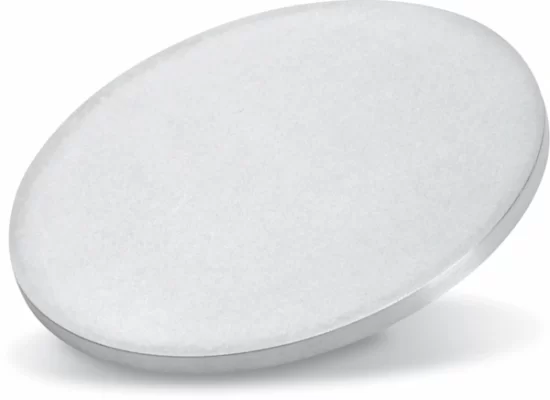
High-performance Vanadium (V) Sputtering Targets (99.5% to 99.95% purity) are essential materials for advanced thin film deposition, semiconductor manufacturing, and protective coatings. Engineered with ultra-low gaseous impurities and a uniform microstructural grain size, our vanadium targets ensure superior sputtering rates and consistent film density. Whether you require standard circular discs, backing plate bonding, or custom rectangular dimensions for R&D and high-volume industrial production, we offer reliable quality backed by full CoA (Certificate of Analysis) documentation.
Technical Specifications
| Parameter | Value |
|---|---|
| Product | Vanadium (V) Sputtering Target — High-Purity 2N5 to 3N5 for PVD Thin-Film Deposition |
| Material | Vanadium — Atomic Number 23, CAS 7440-62-2, transition metal, silvery-grey, ductile, electrically conductive |
| Purity Grades | 99.5% (2N5) — Industrial Grade | 99.9% (3N) — Optical Grade | 99.95% (3N5) — Research Grade |
| Density | 6.11 g/cm³ (theoretical); target density >98% theoretical |
| Melting Point | 1,910 °C |
| Grain Size | <100 μm average; fine-grain microstructure for uniform sputter erosion |
| Manufacturing Process | Vacuum Induction Melting (VIM) → Special Annealing Treatment → Precision Machining → Final Inspection → Vacuum Packaging |
| Forms Available | Planar (round Ø 1″–8″, rectangular up to 12″×12″), rotary (cylindrical), custom shapes |
| Key Properties | Harder than most steels; corrosion-resistant against alkalis, sulfuric & hydrochloric acids; oxidation passivation layer at room temperature; oxidizes in air ~660°C |
| Applications | Smart windows (thermochromic VOx films), electro-optic switches & modulators, laser protection & stealth/defense coatings |
Product Overview
Vanadium (V) sputtering targets from Princeton Powder deliver high-purity vanadium metal in planar and rotary configurations for physical vapor deposition (PVD) of vanadium, vanadium oxide (VOx), and vanadium dioxide (VO2) thin films. Vanadium's unique combination of properties — metallic electrical conductivity with thermal insulating characteristics, exceptional hardness exceeding most steels, and the thermochromic phase-transition behavior of its oxides — makes it an irreplaceable material for infrared smart windows, electro-optic switching devices, and multispectral stealth coatings. Princeton Powder supplies V sputtering targets in three purity grades — 99.5% (2N5) industrial, 99.9% (3N) optical, and 99.95% (3N5) research grade — with fine-grain microstructure (<100 μm average) for uniform sputter erosion and consistent film stoichiometry across the target lifetime.
Each target is manufactured through a rigorous five-stage process: Vacuum Induction Melting (VIM) of high-purity vanadium feedstock under controlled atmosphere to eliminate gaseous impurities, followed by special annealing treatment to homogenize grain structure and relieve residual stress, precision CNC machining to customer-specified dimensions and backing plate configuration, final inspection including GDMS purity verification and ultrasonic bond integrity testing, and vacuum-sealed packaging for contamination-free transport. ISO 9001:2015 certified. US-based supplier with 15+ years of sputtering target manufacturing experience.
Purity Grade Selection Guide
| Grade | Purity | Total Metallic Impurities | Gas Content (O/N/H) | Recommended Application | Cost Index |
|---|---|---|---|---|---|
| 2N5 — Industrial | 99.5% | <5,000 ppm | <500 ppm O | General metallization, wear-resistant coatings, conductive layers, non-critical optical coatings | ★ |
| 3N — Optical | 99.9% | <1,000 ppm | <300 ppm O | Smart window VOx films, electro-optic modulators, IR optical coatings, reactive sputtering applications | ★★ |
| 3N5 — Research | 99.95% | <500 ppm | <200 ppm O | VO2 phase-transition research, neuromorphic devices, defense/stealth coatings, ultra-pure fundamental studies | ★★★ |
Target Form & Configuration Options
| Form | Standard Dimensions | Thickness | Backing Plate | Best For |
|---|---|---|---|---|
| Planar — Round | Ø 1", 2", 3", 4", 6", 8" | 1–6 mm (1/8" std) | Cu (standard), Mo, SS — bonded or solder-free | Laboratory & R&D-scale PVD systems, AJA, Kurt J. Lesker, Angstrom Engineering |
| Planar — Rectangular | Up to 12" × 12" | 2–10 mm | Cu, Mo — bonded | Production-scale in-line sputtering coaters, large-area coatings |
| Rotary / Cylindrical | Ø 50–160 mm × L 200–4000 mm | 3–8 mm wall | Stainless steel or Ti backing tube | High-volume production coaters, architectural glass, continuous web coating |
| Custom Shapes | Per customer drawing | Per specification | Per specification | Specialty deposition systems, R&D prototypes, custom cathode geometries |
All targets are custom-manufactured to your exact dimensions, purity requirements, and backing plate specifications. Contact our technical sales team at [email protected] with your sputtering system model, target dimensions, and film requirements for a tailored quotation within 24-48 hours.
Material Properties & Technical Specifications
| Property | Specification |
|---|---|
| Element | Vanadium (V) — Atomic Number 23, Period 4, Group 5, d-block transition metal |
| CAS Number | 7440-62-2 |
| Appearance | Silvery-grey metallic luster; ductile and malleable in pure form |
| Density | 6.11 g/cm³ at 20 °C (theoretical); target density ≥98% theoretical |
| Melting Point | 1,910 °C (3,470 °F) |
| Boiling Point | 3,407 °C (6,165 °F) |
| Crystal Structure | Body-centered cubic (BCC) at room temperature |
| Electrical Conductivity | 4.89 × 10⁶ S/m at 20 °C — electrically conductive (suitable for DC sputtering) |
| Thermal Conductivity | 30.7 W/(m·K) at 25 °C — thermally insulating relative to Cu/Ag (beneficial for target thermal management) |
| Hardness | ~628 MPa (Vickers) — harder than most steels and common structural metals |
| Grain Size | <100 μm average; fine, equiaxed grain structure optimized for uniform sputter erosion |
| Corrosion Resistance | Excellent — stable against alkalis, sulfuric acid, and hydrochloric acid at room temperature; resistant to saltwater corrosion |
| Oxidation Behavior | Forms a thin, self-limiting oxide passivation layer (primarily V2O5) at room temperature; oxidizes rapidly in air above approximately 660 °C; requires vacuum or inert atmosphere during target bonding and high-temperature processing |
| Sputter Yield | ~0.7 atoms/ion (Ar+, 600 eV) — moderate sputter rate; process parameters should account for V's density and BCC structure |
| Available Purity | 99.5% (2N5), 99.9% (3N), 99.95% (3N5) — GDMS-certified with full trace element analysis report |
Why Vanadium's Thermal Properties Matter for Sputtering
Vanadium's combination of good electrical conductivity (4.89 × 10⁶ S/m) with relatively low thermal conductivity (30.7 W/m·K) is a practical advantage in PVD target design. During DC magnetron sputtering, the target must conduct the magnetron's electrical current efficiently to sustain the plasma while simultaneously managing the intense heat generated by ion bombardment at the racetrack. Vanadium's moderate electrical conductivity supports stable plasma ignition and maintenance, while its lower thermal conductivity (compared to Cu at ~400 W/m·K) concentrates heat at the sputter surface rather than dissipating it rapidly through the target body and backing plate — a characteristic that must be accounted for in cooling design but also reduces total cooling load compared to high-conductivity metals. Princeton Powder's fine-grain (<100 μm) microstructure further enhances sputtering performance by ensuring uniform erosion across the target surface, eliminating preferential grain-boundary sputtering that causes film thickness non-uniformity and particulate generation in coarser-grain targets.
Applications
Infrared Smart Windows & Thermochromic Vanadium Oxide Coatings
The largest and fastest-growing application for vanadium sputtering targets is the deposition of vanadium dioxide (VO2) thermochromic thin films for energy-efficient smart windows. VO2 undergoes a reversible metal-insulator transition (MIT) at approximately 68 °C — below this temperature, the film is monoclinic (semiconducting) and transparent to infrared radiation; above 68 °C, it transforms to a rutile (metallic) phase that reflects infrared while maintaining visible transparency. This passive, self-regulating optical switching requires no external power, wiring, or control systems — the window automatically modulates solar heat gain in response to ambient temperature.
Reactive sputtering from a high-purity vanadium target (3N / 99.9% minimum) in an Ar/O2 mixed atmosphere is the preferred industrial deposition method for VO2 smart-window coatings because it provides precise control over the V:O stoichiometry that determines transition temperature, hysteresis width, and optical modulation depth. Peer-reviewed research (Solar Energy Materials and Solar Cells, 2023) confirms that VO2 films deposited by reactive sputtering from high-purity V targets achieve infrared modulation >50% and visible transmittance >60%, with transition temperature tunable via elemental doping (e.g., tungsten doping lowers the transition temperature toward room temperature). Princeton Powder's 3N and 3N5 vanadium targets provide the impurity-controlled feedstock that enables reproducible VO2 stoichiometry — critical because sub-1% impurity levels shift the MIT temperature and degrade optical switching contrast.
Target recommendation: 3N (99.9%) purity, planar round Ø 2"–4" for R&D/pilot; rectangular up to 12"×12" or rotary cylindrical for architectural glass production coaters. Reactive sputtering compatible. Ar/O2 gas mixture typically 95:5 to 80:20 depending on desired oxide phase (VO2, V2O5, or mixed VOx). Substrate heating to 400–600 °C during deposition is standard for crystalline VO2 film growth.
Electro-optic Switch Devices & Optical Modulators
Vanadium dioxide's ultrafast, reversible metal-insulator phase transition — which can be triggered not only thermally but also electrically (voltage-induced MIT) and optically (femtosecond laser pulse-induced MIT) — positions VO2 as a leading candidate material for next-generation electro-optic switches, optical modulators, and photonic integrated circuits. The phase transition speed of VO2-based devices is critically dependent on film purity: research published in Advanced Functional Materials (2022) demonstrates that impurities exceeding 1% slow VO2 switching speed by an order of magnitude — from sub-picosecond to tens of picoseconds — because impurity atoms act as pinning centers that impede the cooperative lattice rearrangement required for the MIT.
Princeton Powder's 3N5 (99.95%) research-grade vanadium targets are specified for electro-optic device fabrication where maximum switching speed, lowest optical loss, and highest modulation depth are required. The ultra-low total metallic impurity budget (<500 ppm) and tightly controlled gas content (<200 ppm O) ensure that deposited VO2 films exhibit the sharpest MIT with minimal hysteresis — essential for high-speed optical switching, spatial light modulators, tunable metamaterials, and emerging neuromorphic computing devices that exploit VO2's hysteretic resistance switching for artificial synapse behavior.
Target recommendation: 3N5 (99.95%) purity, planar round Ø 1"–3" for device research and pilot fabrication. DC or RF magnetron sputtering. For the highest crystalline quality VO2 films, epitaxial growth on sapphire (Al2O3) or TiO2 substrates with substrate temperature precisely controlled at 450–550 °C is standard. Post-deposition annealing in flowing O2 at 500 °C can further optimize stoichiometry and reduce oxygen vacancy defects.
Laser Protection Materials & Stealth / Defense Coatings
Vanadium oxide (VOx) multilayer coatings deposited from high-purity vanadium targets are established materials for multispectral infrared camouflage and laser protection in defense applications. The tunable emissivity of VOx thin films — controllable across the mid-wave infrared (MWIR, 3–5 μm) and long-wave infrared (LWIR, 8–12 μm) atmospheric transmission windows — enables adaptive thermal signature management: an object coated with a VOx-based multilayer can match its apparent IR temperature to the background, reducing detectability by thermal imaging systems.
Research published in the Journal of Materials Chemistry C (2021) confirms that VOx multilayer coatings deposited from high-purity V targets achieve the emissivity tunability and spectral selectivity required for multispectral stealth — simultaneously managing visible, near-IR, MWIR, and LWIR signatures. The same VOx material system provides broadband optical limiting for laser protection: above a threshold incident laser intensity, the VO2 layer undergoes the MIT, transitioning from transmissive to reflective within picoseconds — effectively acting as a self-activating optical fuse that protects sensors and optical systems from laser damage.
Target recommendation: 3N (99.9%) or 3N5 (99.95%) purity, planar or rotary depending on coater configuration. For multilayer stacks with precise layer thickness control (typically 10–200 nm per layer), RF reactive sputtering with in-situ ellipsometry or quartz crystal microbalance (QCM) thickness monitoring is standard practice. Substrate temperature and O2 partial pressure must be independently controlled to achieve the desired VOx stoichiometry for each layer in the stack.
Typical Chemical Composition
- Metallic elements were analyzed using ICP‑OES.
- Gas elements were analyzed using LECO.
| Elements | Actual | Spec | Units | Elements | Actual | Spec | Units | Elements | Actual | Spec | Units |
|---|---|---|---|---|---|---|---|---|---|---|---|
| Li | ppm | Zn | ppm | Pb | ppm | ||||||
| B | <10 | ppm | Ga | ppm | Bi | ppm | |||||
| F | ppm | Ge | ppm | Y | ppm | ||||||
| Na | ppm | As | ppm | Th | ppm | ||||||
| Mg | ppm | Se | ppm | La | ppm | ||||||
| Al | 170 | ppm | Zr | <10 | ppm | Ru | ppm | ||||
| Si | 15 | ppm | Nb | 52 | ppm | Rh | ppm | ||||
| P | <10 | ppm | Mo | <10 | ppm | Os | ppm | ||||
| Cl | ppm | Pd | ppm | Cd | ppm | ||||||
| K | ppm | Ag | ppm | In | ppm | ||||||
| Ca | ppm | Sn | <10 | ppm | |||||||
| Ti | <10 | ppm | Sb | ppm | |||||||
| V | Matrix | wt% | Ba | ppm | |||||||
| Cr | 18 | ppm | Hf | ppm | |||||||
| Mn | ppm | Ta | <10 | ppm | C | <100 | ppm | ||||
| Fe | 350 | ppm | W | <20 | ppm | S | <20 | ppm | |||
| Co | <10 | ppm | Pt | ppm | O | 280 | ppm | ||||
| Ni | <10 | ppm | Au | ppm | N | <50 | ppm | ||||
| Cu | <10 | ppm | Hg | ppm | H | <10 | ppm |
Frequently Asked Questions
What is a vanadium sputtering target used for?
A vanadium sputtering target is used in physical vapor deposition (PVD) — primarily magnetron sputtering — to deposit thin films of vanadium metal, vanadium oxide (VOx), or vanadium dioxide (VO2) onto substrates. The three major application areas are: (1) Energy-efficient smart windows where VO2 thermochromic coatings automatically modulate infrared transmission in response to temperature, reducing building heating and cooling energy consumption; (2) Electro-optic switching devices where VO2's ultrafast metal-insulator phase transition enables optical modulators, photonic switches, and neuromorphic computing elements; and (3) Defense and security coatings where VOx multilayers provide multispectral infrared camouflage (thermal signature management) and broadband laser protection for sensors and optical systems. Vanadium is chosen over alternative materials because no other element's oxide exhibits the same combination of room-temperature-accessible phase transition, large optical contrast between phases, and picosecond switching speed.
How does vanadium dioxide enable smart windows?
Vanadium dioxide (VO2) undergoes a reversible metal-insulator transition (MIT) at approximately 68 °C (154 °F). Below this temperature, VO2 is in a monoclinic (semiconducting) crystal phase that transmits infrared radiation — allowing solar heat to enter the building for passive heating. Above 68 °C, VO2 transforms to a rutile (metallic) crystal phase that reflects infrared radiation while maintaining visible-light transparency — blocking solar heat gain to reduce air-conditioning load. This switching is passive and automatic: no wiring, sensors, power supply, or user intervention is required. The transition temperature can be tuned toward room temperature (ideal for building windows) by doping the VO2 film with small amounts of tungsten during sputter deposition — each 1 at% W lowers the transition by ~20-25 °C. VO2-based smart windows are manufactured by reactive magnetron sputtering from a high-purity vanadium target in an argon/oxygen atmosphere, which provides the precise stoichiometry control necessary for reproducible optical performance.
What is the metal-insulator transition in vanadium oxide?
The metal-insulator transition (MIT) in vanadium dioxide is a first-order phase transformation in which VO2 switches between an insulating (semiconducting) monoclinic crystal structure at low temperature and a metallic rutile crystal structure at high temperature, with the transition centered at approximately 68 °C for pure, stoichiometric VO2. The transition is accompanied by dramatic changes in electrical resistivity (up to 5 orders of magnitude) and optical properties — particularly in the infrared where the material switches from IR-transparent to IR-reflective. The MIT can be triggered not only by temperature but also by applying an electric field (voltage-induced MIT), by optical excitation with an ultrafast laser pulse (photon-induced MIT), or by mechanical strain. The transition speed is extraordinarily fast — sub-picosecond for optically triggered transitions in high-purity films — making VO2 one of the fastest known switching materials. These properties make VO2 a leading candidate for next-generation electronic and photonic devices including ultrafast optical switches, tunable metamaterials, and neuromorphic computing hardware.
What purity of vanadium target is needed for optical applications?
For optical and electro-optic applications — including smart-window VO2 coatings, optical modulators, and photonic switches — 3N (99.9%) purity is the minimum recommended grade. Impurities at concentrations exceeding 0.1% (1,000 ppm) degrade VO2 film optical performance in three ways: (1) they shift the MIT temperature away from the target value, making the optical switching occur at the wrong temperature for the intended application; (2) they reduce the infrared modulation depth because impurity-scattered charge carriers degrade the metallic-phase IR reflectivity; (3) they broaden the MIT hysteresis, meaning the film's optical state depends on its thermal history — undesirable for reliable device operation. For the most demanding applications — ultrafast electro-optic switches, neuromorphic computing devices, and defense-grade coatings where maximum switching speed and minimum optical loss are required — 3N5 (99.95%) purity is recommended. Research published in Advanced Functional Materials (2022) demonstrates that impurities above 1% slow VO2 switching by an order of magnitude. Princeton Powder offers both 3N and 3N5 grades with GDMS-certified purity verification.
Can vanadium sputtering targets be used for reactive sputtering?
Yes — reactive sputtering is the standard and preferred deposition method for vanadium oxide thin films. In reactive sputtering, a pure vanadium metal target is sputtered in an atmosphere containing both argon (the sputtering gas) and oxygen (the reactive gas). Vanadium atoms sputtered from the target react with oxygen at the substrate surface (and to some extent in the gas phase) to form the desired vanadium oxide phase — VO2, V2O5, or intermediate VOx compositions. Reactive sputtering from a metal target offers significant advantages over sputtering from a ceramic oxide target: (a) metal targets have much higher thermal conductivity than oxide targets, enabling higher sputtering power and deposition rate without target cracking; (b) the oxygen-to-vanadium ratio in the deposited film can be precisely tuned by adjusting the O2/Ar flow ratio — allowing deposition of any VOx stoichiometry from a single target; (c) metal targets are mechanically more robust than ceramic oxide targets, with longer service life and lower particulate generation. Princeton Powder vanadium targets are fully compatible with reactive sputtering in all common PVD systems. Our applications engineers can provide starting-point O2/Ar ratio recommendations for your desired oxide phase.
What industries use vanadium sputtering targets?
Vanadium sputtering targets serve four primary industry sectors: (1) Architectural Glass & Fenestration — manufacturers of energy-efficient smart windows, switchable glazing, and dynamic building envelope products incorporating VO2 thermochromic coatings for passive solar heat-gain control. (2) Photonics & Optoelectronics — companies developing electro-optic switches, optical modulators, tunable filters, spatial light modulators, and photonic integrated circuits based on VO2's ultrafast phase transition. (3) Defense & Aerospace — organizations producing multispectral camouflage coatings, infrared signature management materials, laser protection systems, and hardened optical sensors utilizing VOx thin films. (4) Academic & Government Research Laboratories — university and national-lab research groups investigating VO2 phase-transition physics, correlated electron materials, neuromorphic computing, and next-generation functional oxide thin films. Princeton Powder supplies vanadium targets to all four sectors, from single R&D targets for university labs to production-volume rotary targets for architectural glass coaters.
Research & Technical References
The following peer-reviewed research demonstrates vanadium thin-film performance in smart window, electro-optic, and defense applications. Princeton Powder vanadium sputtering targets meet or exceed the purity and microstructural specifications used in these studies.
Thermochromic VO2 Thin Films for Smart Windows: Recent Advances in Sputter Deposition
Solar Energy Materials and Solar Cells (Elsevier), 2023 — Comprehensive review of VO2 thin-film deposition by reactive magnetron sputtering from high-purity vanadium targets for energy-efficient smart-window applications. The review reports that optimized VO2 films achieve infrared modulation exceeding 50% (ΔTIR = T_semiconducting − T_metallic) while maintaining visible transmittance above 60% — the two figures of merit that determine smart-window energy-saving performance. The metal-insulator transition temperature of ~68 °C for undoped VO2 can be systematically reduced toward room temperature by tungsten doping during sputter deposition, with each atomic percent of W lowering the transition temperature by approximately 20–25 °C. The review concludes that reactive sputtering from high-purity V targets is the most industrially scalable deposition route for VO2 smart-window coatings, offering superior film uniformity, reproducibility, and throughput compared to sol-gel, CVD, and pulsed laser deposition alternatives. Practical takeaway: Princeton Powder's 3N (99.9%) high-purity V targets provide the impurity-controlled vanadium feedstock necessary for precise VO2 stoichiometry control — critical because sub-percent impurity levels shift the MIT temperature and degrade the IR modulation that defines smart-window energy performance.
Metal-Insulator Transition in Vanadium Dioxide: Device Applications from Optical Switches to Neuromorphic Computing
Advanced Functional Materials (Wiley), 2022 — Authoritative review of VO2-based functional devices leveraging the ultrafast, reversible metal-insulator phase transition. The review establishes that phase-transition speed in VO2 thin-film devices is critically dependent on film purity: impurity concentrations exceeding 1% slow the switching time by an order of magnitude (from sub-picosecond to tens of picoseconds) because impurity atoms act as nucleation-pinning centers that impede the cooperative Peierls-assisted lattice rearrangement. The review covers electro-optic switches operating at telecom wavelengths (1550 nm), broadband optical modulators with extinction ratios exceeding 10 dB, ultrafast photonic devices exploiting femtosecond-laser-induced MIT, and emerging VO2-based neuromorphic computing elements where hysteretic resistance switching emulates synaptic plasticity for spiking neural network hardware. Practical takeaway: Princeton Powder's 3N5 (99.95%) research-grade V targets, with total metallic impurities below 500 ppm, enable the ultra-high-purity VO2 films required for fastest switching speed, lowest optical loss, and highest modulation depth in advanced electro-optic and neuromorphic devices.
Vanadium-Based Thin Films for Infrared Camouflage and Laser Protection
Journal of Materials Chemistry C (Royal Society of Chemistry), 2021 — Reports on VOx multilayer coating architectures deposited from high-purity vanadium targets for multispectral stealth and laser protection applications. The study demonstrates that VOx thin films with controlled stoichiometry (achieved by precise O2 partial pressure regulation during reactive sputtering) provide tunable infrared emissivity across both the MWIR (3–5 μm) and LWIR (8–12 μm) atmospheric transmission bands — enabling adaptive thermal signature management where the coated object's apparent IR temperature can be matched to varying backgrounds. The same VOx material system provides intrinsic broadband optical limiting: above a threshold laser fluence, the VO2 layer undergoes the MIT and transitions from IR-transmissive to IR-reflective within picoseconds, acting as a passive, self-activating optical fuse that protects sensitive infrared sensors, missile seeker domes, and optical communication systems from laser damage without requiring external power or control electronics. Practical takeaway: Princeton Powder's high-purity V targets support the advanced defense and security coating applications that require precise, reproducible control of VOx stoichiometry across multilayer stacks — where each layer's oxygen content determines its specific IR optical function within the coating design.
Contact our technical team at [email protected] for the full reference list, to discuss vanadium target specifications for your specific thin-film application, or for complimentary sputtering process consultation including deposition parameter optimization.