
Hydroxyapatite (HAp) Powder - High Purity Calcium Hydroxylapatite for Dental & Orthopedic Applications
Princeton Powder’s high purity hydroxyapatite (HA) powder (calcium hydroxylapatite, CAS 1306-06-5) is a bioactive calcium phosphate compound engineered for superior performance in dental, orthopedic, and industrial applications. We offer fully customizable nano hydroxyapatite powder (<100 nm) and micron hydroxyapatite powder (0.1–100 μm) to match your exact formulation needs—from toothpaste remineralization to bone graft materials and industrial ceramic production. All our hydroxyapatite powder meets USP grade standards, with 99.5% trace metals purity and consistent batch-to-batch quality for global buyers in Europe and North America.
| Category | Model No. | Morphology | Particle Size & Purity | Application |
|---|---|---|---|---|
| Green Powder | ||||
| HAP01 | 01‑2u | Quasi‑spherical | 2 μm, 96% | Toothpaste, soil treatment, mouthwash |
| HAP01 | 01‑200 | Needle‑shaped | 200 nm, 95% | Toothpaste, soil treatment, mouthwash |
| HAP01 | 01‑60 | Needle‑shaped | 60 nm, 96% | Toothpaste, soil treatment, mouthwash |
| HAP02 | 02‑40 | Needle‑shaped | 40 nm, 96% | Cosmetics, carrier material |
| HAP03 | 03‑20 | Needle‑shaped | 20 nm, 97.5% | Low‑purity artificial bone, bone scaffold |
| HAP04 | 04‑20 | Needle‑shaped | 20 nm, 99% | High‑purity artificial bone, bone screw |
| HAP05 | 05‑20 | Short rod‑like | 20 nm, 99% | High‑purity artificial bone, bone screw |
| HAP06 | 06‑80 | Spherical | 80 μm, 96% | Soil remediation |
| Calcined Powder (High‑Temperature Sintered) | ||||
| HAP07 | 07‑15u | Spherical | 15 μm (1‑45 μm) | 3D printing, bone cement |
| HAP07 | 07‑25u | Spherical | 25 μm (15‑35 μm) | 3D printing, thermal spraying |
| HAP07 | 07‑50u | Spherical | 50 μm (30‑85 μm) | Bone coating, thermal spraying |
| HAP07 | 07‑80u | Spherical | 80 μm (45‑120 μm) | 3D printing, thermal spraying |
| HAP07 | 07‑Q | Spherical | 0.5‑5 mm | Orthopedics |
| CaHa | Porous | Spherical | 1.2 g/cm³, 25‑45 μm | Medical aesthetics |
| CaHa | Microporous | Spherical | 1.5 g/cm³, 25‑45 μm | Medical aesthetics |
| CaHa | Solid smooth | Spherical | 1.9 g/cm³, 25‑45 μm | Medical aesthetics |
| Product Attribute | Standard Value |
|---|---|
| Chemical Name | Hydroxyapatite (Calcium Hydroxylapatite) |
| CAS Number | 1306-06-5 |
| Purity | 99.5% (Trace Metals Basis) – USP Grade Hydroxyapatite Powder |
| Particle Size | Customizable: Nano (<100 nm) / Micron (0.1–100 μm) / Bulk (>100 μm) |
| Appearance | White Crystalline Hydroxyapatite Powder |
| Grade Options | Food Grade (for toothpaste), Biomedical Grade (orthopedic), Industrial Grade |
| Melting Point | 1100℃ |
| Density | 3–3.2 g/cm³ (25°C) |
| Key Applications | Dental (toothpaste remineralization), Orthopedic (bone graft) |
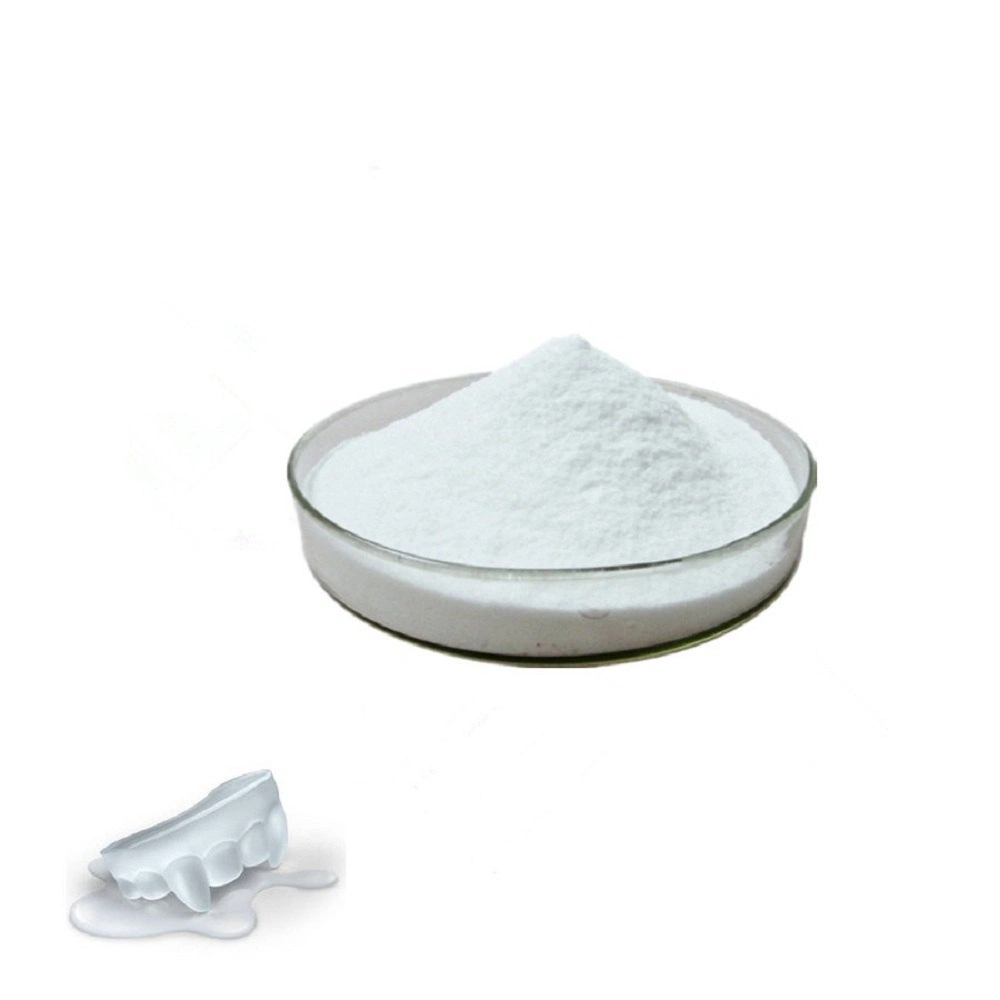
Description of Hydroxyapatite (HAp) powder
Hydroxyapatite (HA) powder, a calcium phosphate compound (Ca₁₀(PO₄)₆(OH)₂), is widely used in biomedical applications due to its biocompatibility and similarity to human bone mineral. Bulk hydroxyapatite powder is commonly used for bone grafts, dental implants, and as a coating for orthopedic implants to promote bone integration. Additionally, HA powder is utilized in chromatography for protein purification and in various research and development applications within the medical and materials science fields
Hydroxyapatite (HA) powder, available for sale in the USA, is offered in food grade, nano particle, and micro size forms. We provide a wide range of products including ceramic plates, rods, pellets, crucibles, sputtering targets, and custom shapes. Our extensive manufacturing expertise ensures reliable, tailored solutions to effectively support your projects.
Physical And Chemical Analysis
| Items | Standards | Results | Method |
|---|---|---|---|
| Description | White powder, without any | Qualified | Visual& Optical Microscope |
| visible impurities or blemishes | |||
| Shape | Needle-like / Rod-like | Qualified | Visual& Optical Microscope |
| Mesh Size | Average particle size:200 nm, | Qualified | GB/T23101.6-4.6 |
| with no deviation of more than 50 nm either upward or | |||
| downward | |||
| Assay(HAP) | Purity≥96% | 97% | GB/T23101.3-7、8 |
| Burn-off weight loss | <5% | 1.1% | GB/T1875 |
| Total volatile matter at 105℃ | ≤3% | 0.7% | Pharmacopoeia 2020 Edition – Loss on Drying |
| Calcium to phosphorus ratio | 1.66-1.71 | 1.667 | GB/T 23101.1-4.1 |
| IR absorption spectrum | There should be an OH | Qualified | GB/T 23101.6 – Appendix A.3 |
| absorption peak at 3573 cm-1 and 632 cm-1, a P04-3 absorption peak at 1090 cm-1, 1047 cm-1,959.cm-1,601 cm-1and 571 cm-1. No absorption peaks for carbonate ions, carbonyl groups, amines or other impurities are observed. |
Residue Analysis
| Items | Standards | Results | Method |
|---|---|---|---|
| Description | White powder, without any | Qualified | Visual& Optical Microscope |
| visible impurities or blemishes | |||
| Shape | Needle-like / Rod-like | Qualified | Visual& Optical Microscope |
| Mesh Size | Average particle size:200 nm, | Qualified | GB/T23101.6-4.6 |
| with no deviation of more than 50 nm either upward or | |||
| downward | |||
| Assay(HAP) | Purity≥96% | 97% | GB/T23101.3-7、8 |
| Burn-off weight loss | <5% | 1.1% | GB/T1875 |
| Total volatile matter at 105℃ | ≤3% | 0.7% | Pharmacopoeia 2020 Edition – Loss on Drying |
| Calcium to phosphorus ratio | 1.66-1.71 | 1.667 | GB/T 23101.1-4.1 |
| IR absorption spectrum | There should be an OH | Qualified | GB/T 23101.6 – Appendix A.3 |
| absorption peak at 3573 cm-1 and 632 cm-1, a P04-3 absorption peak at 1090 cm-1, 1047 cm-1,959.cm-1,601 cm-1and 571 cm-1. No absorption peaks for carbonate ions, carbonyl groups, amines or other impurities are observed. |
Residue Analysis
| Items | Standards | Results | Method |
|---|---|---|---|
| Description | White powder, without any | Qualified | Visual& Optical Microscope |
| visible impurities or blemishes | |||
| Shape | Needle-like / Rod-like | Qualified | Visual& Optical Microscope |
| Mesh Size | Average particle size:200 nm, | Qualified | GB/T23101.6-4.6 |
| with no deviation of more than 50 nm either upward or | |||
| downward | |||
| Assay(HAP) | Purity≥96% | 97% | GB/T23101.3-7、8 |
| Burn-off weight loss | <5% | 1.1% | GB/T1875 |
| Total volatile matter at 105℃ | ≤3% | 0.7% | Pharmacopoeia 2020 Edition – Loss on Drying |
| Calcium to phosphorus ratio | 1.66-1.71 | 1.667 | GB/T 23101.1-4.1 |
| IR absorption spectrum | There should be an OH | Qualified | GB/T 23101.6 – Appendix A.3 |
| absorption peak at 3573 cm-1 and 632 cm-1, a P04-3 absorption peak at 1090 cm-1, 1047 cm-1,959.cm-1,601 cm-1and 571 cm-1. No absorption peaks for carbonate ions, carbonyl groups, amines or other impurities are observed. |
Applications of Hydroxyapatite Powder
1. Dental Care & Oral Health Formulations
- Nano-Hydroxyapatite Toothpaste Ingredients: Advanced raw materials for enamel remineralization, anti-sensitivity, and cavity protection.
- Bioactive Dental Coatings & Varnishes: High-adhesion $nHAp$ solutions for desensitizing treatments and professional dental care.
- Whitening & Oral Care R&D: Next-generation biomaterials tailored for innovative oral care products and custom formulations.
2. Biomedical & Tissue Engineering Solutions
- Medical-Grade Bone Grafts & Orthopedic Implants: Osteoconductive nano-hydroxyapatite for enhanced bone regeneration and osseointegration.
- 3D Scaffolds for Tissue Engineering: Porous biomaterial matrices designed for cell proliferation and regenerative medicine.
- Targeted Drug Delivery Carriers: Controlled-release nanoparticle systems for pharmaceutical and biomedical applications.
3. Cosmetic & Skincare Raw Materials
- Anti-Aging & Firming Skincare Additives: Bio-compatible nano minerals that boost skin barrier repair and elasticity.
- Mineral Sunscreens & Brightening Formulations: Non-toxic $TiO_2$/$ZnO$ compatible bio-minerals for natural UV protection and even skin tone.
4. Food & Nutraceutical Grade Additives
Dietary Calcium Fortification: Water-dispersible, high-absorption calcium sources for nutritional supplements (Custom specifications available upon request).
Hydroxyapatite Powder our strength
- 99.5% high purity hydroxyapatite powder (USP grade) with batch-to-batch consistency
- Custom particle size hydroxyapatite powder (nano/micron/bulk) tailored to your application
- FDA/GMP/ISO certified calcium hydroxylapatite powder for global compliance
- Fast shipping for hydroxyapatite powder to Europe and North America
- Free samples available for nano/micron hydroxyapatite powder testing
Hydroxyapatite (HA) Powder Reference
Hydrothermal synthesis of hydroxyapatite powders using Response Surface Methodology (RSM)
- Hydroxyapatite (HAp)—[Ca10 (PO4)6(OH) 2] has a similar chemical composition to bone material, making it the main mineral supplement in bone-making. Due to its high biocompatibility, hydroxyapatite is widely used in the repair of bone deficiencies and in the production of dental or orthopedic implants.
In comparison to hydroxyapatite, nano-hydroxyapatite (n-HAP) has higher solubility, surface energy and bioactivity and its structure is similar to dental apatite. Recent reports claim that Nano-HAP can be used as a remineralizing agent.
Micro-hydroxyapatite particles are at least 1,000 larger than nano-hydroxyapatite particles. They are less effective in treating dental erosion/damage because they do not interact/bind as well with the cells and surfaces in your oral microbiome. While nano-hydroxyapatite is more effective than micro hydroxyapatite.
Though it is safe for ingestion, of course we do not recommend eating it! We do recommend flossing before brushing with a toothpaste that contains hydroxyapatite so that the active ingredients can penetrate your teeth’s surface properly after the biofilm between the teeth has been removed.