
AlSi10Mg Aluminum Powder Spherical 20-63 µm LPBF 3D Printing
AlSi10Mg Powder is a Aluminum Silicon Magnesium Alloy Powder with approximately 89-91% aluminum (Al), 9-11% silicon (Si), and 0.2-0.5% magnesium (Mg). It has High strength-to-weight ratio, good thermal conductivity, and excellent corrosion resistance. AlSi10Mg spherical powder is widely used in additive manufacturing, especially in aerospace and automotive industries, for producing lightweight, high-performance parts with complex geometries.
Princeton Powder is a leading supplier of spherical AlSi10Mg powder. We specialize in a comprehensive range of spherical powder products and possess extensive expertise in additive manufacturing (3D printing) industry. Spherical AlSi10Mg powder is for sale at a competitive price.
Formula | AlSi10Mg |
Synonyms | AlSi10Mg spherical particles, AlSi10Mg spherical powders, AlSi10Mg Powder, AlSi10Mg thermal spray powder, AlSi10Mg gas atomized powder |
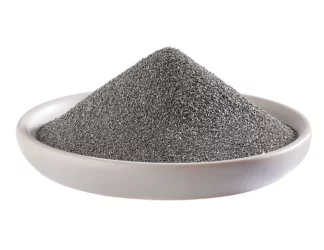
Appearance | Silver grey Powder, spherical shape |
Particle Size | 0-45 um, 45-105 um, can be customized upon request |
Melting Point | 570°C |
Density | 2.67 g/cm 3 |
Tap Density | 1.60 g/cm³ |
Apparent density | 1.35 g/m3 |
Product Overview
Spherical AlSi10Mg powder is the most widely used aluminum alloy powder for laser powder bed fusion (LPBF/SLM) additive manufacturing worldwide. Its near-eutectic Al-Si composition (~10% Si) provides excellent castability and printability — wide processing window, low hot-tearing susceptibility, good powder bed flowability — while the Mg addition (0.2–0.5%) enables precipitation hardening via T6 heat treatment for enhanced mechanical properties. Princeton Powder supplies AlSi10Mg powder in the industry-standard 20–63 µm particle size range, gas-atomized for spherical morphology and consistent AM process performance.
As-printed AlSi10Mg typically achieves UTS of 350–450 MPa with 3–8% elongation depending on build parameters and post-processing. After T6 heat treatment (solution + aging), elongation increases to 8–12% with UTS of 280–330 MPa — providing a tunable strength-ductility balance for application-specific optimization. Bulk supply available for production AM fleets. Custom PSD cuts available for specific machine requirements (EOS, SLM Solutions, Renishaw, etc.). Contact our AM powder specialists with your machine model and target properties.
Chemical Composition (wt%)
Chemical Composition (wt%) | ||||||||||
Item | Fe | Zr | Mn | Si | Ni | Cr | Zn | Sn | Pb | Al |
AlSi10Mg | ≤0.55 | – | ≤0.45 | 9.0~11.0 | ≤0.05 | – | ≤0.1 | ≤0.05 | ≤0.05 | Bal. |
Mg | Cu | Ti |
|
|
|
|
|
|
| |
0.2~0.45 | ≤0.1 | ≤0.15 |
|
|
|
|
|
|
| |
Oxygen≤800 ppm; Nitrogen≤500 ppm
Mechanical Properties
| Condition | UTS (MPa) | Yield (MPa) | Elongation (%) | Hardness (HV) |
|---|---|---|---|---|
| As-Printed | 350–450 | 200–270 | 3–8 | 120–140 |
| T6 Heat Treated | 280–330 | 210–260 | 8–12 | 100–120 |
Particle Size Distribution
| 20–63 µm | Standard LPBF/SLM range — compatible with EOS, SLM Solutions, Renishaw, Trumpf, Concept Laser |
| 15–45 µm | Fine-grade — higher resolution, thinner layer thickness (20–30 µm) |
| Custom | Any PSD within 5–100 µm range — specify your machine requirements |
Applications
Automotive Lightweight Components
AlSi10Mg is the dominant AM material for series-production automotive parts — brackets, housings, heat exchangers, intake manifolds — where 40–60% weight reduction vs. steel and part consolidation (multiple components merged into one printed part) provide compelling business cases beyond prototyping.
Aerospace Brackets & Structural Housings
Flight-qualified AlSi10Mg components are flying on commercial aircraft for non-structural and secondary structural applications. The alloy's well-characterized fatigue behavior and established LPBF process parameters reduce qualification time vs. newer Al alloys.
Functional Prototypes & Production Tooling
AlSi10Mg bridges prototyping and production — the same powder, same machine parameters, and same post-processing produce prototype validation parts and series production components without material re-qualification.
Why Choose Our AlSi10Mg Powder
- Gas-atomized spherical — Hall flow <15 s/50g, high apparent density for consistent LPBF spreading
- Industry-standard 20–63 µm, 15-45 µm PSD — compatible with all major LPBF machine OEMs
- Tight chemistry control — Si: 9.5–10.5%, Mg: 0.3–0.4% typical, verified per lot by ICP-OES
- Bulk supply — production quantities for AM fleets; no upper limit on order size
- ISO 9001:2015 certified
FAQ
What is AlSi10Mg used for in 3D printing?
It is the most widely used aluminum alloy for LPBF/SLM — automotive lightweight parts, aerospace brackets, heat exchangers, and functional prototypes.
What particle size for LPBF AlSi10Mg?
20–63 µm is the industry standard, compatible with all major LPBF machine OEMs. 15–45 µm for higher-resolution builds.
As-printed vs T6 heat treated — which for my application?
As-printed: higher strength (350–450 MPa UTS), lower ductility. T6: better ductility (8–12% elongation), improved fatigue life, slightly lower strength.
MOQ and lead time?
MOQ: 1 kg sample; 10 kg+ production. Lead: 1-2 weeks stock; 3-4 weeks custom PSD. Bulk pricing available. Contact for quote.
Research & Technical References
Process-Structure-Property Relationships in LPBF AlSi10Mg: A Comprehensive Review
Progress in Materials Science (Elsevier), 2019 — Reviewed 200+ publications on LPBF AlSi10Mg; identified optimal laser parameters for 99.5%+ density across multiple machine platforms; characterized the fine cellular-dendritic microstructure unique to LPBF AlSi10Mg that produces higher as-printed strength vs. cast AlSi10Mg. Practical takeaway: Princeton Powder's 20–63 µm AlSi10Mg targets the PSD and chemistry validated across the extensive published LPBF parameter space — reducing your process development time.
Fatigue Behavior of LPBF AlSi10Mg: Effect of Building Orientation & Post-Processing
International Journal of Fatigue (Elsevier), 2020 — Established S-N curves for as-printed, stress-relieved, and T6 AlSi10Mg. T6 heat treatment improved fatigue life by 40% at 10⁷ cycles vs. as-printed due to stress relief and Si particle spheroidization. Practical takeaway: Our consistent-lot-chemistry AlSi10Mg produces the predictable fatigue performance documented in this study — critical for aerospace components requiring certified fatigue allowables.