
Titanium Carbide TiC Powder (Nanopowder and submicrons)
Source industrial and research-grade Titanium Carbide (TiC) powder available in precision-milled nanopowder and submicron particle sizes. Featuring superior chemical purity, low oxygen content, and uniform morphology, our nano and submicron TiC powders provide exceptional sinterability and mechanical reinforcement. Ideal for metal matrix composites (MMCs), cemented carbides, wear-resistant coatings, and additive manufacturing, Titanium Carbide improves hardness, electrical conductivity, and thermal shock resistance. Available in custom particle size distributions and bulk packaging with full batch traceability and COA documentation to meet stringent aerospace, automotive, and tooling specifications.
Princeton Powder is a leading supplier of Titanium Carbide refractory ceramic powder. Titanium powders including Titanium Nitride Powder, Titanium Boride TiB2 Powder, and Titanium disilicide TiSi2 Powder are for sale in bulk.
Formula | TiC |
Synonyms | Titanium Carbide, Titanium(IV) carbide |
Appearance | Black Particle |
Particle Size | -60 mesh or customize |
Melting Point | 3140℃ |
Density | 4.93 g/cm³ at 25°C |
Purity | 99.5% 2N5 (trace metals basis) |
CAS Number | 12070-08-5 |
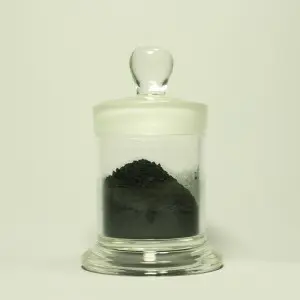
Description of Titanium Carbide TiC Powder
Titanium Carbide (TiC) powder is a ceramic material known for its high hardness and excellent thermal and electrical conductivity. It is often used in applications such as cutting tools, wear-resistant coatings, and as a component in metal matrix composites. TiC powder is valued for its high melting point, chemical stability, and resistance to wear and corrosion. It enhances the performance and longevity of tools and components in extreme environments.
Titanium Carbide (TiC) Powder,with a particle size of 1-50 um and nano size, is an ultra-hard ceramic material (Mohs 9-9.5) composed of titanium and carbon, widely used in cutting tools, wear-resistant coatings, and aerospace components. Its exceptional high-temperature stability (up to 3,160°C) and low friction coefficient make it ideal for extreme environments. Angular and spherical TiC powder is an excellent Thermal spray coatings material.
Princeton Powder manufactures Titanium Carbide (TiC) ceramic powder and offers a range of products, including ceramic plates, rods, pellets, crucibles, sputtering targets, and custom shapes. Our extensive expertise guarantees reliable, tailored solutions to support your projects effectively. Additional shapes are available upon request.
Chemical Composition
Grade | Average Particle Size (D50) | Purity (%) | O (%) | N (%) | Free Carbon (%) | Total Carbon (%) |
TiC3000 | 20-40 nm | >99.0 | — | — | — | 19.1-20.0 |
TiC0800 | 0.5-1.0 μm | >99.0 | ≤1.0 | ≤0.10 | ≤0.1 | 19.1-20.0 |
TiC0020 | 1.0-3.0 μm | >99.5 | ≤0.8 | ≤0.10 | ≤0.1 | 19.1-20.0 |
TiC0003 | 10.0-60.0 μm | >99.9 | >≤0.5 | ≤0.05 | ≤0.1 | 19.1-20.0 |
TiC0008 | -100+325 mesh | >99.9 | ≤0.3 | ≤0.05 | ≤0.1 | 19.1-20.0 |
TiC0001 | -200 mesh | >99.99 | ≤0.1 | ≤0.01 | ≤0.001 | 19.1-20.0 |
Applications
- Cutting Tools: For high-performance tools due to its hardness and wear resistance.
- Wear-Resistant Coatings: To protect surfaces from abrasion and corrosion.
- Metal Matrix Composites: Enhancing the hardness and strength of composite materials.
- Electrical Contacts: In electronic applications for its electrical conductivity.
- Abrasives: In grinding and polishing applications due to its hardness.
Titanium Carbide TiC Powder Reference
Synthesis of titanium carbide nano-powders by thermal plasma
- The paper presents a thermodynamic analysis for predicting conditions of thermal plasma synthesis of TiC. Emphasis was placed on various processing conditions so as to optimize the process parameters for the production of TiC nano-powders.
Titanium Carbide Micron and Nano Powder FAQ
1. What is the difference between nanopowder and submicron Titanium Carbide (TiC) powder?
Nanopowder TiC typically ranges from 20 nm to 100 nm, offering ultra-high surface area, lower sintering temperatures, and superior grain-refinement effects in advanced composites and coatings. Submicron TiC powder generally falls between 0.1 µm (100 nm) and 1.0 µm, providing easier dispersion, lower agglomeration, higher tap density, and more cost-effective processing for standard cermets, cutting tools, and thermal spray applications.
2. What are the primary industrial applications of submicron and nano TiC powder?
Submicron and nanoscale Titanium Carbide powders are widely used in:
Cutting Tools & Cermets: Enhances hardness, red hardness, and wear resistance in TiC-based cermets and WC-Co cemented carbides.
Wear-Resistant Coatings: Applied via plasma spraying, HVOF, or laser cladding to protect industrial machinery and aerospace components.
Metal Matrix Composites (MMCs): Reinforces aluminum, titanium, steel, and nickel superalloys for improved tensile strength and stiffness.
Refractories & Crucibles: Withstands extreme temperatures (melting point ~3,160 °C) and chemical corrosion in metallurgical processing.
3. What purity levels and particle sizes are available for TiC powder?
Commercial and research-grade Titanium Carbide powders are commonly supplied at 99% to 99.9% metals-basis purity, with controlled low free-carbon and low oxygen content. Standard particle size options include 40 nm, 50 nm, 80 nm, 100 nm for nanopowders, and 0.3 µm, 0.5 µm, 0.8 µm, and 1.0 µm for submicron grades, with custom particle size distributions (PSD) available upon request.
4. Is Titanium Carbide nanopowder hazardous, and how should it be stored?
Fine TiC powders—especially in the nanoscale range—can be combustible when suspended as airborne dust and may cause respiratory irritation if inhaled. Store Titanium Carbide powder in tightly sealed, moisture-free containers in a cool, dry, well-ventilated area away from strong oxidizers. Always handle using proper PPE, including N95/P100 respirators, protective eyewear, and grounding equipment to prevent static discharge.
5. What quality documentation is provided with each batch of TiC powder?
Every shipment typically includes a batch-specific Certificate of Analysis (COA) detailing chemical purity, free carbon, total oxygen, and trace elemental impurities, alongside Safety Data Sheets (SDS).