
Spherical Cobalt based CoCrW Powder
CoCrW (cobalt-chromium-tungsten) metal powder is a spherical, gas-atomized alloy powder in which tungsten is added to the cobalt-chromium system to deliver red hardness — the ability to retain hardness and wear resistance at elevated temperature. Princeton Powder supplies CoCrW powder with nominal composition Cr 26.5–29.0% and W 7.0–9.0%, low interstitials (O ≤500 ppm, N ≤100 ppm), and five classified particle-size cuts from 0–15 µm to 45–150 µm. The alloy is produced by vacuum induction melting followed by inert gas atomization, giving spherical particles with high packing density and consistent flow for powder-bed and powder-fed processes.
CoCrW sits between two well-known material families and borrows the best of each. Compared with CoCrMo, the tungsten addition raises hot hardness and wear resistance — CoCrW holds its hardness to roughly 500–600 °C where CoCrMo begins to soften, which is why CoCrW is preferred for high-temperature wear surfaces in aerospace and industrial equipment. Compared with carbon-bearing Stellite-type hardfacing alloys, this low-carbon CoCrW grade offers better ductility and corrosion resistance, making it suitable for dental frameworks, partial dentures, and implant components produced by laser powder bed fusion to ISO 22674. The same powder serves laser cladding and HVOF/plasma spray, where it deposits dense, metallurgically bonded wear overlays on valve seats, pump components, and extrusion hardware. One alloy, three process routes — with lot-specific Certificates of Analysis documenting chemistry, particle size, and interstitials.
Formula | CoCrW |
Synonyms | spherical CoCrW particles, spherical Cobalt Chromium Tungsten powders, CoCrW Powder, Cobalt Chromium Tungsten thermal spray powder, CoCrW gas atomized powder |
Appearance | Black Powder, spherical shape |
Particle Size | 0–15 µm (MIM) 15–53 µm (LPBF) 45–105 µm (EBM/DED) 45–150 µm (cladding) 45–106 µm (thermal spray) can be customized upon request |
Melting Point | 1,310–1,420 °C |
Density | 8.6 g/cm 3 |
Tensile Strength, Ultimate | 900-1200 MPa |
Tensile Strength, Yield | N/A |
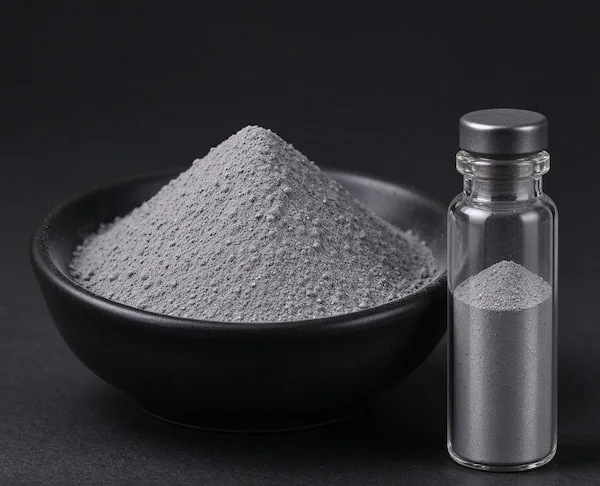
Description of Spherical CoCrW Powder
Spherical CoCrW powder is a metal alloy powder composed primarily of Cobalt (Co), Chromium (Cr), and Tungsten (W). This type of powder is known for its high strength, excellent wear resistance, and good corrosion resistance. CoCrW powder is typically produced through atomization processes, such as gas or plasma atomization, which ensure a uniform particle size distribution and high purity. The powder can be further processed through techniques like hot isostatic pressing (HIP) or powder metallurgy to form solid parts with the desired properties.
Cobalt Chromium Tungsten powder is primarily used in the aerospace and medical industries for producing high-strength, wear-resistant components, such as turbine blades and orthopedic implants. Its excellent corrosion resistance and thermal stability also make it ideal for additive manufacturing and other high-performance applications.
Princeton Powder is a leading supplier of CoCrW powder. We specialize in a comprehensive range of spherical powder products and possess extensive expertise in additive manufacturing (3D printing) industry. CoCrW powder is for sale at a competitive price.
CoCrW (Co-28Cr-8W) Spherical Powder Technical Specifications
| Parameter | Value |
|---|---|
| Product | CoCrW Cobalt-Based Metal Powder — Spherical Co-Cr-W Alloy Powder for AM, Cladding & Thermal Spray |
| Alloy System | Co-Cr-W (cobalt-chromium-tungsten); low-carbon dental/medical alloy class |
| CAS Reference | Alloy — no single CAS. Components: Co 7440-48-4 | Cr 7440-47-3 | W 7440-33-7 |
| Nominal Composition | Cr 26.5–29.0% | W 7.0–9.0% | Si 1.2–1.9% | Fe ≤0.70% | Mn ≤0.4% | Co balance |
| Interstitial Control | O ≤500 ppm | N ≤100 ppm |
| Density | 8.5–8.6 g/cm³ |
| Melting Point | 1,310–1,420 °C |
| Tensile Strength | 900–1,200 MPa |
| Yield Strength | 600–800 MPa |
| Hardness | ~350–450 HV (low-carbon dental grade) | 38–55 HRC (carbon-bearing Stellite-type hardfacing grades) |
| High-Temperature Behavior | Red hardness retained to ~500–600 °C; oxidation resistance to ~1,000 °C |
| Morphology | Spherical, gas atomized (VIGA) |
| Particle Size Grades | 0–15 µm (MIM) | 15–53 µm (LPBF) | 45–105 µm (EBM/DED) | 45–150 µm (cladding) | 45–106 µm (thermal spray) |
| Standards | ISO 22674 (dental) | UNS R30006 (Stellite 6) | AMS 7006 | EN 2.4979 |
| Manufacturing Process | VIM → Inert Gas Atomization → Sieving/Classification → Inspection → Packaging |
| Key Applications | Dental & medical frameworks, aerospace high-temperature wear parts, laser cladding, HVOF/plasma spray |
| Related Products | CoCrMo powder, CoCr alloy powder, pure cobalt powder |
Chemical Composition of CoCrW Spherical Powder
Chemical Composition (wt%) | ||||||||||
Item | Fe | Co | Mn | Si | Ni | Cr | Mo | W | Be | Cd |
CoCrW | ≤0.70 | Bal. | ≤0.4 | 1.2~1.9 | – | 26.5~29.0 | – | 7.0~9.0 | – | – |
Oxygen≤500 ppm; Nitrogen≤100 ppm
Manufacturing Process & Quality Control
5-Step Manufacturing Process
Every Princeton Powder CoCrW lot is produced through a controlled atomization route designed to deliver spherical morphology, low interstitial content, and repeatable particle size distribution:
- Vacuum Induction Melting (VIM): High-purity cobalt, chromium, and tungsten feedstock is melted under vacuum to the target composition. Vacuum melting removes dissolved gases and volatile impurities and prevents oxidation of chromium and tungsten, both of which have a strong affinity for oxygen at melt temperature. Chemistry is verified by ICP-OES before atomization proceeds.
- Inert Gas Atomization: The molten alloy is delivered through a ceramic nozzle and disintegrated by high-pressure argon (or nitrogen) into fine droplets that solidify rapidly into spherical particles. Rapid solidification suppresses elemental segregation — important for CoCrW, where tungsten would otherwise form coarse, unevenly distributed precipitates — and produces the fine, homogeneous microstructure that gives additively manufactured parts consistent properties.
- Sieving & Classification: The raw powder is classified into application-specific cuts — 0–15 µm, 15–53 µm, 45–105 µm, 45–106 µm, and 45–150 µm — using ultrasonic sieving and, where required, air classification. Particle size distribution is measured by laser diffraction per ASTM B822 and reported as D10/D50/D90.
- Inspection: Each lot is tested for chemistry (ICP-OES), interstitial content (oxygen and nitrogen by inert gas fusion), particle size distribution, apparent and tap density (ASTM B212/B527), Hall flow rate (ASTM B213), and morphology (SEM). Results are compiled into a Certificate of Analysis issued with every shipment.
- Packaging: Powder is packaged under inert atmosphere in moisture-barrier bags or sealed drums with desiccant, individually labeled with alloy grade, particle size cut, lot number, and date of manufacture. Packaging is rated for international air and sea freight.
Spherical CoCrW Powder Particle Size Distribution and Applications
| Grade | Particle Size | Typical Process | Typical Applications |
|---|---|---|---|
| Fine | 0–15 µm | MIM, fine-feature AM | Small dental components, fine-detail parts, metal injection molding feedstock |
| LPBF / SLM | 15–53 µm (D50 ≈ 25–35 µm) | Laser powder bed fusion | Dental crowns and frameworks, partial dentures, implant components, thin-wall parts |
| EBM / DED | 45–105 µm | Electron beam melting, directed energy deposition | Larger components, repair and build-up, higher-throughput builds |
| Cladding | 45–150 µm | Laser cladding, PTA | Valve seats, pump sleeves, extrusion screws, high-temperature wear surfaces |
| Thermal Spray | 45–106 µm | HVOF, plasma spray | Wear- and oxidation-resistant coatings on shafts, seals, and hot-section components |
Research & Technical References
The following peer-reviewed research describes the behavior of CoCrW alloy in additive manufacturing and high-temperature wear service. Princeton Powder CoCrW powder is produced to the composition and interstitial limits used in these studies.
Investigation on the Microstructure, Mechanical Property and Corrosion Behavior of the Selective Laser Melted CoCrW Alloy for Dental Application
Materials Science and Engineering: C, 2015;49:517–525 — Characterized selective laser melted CoCrW intended for dental restorations, examining microstructure, mechanical properties, and corrosion behavior. The study established that the additively manufactured alloy develops a fine, homogeneous microstructure with mechanical properties and corrosion resistance suitable for dental application, and is a foundational reference for SLM CoCrW in dentistry. Practical takeaway: The fine-scale microstructure that gives SLM CoCrW its dental performance depends on rapid solidification of spherical, low-oxygen powder — the powder characteristics Princeton Powder reports on every lot.
Effect of Laser Scanning Speed on the Mechanical Property and Corrosion Resistance of CoCrW Alloy Fabricated by SLM
Rapid Prototyping Journal, 2017;23(1):28–33 — Investigated laser scanning speeds from 200 to 1,500 mm/s in selective laser melting of CoCrW. Relative density reached 99.4% at 700 mm/s, and the yield strength of the optimized material met ISO 22674 Type 5 requirements while maintaining good corrosion resistance. Practical takeaway: Achievable density depends on powder particle size distribution and flow behavior as much as on laser parameters — lot-to-lot consistency in the 15–53 µm cut is what makes the 99.4% density result repeatable across builds.
Microstructure and Enhanced High-Temperature Wear Properties of TiC Reinforced Co-Cr-W Metal Matrix Composite Coatings Fabricated by Laser Cladding
Journal of Alloys and Compounds, 2025;1040:183565 — Examined laser-clad Co-Cr-W coatings and their high-temperature wear behavior, with wear testing conducted at 150, 300, and 450 °C. The work documents grain refinement and the formation of an oxide "glaze" layer that governs friction and wear in this temperature window — behavior directly relevant to CoCrW overlays on hot-section components. Practical takeaway: CoCrW's advantage in high-temperature wear is a function of both composition and deposit quality; low-oxygen powder with a tight size distribution produces the dense, defect-free cladding that these mechanisms require.
Contact our technical team for the complete reference list and to discuss how Princeton Powder CoCrW powder meets the requirements of your specific AM, cladding, or thermal spray process.
Parts made of Co–Cr alloys have high strength, excellent wear resistance, high temperature resistance, and outstanding biocompatibility, which make them ideal load-bearing implants [5,134–137]. Co–Cr alloys were first used in artificial joints and have now been commonly used in dental and oral applications [138,139].