
CuCrZr Powder (C18150 Copper alloy Powder) for AM & Aerospace
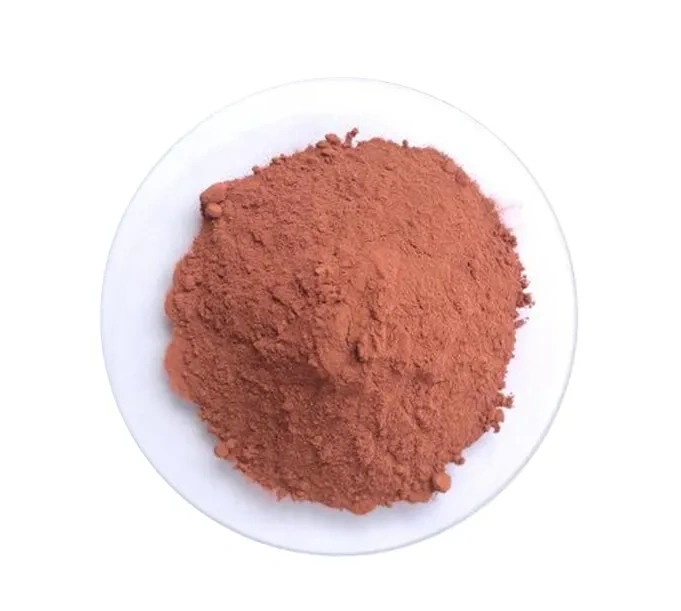
CuCrZr is a copper-based alloy with chromium and zirconium added to enhance its mechanical properties. CuCrNb alloys usually refer to the C18150 Copper alloys. CuCrNb C18150 Copper Powders are usually manufactured via Laser powder bed fusion (L-PBF) and gas atomization.
Princeton Powder is a leading supplier of high-purity CuCrZr powders. Copper powders including Copper Nickel Alloy CuNi Powder, Aluminium Bronze CuAl10 Alloy Powder, and CuCrNb powder are for sale at a competitive price.
Formula | CuCrNb |
Part Number | CU1121 |
Purity | 99% min |
Synonyms | CuCrZr Powder, C18150 Copper alloy powder |
Particle Sizes | 15-53 um, 15-45 um, Customized |
Shape | Spherical or irregular |
Oxygen | <0.2% |
Density | 8.79 g/cm3 |
Product Overview
Spherical CuCrZr powder (UNS C18150) is a gas-atomized precipitation-hardening copper alloy powder containing chromium (0.5-1.2%) and zirconium (0.05-0.3%), engineered for laser powder bed fusion (L-PBF), electron beam melting (EBM), and directed energy deposition (DED) additive manufacturing. Unlike pure copper (which lacks strength) and CuCrNb GRCop (which uses dispersion strengthening), C18150 achieves its unique combination of high strength and high conductivity through precipitation hardening — fine Cr and Zr-rich precipitates form during aging heat treatment, pinning dislocations while leaving the Cu matrix free for electron transport. Post-build solution treatment (950-1000°C) + aging (400-500°C) develops peak properties: UTS 400-500 MPa with electrical conductivity of 75-85% IACS — the highest conductivity-strength combination of any AM-processable copper alloy.
CuCrZr (C18150) vs. GRCop (CuCrNb) — Which Alloy for Your Application?
| Property | CuCrZr C18150 | GRCop-84 (CuCrNb) |
|---|---|---|
| Strengthening | Precipitation hardening (heat-treatable) | Dispersion strengthening (Cr₂Nb) |
| Conductivity | 75-85% IACS (after aging) | ~250 W/m·K (~43% IACS) |
| Max Service Temp | ~500°C (precipitates coarsen above) | ~700°C (dispersion stable) |
| Best For | Highest conductivity + strength; heat exchangers, electrical contacts | Maximum high-temp strength; rocket thrust chambers |
Chemical Composition & Specifications
| Copper (Cu) | Balance (~98.5-99.5%) |
| Chromium (Cr) | 0.5-1.2% |
| Zirconium (Zr) | 0.05-0.3% |
| UNS Designation | C18150 |
Particle Size Availability
| PSD | Application |
|---|---|
| 15-45 µm | L-PBF/SLM |
| 45-106 µm | EBM, DED |
| Custom | Specific AM machine requirements |
Mechanical & Physical Properties
| Condition | UTS | Yield | Elongation | Conductivity |
|---|---|---|---|---|
| As-Printed (L-PBF) | 250-350 MPa | 150-200 MPa | 15-25% | 40-55% IACS |
| Solution + Aged | 400-500 MPa | 300-400 MPa | 10-18% | 75-85% IACS |
Heat Treatment Protocol
Solution Treatment: 950-1000°C / 1-2h in vacuum or inert atmosphere → rapid quench. Dissolves Cr and Zr into Cu matrix. Aging: 400-500°C / 2-4h → Cr and Zr-rich precipitates form, pinning dislocations while Cu matrix regains conductivity. This heat treatment is C18150's key differentiator — no other AM Cu alloy offers this combination of post-process tunable strength and conductivity.
Applications
Aerospace Propulsion Components
CuCrZr C18150 is used in L-PBF printed regeneratively cooled combustion chamber liners for liquid rocket engines where its 75-85% IACS conductivity provides superior cooling efficiency vs. GRCop's ~43% IACS — at the cost of lower maximum service temperature (~500°C vs 700°C). For expander-cycle engines where cooling capacity directly determines engine performance, C18150's conductivity advantage is critical.
High-Heat-Flux Heat Exchangers
The unique combination of high thermal conductivity (approaching pure Cu after aging) and good elevated-temperature strength makes C18150 the material of choice for AM-printed compact heat exchangers, cold plates, and thermal management components in power electronics, laser diode cooling, and fusion energy applications.
Electrical & Thermal Management Components
Aged C18150 achieves 75-85% IACS conductivity — higher than any other AM-processable Cu alloy. This enables L-PBF printed high-current electrical contacts, switchgear components, induction coils, and welding electrodes that combine the geometric freedom of AM with near-pure-copper electrical performance.
Frequently Asked Questions
What is CuCrZr C18150 and how does precipitation hardening work?
C18150 is a precipitation-hardening Cu alloy with 0.5-1.2% Cr and 0.05-0.3% Zr. After solution treatment (950-1000°C) and aging (400-500°C), fine Cr and Zr-rich precipitates form, pinning dislocations for high strength while the pure Cu matrix provides 75-85% IACS conductivity.
CuCrZr C18150 vs GRCop (CuCrNb) — which for my application?
C18150: highest conductivity (75-85% IACS), best for heat exchangers and electrical components. GRCop: highest strength at temperature (to 700°C), best for rocket thrust chambers. C18150 max service ~500°C; GRCop max ~700°C.
What heat treatment does CuCrZr require after AM?
Solution treatment: 950-1000°C / 1-2h + rapid quench. Aging: 400-500°C / 2-4h. This develops peak strength (400-500 MPa UTS) and peak conductivity (75-85% IACS). As-printed condition has lower strength and conductivity.
What particle size for L-PBF CuCrZr?
15-45µm standard for L-PBF/SLM. 45-106µm for EBM/DED. Custom PSD available.
What is the electrical conductivity of aged C18150?
75-85% IACS after solution + aging — the highest of any AM-processable copper alloy. As-printed: 40-55% IACS. GRCop-84: ~43% IACS for comparison.
MOQ and lead time?
MOQ: 1 kg. Lead: 2-3 weeks. Heat treatment protocol documentation included. Contact +1 (646) 749-1791 for same-day quote.
Research & Technical References
The following peer-reviewed research demonstrates CuCrZr C18150 performance in AM and high-heat-flux applications.
L-PBF of CuCrZr: Process Parameter Optimization and Precipitation Hardening Response
Materials Science & Engineering A (Elsevier), 2019 — Achieved >99.5% density with 15-45µm CuCrZr at optimized L-PBF parameters. Solution treatment (980°C/1h) + aging (480°C/2h) produced UTS of 480 MPa with 78% IACS conductivity — confirming that AM-processed C18150 matches wrought properties after heat treatment. Practical takeaway: Princeton Powder's C18150 powder with tight Cr/Zr chemistry control enables the precipitation hardening response validated by this study.
CuCrZr vs CuCrNb for Fusion Reactor High-Heat-Flux Components: A Comparative Study
Journal of Nuclear Materials (Elsevier), 2020 — Evaluated L-PBF printed CuCrZr and CuCrNb for ITER divertor heat sink applications. CuCrZr demonstrated 78% IACS conductivity vs 45% for CuCrNb after respective heat treatments, providing 40% higher heat flux dissipation at the cost of lower recrystallization temperature (500°C vs 700°C). Practical takeaway: For applications where thermal conductivity is the primary design driver (heat exchangers, divertors, cold plates), C18150's 75-85% IACS provides a documented performance advantage over GRCop.
Contact for full reference list and application-specific CuCrZr recommendations.