
Nicotinamide Riboside (NR) Powder — NAD+ Precursor
Nicotinamide riboside (NR, CAS 23111-00-4 as chloride salt) is a naturally occurring pyridine-nucleoside analog of vitamin B3, first identified in trace amounts in cow’s milk and now manufactured as a nature-identical synthetic compound with a molecular weight of 290.70 Da (chloride form) and a white crystalline appearance. NR is the most clinically studied NAD+ precursor available: once inside cells, NR is phosphorylated by NRK1/NRK2 (nicotinamide riboside kinases) to nicotinamide mononucleotide (NMN), which is then converted by **NMNAT** to **NAD+** (nicotinamide adenine dinucleotide) — the essential coenzyme for cellular energy metabolism, sirtuin activation (SIRT1/3/6), PARP DNA repair, and mitochondrial function.
In skincare, topical NR supports intracellular NAD+ for DNA repair, sirtuin-mediated collagen maintenance, and antioxidant defense, though aqueous stability requires specialized formulation. Our NR powder is manufactured to ≥99% purity (HPLC-verified), available as chloride or hydrogen malate salt, in nutraceutical, cosmetic, research, and GMP grades. As a leading bulk NR manufacturer and supplier, we provide full CoA documentation, custom grades, and competitive pricing for supplement brands, skincare formulators, and research labs worldwide.
Technical Specifications
| Parameter | Specification |
|---|---|
| INCI / Common Name | Nicotinamide Riboside (NR) |
| Other Names | NR, β-Nicotinamide riboside, NR chloride (NRCl), NR hydrogen malate (NRHM), NR malate, Nicotinamide riboside chloride |
| CAS Number (Chloride) | 23111-00-4 |
| CAS Number (Hydrogen Malate) | Available upon request |
| Chemical Formula | C₁₁H₁₅ClN₂O₅ (chloride) |
| Molecular Weight | 290.70 g/mol (chloride); 255.25 g/mol (NR cation) |
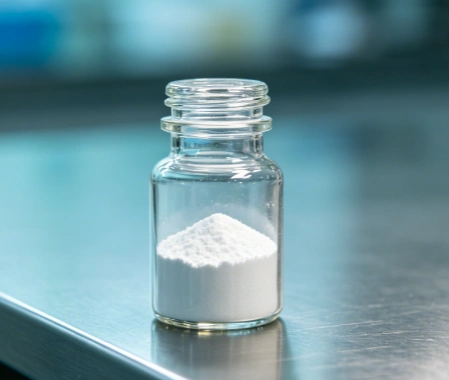
| Appearance | White to off-white crystalline powder |
| Odor | Characteristic or odorless |
| Purity (HPLC) | ≥ 99.0% (high-purity grade ≥ 99.5%, ultra-high ≥ 99.8%) |
| Identification (HPLC) | Retention time matches reference standard |
| Identification (UV) | λmax at 261 nm (characteristic nicotinamide absorbance) |
| Identification (FTIR) | Characteristic peaks for amide (1680 cm⁻¹), pyridine ring (1580, 1480 cm⁻¹), ribose C-O (1080, 1040 cm⁻¹) |
| Loss on Drying | ≤ 2.0% |
| pH (1% aqueous solution) | 2.5 – 4.0 |
| Melting Point | ~130–140°C (decomposition) |
| Solubility | Freely soluble in water (≥ 100 mg/mL); soluble in methanol; slightly soluble in ethanol; insoluble in oils |
| Bulk Density | 400 – 600 kg/m³ |
| Particle Size | D50 = 50 – 200 μm (customizable; micronized grade D50 < 20 μm available) |
| Residual Solvents | ≤ 0.5% (methanol, ethanol, acetonitrile) |
| Heavy Metals | ≤ 10 ppm (Pb, As, Hg, Cd) |
| Total Plate Count | ≤ 100 CFU/g (nutraceutical/cosmetic grade); sterile grade available |
| Yeast & Mold | ≤ 10 CFU/g |
What Is Nicotinamide Riboside (NR)?
Nicotinamide riboside (NR) is a **pyridine-nucleoside analog of vitamin B3 (niacin)** and a direct biosynthetic precursor to nicotinamide adenine dinucleotide (NAD+). It was first discovered in 1944 as a growth factor for *Haemophilus influenzae* bacteria (then called “factor V”), and was later identified in trace amounts in cow’s milk, beer, and yeast — making it a naturally occurring compound. In 2004, researchers at Dartmouth Medical School demonstrated that NR could boost NAD+ levels in mammalian cells, launching its modern use as a nutraceutical and cosmetic active.
Applications — Nutraceutical, Skincare & Research
| Product Type | Recommended Usage | Key Benefit |
|---|---|---|
| Nutraceutical — capsules/tablets | 100 – 300 mg/serving (NR chloride, standard) | NAD+ elevation, anti-aging, energy, metabolic health, cognitive support |
| Nutraceutical — premium/high-dose | 300 – 500 mg/serving | Enhanced NAD+ elevation, athletic performance, mitochondrial support |
| Nutraceutical — drinkable powders/liquids | 100 – 300 mg/serving (NR malate for taste; use anhydrous or just-add-water format) | NAD+ elevation, hydration, metabolic support, convenience |
| Sublingual powders/sprays | 50 – 150 mg/dose (micronized NR) | Rapid absorption, immediate energy support, cognitive focus |
| Nootropic / brain health stacks | 100 – 300 mg/serving | Neuroprotection, memory, attention, brain NAD+ support |
| Sports nutrition / pre-workout | 150 – 300 mg/serving | Mitochondrial energy, exercise endurance, recovery, ATP production |
| Anti-aging / longevity supplements | 150 – 300 mg/serving | NAD+ repletion, sirtuin activation, DNA repair, longevity pathways |
| Metabolic / weight management | 150 – 300 mg/serving | Insulin sensitivity, lipid metabolism, energy expenditure, cardiovascular health |
| Skincare — anti-aging serums | 0.5% – 2.0% (NR chloride or liposomal; use anhydrous or stabilized formula) | Intracellular NAD+, DNA repair, sirtuin collagen maintenance, antioxidant |
| Skincare — eye creams | 0.5% – 1.5% | Fine line reduction, DNA repair, improved microcirculation, antioxidant |
| Skincare — brightening/radiance serums | 0.5% – 1.5% | Reduced oxidative stress, even skin tone, cellular energy glow, DNA repair |
Frequently Asked Questions (FAQ)
Q: What is the difference between NR chloride and NR hydrogen malate? Which should I use?
A: NR chloride (CAS 23111-00-4) is the most widely used and clinically studied form — it has the highest NR content per gram (~87.8% NR cation), lower cost, and is used in the majority of NR supplements including Tru Niagen’s Niagen®. NR hydrogen malate (NRHM) uses malic acid as the counterion — it has lower NR content per gram (~65%) but may offer better taste (less bitter), improved palatability for drinkable products, and the malate component contributes to cellular energy via the Krebs cycle. Recommendation: Use NR chloride for capsules, tablets, and most standard supplements where taste is not a concern. Use NR hydrogen malate for drinkable powders, chewables, sublingual products, and premium formulations where taste and mouthfeel matter. Both forms deliver the same active NR molecule upon ingestion. We can help you select based on your product format and target market.
Q: How does NR compare to NMN and NAD+? Which NAD+ precursor is best for my product?
A: All three boost NAD+, but through different pathways and with different characteristics:
- NR (MW 255/290): Enters cells directly via ENT1 nucleoside transporters, then is phosphorylated by NRK1/2 to NMN, then to NAD+. Most clinically studied (multiple human RCTs), good oral bioavailability, unstable in water. Best for: supplements with strong clinical substantiation, stabilized skincare.
- NMN (MW 334): Directly converted to NAD+ by NMNAT. Enters cells via SLC12A8 transporter or is first dephosphorylated to NR in the gut. Fewer human RCTs than NR (though growing), good oral bioavailability, moderately stable in water. Best for: high-dose anti-aging supplements, premium skincare.
- NAD+ (MW 663): The active coenzyme itself, but poor oral bioavailability (most is degraded in the gut to NAM/nicotinamide before absorption) and poor transdermal penetration (large molecule). Best for: IV therapy, liposomal formulations, research reagents. Not ideal as an oral supplement active. Recommendation by product type:
- Clinically substantiated anti-aging supplement: NR (most human data)
- High-dose premium longevity supplement: NMN or NR + NMN combination
- NAD+ boosting drinkable/powder: NR chloride or malate
- Anti-aging skincare serum: NR (liposomal or anhydrous) or NMN (better aqueous stability)
- IV therapy: NAD+ (GMP grade)
- We supply all three and can help you design an optimal NAD+ blend for your target market and budget.