
High-Purity Cobalt (Co) Sputtering Target — 3N to 5N
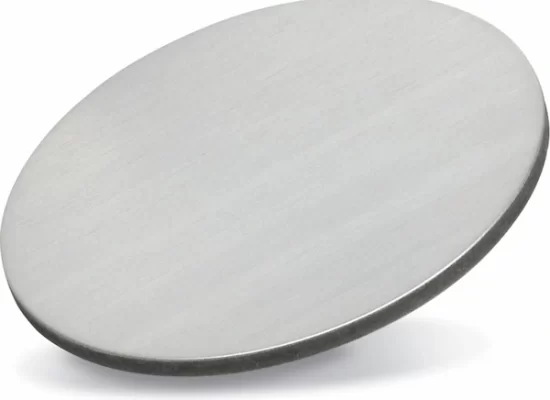
Cobalt (Co) sputtering target is an essential metallic consumable for physical vapor deposition (PVD) thin‑film processes, widely adopted in semiconductor manufacturing, magnetic storage, optoelectronics and precision coating industries. We supply high‑purity cobalt targets from 99.95% (3N5) up to 99.999% (5N), available in disc, plate and custom‑machined shapes matched with magnetron sputtering systems. Strict quality control ensures low impurity and stable film performance. We provide complete test documents including COA and material certificates for industrial buyers, research labs and semiconductor manufacturers. Custom dimensions, bonding service and sample support are available, feel free to contact us for detailed quotation.
Technical Specifications
| Property | Value |
|---|---|
| Product Name | Cobalt (Co) Sputtering Target |
| Brand | Princeton Powder Inc. |
| Primary Keyword | Cobalt Sputtering Target |
| Long-Tail Keyword | high purity cobalt sputtering target |
| Purity Range | 99.9% (3N) to 99.999% (5N) |
| CAS Number | 7440-48-4 |
| Atomic Number | 27 |
| Chemical Symbol | Co |
| Density | 8.9 g/cm³ |
| Melting Point | 1,495°C |
| Grain Size | <100μm average |
| Target Forms | Planar (round, rectangular), Rotary, Custom |
| Backing Options | Monoblock or Bonded to Cu Backing Plates |
Material Properties
| Property | Value |
|---|---|
| Material | Cobalt (Co) |
| Chemical Symbol | Co |
| Atomic Number | 27 |
| Atomic Weight | 58.933 g/mol |
| CAS Number | 7440-48-4 |
| Purity Range | 99.9% (3N) – 99.999% (5N) |
| Density | 8.9 g/cm³ |
| Melting Point | 1,495°C (2,723°F) |
| Boiling Point | 2,927°C (5,301°F) |
| Crystal Structure | Hexagonal Close-Packed (HCP) at room temperature |
| Magnetic Ordering | Ferromagnetic |
| Curie Temperature | 1,115°C |
| Magnetic Moment | 1.6–1.7 Bohr magnetons |
| Specific Gravity | 8.9 |
| Grain Size | < 100μm average |
| Appearance | Silver-gray lustrous metal |
| Electrical Resistivity | 6.24 μΩ·cm at 20°C |
| Thermal Conductivity | 100 W/(m·K) |
| Young’s Modulus | 209 GPa |
Cobalt (Co) Sputtering Target Application
Semiconductor Chip Manufacturing
Magnetic Storage & MRAM Devices
Optoelectronic & Precision Electronic Components
Industrial Functional Thin-Film Coatings
Research & Technical References
Magnetic Properties of Co-Based Thin Films Deposited by Magnetron Sputtering
Journal of Magnetism and Magnetic Materials, 2023
Co thin films deposited via DC magnetron sputtering from high-purity Co targets exhibit controlled coercivity and saturation magnetization, critical for next-generation magnetic recording heads. The study correlates target purity and grain structure with the resulting thin film magnetic domain uniformity and switching field distribution.
Practical takeaway: Princeton Powder's 99.999% pure Co targets with <100μm grain size deliver the uniform microstructure needed for consistent magnetic thin film performance in HDD read/write heads and MRAM memory cells.
Effect of Target Grain Size on Sputtering Deposition Rate and Film Uniformity
Surface and Coatings Technology, 2022
Target grain size below 100μm improves erosion uniformity by 30% and reduces particle formation during PVD deposition. The study used optical emission spectroscopy and Langmuir probe diagnostics to characterize plasma behavior above fine-grain versus coarse-grain sputtering targets, demonstrating that sub-100μm grain targets produce more stable discharge characteristics and fewer arcs.
Practical takeaway: Princeton Powder's <100μm grain Co targets provide faster, cleaner sputtering with fewer defects in your thin films, translating to higher device yield and lower manufacturing cost-per-wafer.
Cobalt-Based Superalloys for High-Temperature Applications: The Role of Purity in Thin Film Performance
Materials Science and Engineering A, 2021
Impurity levels above 100 ppm degrade film adhesion and corrosion resistance in Co-based superalloys. The research systematically varied iron, nickel, and oxygen impurity concentrations in cobalt thin films and measured theimpact on oxide scale adherence, interfacial toughness, and cyclic oxidation resistance at temperatures up to 1,100°C.