
Chromium Nitride Powder (Submicron and nanopowder)
As a dedicated global supplier of advanced transition-metal nitrides, we provide high-purity Chromium Nitride (CrN) submicron and nanopowder (99%–99.9% purity) with controlled particle sizes from 50 nm to 1.0 µm. Synthesized for high phase purity, narrow particle size distribution, and low oxygen impurities, our fine CrN powders deliver exceptional hardness, corrosion resistance, and electrical conductivity. Widely used in wear-resistant thermal spray coatings, sintered cermets, metal matrix composites (MMCs), supercapacitor electrodes, and battery materials, our Chromium Nitride powders are available for R&D samples, OEM custom dispersion/PSD, and bulk industrial orders with full COA, SDS, and factory-direct pricing. Chromium Nitride powder is for sale at a competitive price in the United States, Canada, and Europe.
Formula |
|
CAS Number | 24094-93-7 |
Purity | 99.5% min |
Synonyms | Chromium Nitride nano powder, Chromium Nitride submicrons Powder, Chromium Nitride Powder |
Particle Sizes | -325 mesh or be customized |
Appearance | Gray metal Color |
Melting Point | 1770°C |
Boiling Point: | N/A |
Density | 6.14g/cm3 |
Oxygen content | Be customized |
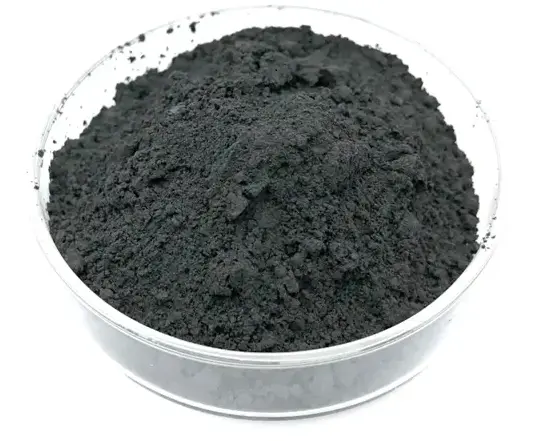
Description of Chromium Nitride Powder
Chromium Nitride (CrN) powder is a gray, hard ceramic material known for its excellent wear resistance and high hardness, typically around 1400-1800 HV. It has good thermal stability, corrosion resistance, and can withstand oxidation at high temperatures. CrN powder is often used in coatings for cutting tools, improving their durability and reducing friction. It’s also applied in protective coatings for aerospace and automotive parts that endure harsh environments. Additionally, it finds use in surface engineering and biomedical devices due to its chemical inertness and biocompatibility.
Our Chromium Nitride powders consist predominantly of the face-centered cubic (fcc) CrN crystal phase with minimal Cr2N secondary phase or free chromium impurities. Available in 99.0% (2N) industrial grades and 99.9% (3N) high-purity grades, every lot is verified via X-ray diffraction (XRD) and elemental analysis to ensure consistent stoichiometry and predictable sintering or electrochemical performance.
Chemical Specifications & Particle Size of Chromium Nitride Powder
| Item | Chemical Composition(%) | ||||||||
| Cr+N | N | Fe | Al | Si | S | P | C | O | |
| ≥ | ≤ | ||||||||
| CrN | 95.0 | 11.0 | 0.20 | 0.20 | 0.20 | 0.02 | 0.01 | 0.10 | 0.20 |
| Particle Size | 40-325mesh, 60-325mesh, 80-325mesh, -325 mesh | ||||||||
Industrial & Research Applications
Thermal Spray, Cold Spray & Slurry-Based Protective Coatings
- Submicron CrN powders serve as feedstock additives for suspension plasma spray (SPS), HVOF coatings, and composite electroplating, imparting corrosion- and erosion-resistant surfaces onto automotive piston rings, hydraulic cylinders, turbine blades, and marine hardware.
Metal Matrix Composites (MMCs) & Sintered Cermet Tooling
- Used as a hard-phase reinforcement in copper-, aluminum-, nickel-, and iron-based metal matrix composites as well as CrN-based cermets, improving high-temperature creep strength, wear resistance, and thermal shock durability without sacrificing fracture toughness.
Electrochemical Energy Storage, Supercapacitors & Battery Anodes
- Thanks to its high electrical conductivity (~1.5 × 10⁴ S/m) and pseudocapacitive surface redox activity, Chromium Nitride nanopowder is widely researched and deployed in high-rate supercapacitor electrodes, conversion-type lithium/sodium-ion battery anodes, and electrocatalysts.
Electromagnetic Shielding & Conductive Ceramic Fillers
- Incorporated into structural ceramics and polymer composites to tailor electrical conductivity, thermal dissipation, and electromagnetic interference (EMI) shielding performance.
Scholar Reference
Chromium-nitride in situ composites with a compositional gradient formed by reactive DC plasma spraying
- Nitrides of transition metals have good wear- and corrosion-resistant properties because of their high hardness and chemical stability. Chromium-nitride coatings can be deposited by ion plating; however, the thin thickness due to the slow deposition rate must be improved for severe wear-resistant applications. The main objective in this paper is to realize good structural control in the processing of chromiumnitride in situ composite coatings formed at a high deposition rate. They were synthesized by reactive low-pressure plasma spraying using elemental chromium powder as a spray material. The transferred arc between the gun electrode and the substrate was used to accelerate the nitriding reaction. The sprayed coatings consist of chromium, Cr2N, and CrN, which have a composition gradient from the substrate interface to the surface.
Frequently Asked Questions About Chromium Nitride Submicron & Nanopowder
1. What is the difference between Chromium Nitride (CrN) nanopowder and submicron powder?
Chromium Nitride nanopowder (50–200 nm) provides a much higher specific surface area and lower sintering onset temperature, making it ideal for supercapacitors, battery electrodes, and nano-reinforced composites. Submicron CrN powder (0.2–1.0 µm) exhibits lower inter-particle agglomeration and easier slurry dispersion, which is preferred for cermet powder metallurgy, metal matrix composites, and suspension thermal spray coatings.
2. What crystal phase and purity levels are available for your CrN powders?
Our standard powders feature the cubic CrN phase (verified by XRD) with 99.0% (2N) and 99.9% (3N) metals-basis purity and strictly controlled oxygen, carbon, and trace metal impurities.
3. How does Chromium Nitride (CrN) compare to Titanium Nitride (TiN) powder?
While Titanium Nitride (TiN) has slightly higher hardness, Chromium Nitride (CrN) offers superior oxidation resistance at elevated temperatures (up to 700–800 °C vs. ~500 °C for TiN), lower internal stress, better corrosion resistance, and higher toughness in wear-resistant coatings and composite matrices.
4. How should submicron and nano Chromium Nitride powders be stored?
Store sealed containers in a cool, dry environment—ideally inside a dry nitrogen cabinet or desiccator—away from strong oxidizers and moisture. Minimize prolonged exposure to ambient air after opening to preserve low oxygen content.