
Hydrolyzed Zinc Hyaluronate Powder — HA-Zn for Acne, Sebum Control & Skin Repair
Hydrolyzed zinc hyaluronate (INCI: Zinc Hydrolyzed Hyaluronate; also known as HA-Zn or zinc hyaluronic acid salt) is a dual-action cosmetic active that combines the moisturizing and barrier-repair properties of low-molecular-weight hyaluronic acid with the anti-inflammatory, antibacterial, sebum-regulating, and wound-healing benefits of zinc. Produced by controlled enzymatic hydrolysis of sodium hyaluronate followed by ion-exchange with zinc ions, this water-soluble powder delivers zinc directly to the skin while HA provides deep hydration and supports tissue regeneration. The hydrolyzed low-molecular-weight structure ensures better skin penetration than high-MW zinc hyaluronate, making it ideal for acne-prone, oily, and sensitive skin formulations. With a controlled zinc content and ≥95% purity, our hydrolyzed zinc hyaluronate is suitable for serums, creams, toners, masks, and scalp care products targeting blemish control, pore refinement, redness reduction, and post-acne healing. As a leading bulk cosmetic ingredient supplier and manufacturer, we provide full documentation, custom molecular weight options, and competitive pricing for skincare formulators worldwide.
Technical Specifications
| Parameter | Specification |
|---|---|
| INCI Name | Zinc Hydrolyzed Hyaluronate |
| Common Names | HA-Zn, Zinc Hyaluronate (hydrolyzed), Hydrolyzed Zinc Hyaluronate, Zinc Hyaluronic Acid Salt |
| Chemical Formula | (Zn(C₁₄H₂₀NO₁₁)₂)ₙ |
| CAS Number | Not separately assigned (HA derivative; referenced under parent HA 9004-61-9) |
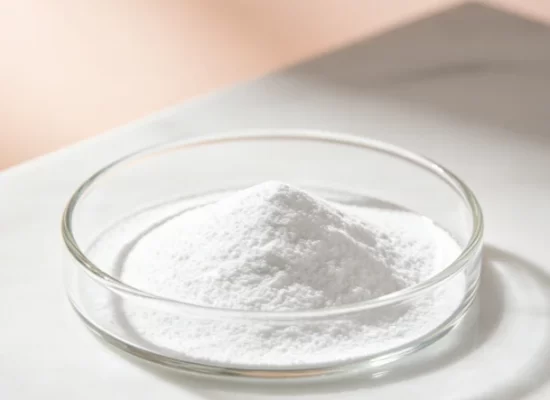
| Appearance | White to off-white powder or granules |
| Purity (GPC / HPLC) | ≥ 95.0% |
| Zinc Content | 3.0% – 8.0% (customizable; standard ~5%) |
| Molecular Weight (Mw) | < 100 kDa (hydrolyzed; customizable: 5 kDa – 100 kDa) |
| pH (1% solution) | 5.5 – 7.5 |
| Loss on Drying | ≤ 10.0% |
| Solubility | Freely soluble in water; soluble in aqueous cosmetic bases |
| Viscosity (1% solution) | Low (hydrolyzed low-MW structure) |
| Heavy Metals | ≤ 20 ppm (Pb, As, Hg, Cd) |
| Residual Solvent | ≤ 1.0% |
| Total Plate Count | ≤ 100 CFU/g |
| Yeast & Mold | ≤ 10 CFU/g |
| Specific Pathogens | E. coli, P. aeruginosa, S. aureus — absent |
| Protein Residue | ≤ 0.5% |
| Origin | Microbial fermentation (Streptococcus equi), vegan, non-GMO |
| Manufacturing Standard | ISO 22716 (cosmetic GMP) |
| Recommended Usage | 0.1% – 0.5% (up to 1.0% for intensive acne treatments) |
What Is Hydrolyzed Zinc Hyaluronate (HA-Zn)?
Hydrolyzed zinc hyaluronate (INCI: Zinc Hydrolyzed Hyaluronate; chemical formula: (Zn(C₁₄H₂₀NO₁₁)₂)ₙ) is the zinc salt of hydrolyzed hyaluronic acid — a dual-functional cosmetic active that merges two well-established skin-beneficial ingredients into a single molecular complex.
The chemistry: Native sodium hyaluronate is first subjected to controlled enzymatic hydrolysis (using hyaluronidase) to reduce its molecular weight, creating low-MW HA fragments with improved skin penetration. The sodium counterions are then replaced with zinc ions (Zn²⁺) via ion-exchange, forming the zinc salt of hydrolyzed hyaluronic acid. Each zinc ion coordinates with the carboxylate groups of two HA disaccharide units, creating a stable, water-soluble complex.
| Component | Role | Key Benefits |
|---|---|---|
| Hydrolyzed HA | Carrier + moisturizer | Deep hydration, barrier repair, softening, improved penetration, wound healing support |
| Zinc (Zn²⁺) | Active therapeutic | Anti-inflammatory, antibacterial (C. acnes), sebum regulation (5α-reductase inhibition), antioxidant, wound healing, collagen synthesis support, UV damage repair |
Benefits & Mechanisms — Why HA-Zn for Acne & Oily Skin
1. Antibacterial Activity Against Cutibacterium acnes
- Zinc ions disrupt bacterial cell membrane integrity and inhibit essential bacterial enzymes, reducing C. acnes proliferation in the pilosebaceous unit.
- Unlike benzoyl peroxide or topical antibiotics, zinc has a low risk of inducing bacterial resistance and is non-irritating at cosmetic concentrations.
- The hydrolyzed HA carrier delivers zinc directly into the follicular opening, where C. acnes resides.
2. Sebum Regulation (Oil Control)
- Zinc inhibits 5α-reductase, the enzyme that converts testosterone to dihydrotestosterone (DHT) — a key driver of sebaceous gland activity and sebum production.
- By reducing DHT levels locally, zinc decreases excess sebum secretion, reducing shine, greasiness, and pore clogging.
- Clinical studies of topical zinc formulations demonstrate measurable reduction in sebum production after 4–8 weeks of regular use.
3. Anti-Inflammatory & Redness Reduction
- Zinc modulates inflammatory cytokine production, reducing TNF-α, IL-1β, and IL-6 in activated keratinocytes and immune cells.
- It inhibits NF-κB signaling, a master regulator of inflammation.
- This reduces the redness, swelling, and pain associated with inflammatory acne lesions (papules, pustules, nodules) and soothes irritated, sensitive skin.
- The HA component further supports anti-inflammatory action by binding to CD44 receptors and modulating immune cell behavior.
4. Pore Refinement & Keratinization Regulation
- Zinc helps normalize follicular keratinization, reducing the formation of microcomedones (the precursors to acne lesions).
- By reducing excess sebum and supporting normal desquamation, zinc helps minimize the appearance of enlarged pores.
- The low-MW HA softens the stratum corneum and supports healthy epidermal turnover.
5. Wound Healing & Post-Acne Repair
- Zinc is an essential cofactor for numerous metalloenzymes involved in wound healing, including matrix metalloproteinases (MMPs), DNA polymerases, and collagenases.
- It promotes fibroblast proliferation, collagen synthesis, and re-epithelialization, accelerating the healing of acne lesions and reducing the risk of post-inflammatory hyperpigmentation (PIH) and scarring.
- HA provides a hydrated extracellular matrix environment that supports cell migration and tissue regeneration.
- This dual action makes HA-Zn particularly valuable for “repair” products targeting post-acne marks and overall skin recovery.
6. Antioxidant & UV Damage Repair
- Zinc acts as an antioxidant by stabilizing cell membranes and reducing reactive oxygen species (ROS) generated by UV exposure and inflammation.
- It supports DNA repair mechanisms and helps mitigate photoaging.
- Unlike chemical UV filters, zinc does not absorb UV radiation but supports the skin’s endogenous defense and repair systems.
7. Barrier Repair & Hydration
- The hydrolyzed HA component provides deep, multi-layer hydration, supporting the skin barrier and reducing transepidermal water loss (TEWL).
- A healthy barrier is essential for acne-prone skin, as barrier dysfunction can exacerbate inflammation and increase susceptibility to irritation from acne treatments (retinoids, benzoyl peroxide, AHAs).
- HA-Zn allows formulators to combine active acne treatment with barrier support — avoiding the “over-drying” common with traditional acne ingredients.
8. Scalp Health & Hair Care
- Zinc’s anti-inflammatory and sebum-regulating properties benefit the scalp, reducing dandruff, seborrheic dermatitis, and scalp acne.
- By supporting a healthy scalp environment and reducing DHT locally, zinc may contribute to healthier hair growth and reduced hair shedding.
- Suitable for scalp serums, tonics, and anti-dandruff shampoos.
Frequently Asked Questions Zinc Hydrolyzed Hyaluronate
Q: Is hydrolyzed zinc hyaluronate vegan and cruelty-free?
A: Yes. Our hydrolyzed zinc hyaluronate is produced from microbial fermentation-derived hyaluronic acid (Streptococcus equi), not from animal sources (rooster combs, umbilical cords). The enzymatic hydrolysis uses hyaluronidase enzymes, and the zinc ion exchange uses pharmaceutical-grade zinc chloride or zinc sulfate — no animal-derived reagents. We provide vegan and cruelty-free declarations upon request.
Q: Can HA-Zn be used in hair and scalp products?
A: Absolutely. Zinc’s anti-inflammatory, sebum-regulating, and mild antifungal properties make it excellent for scalp care. It can help reduce dandruff and seborrheic dermatitis (by reducing Malassezia yeast overgrowth and scalp inflammation), control excess scalp oil, and create a healthier environment for hair growth. Typical usage is 0.1–0.5% in scalp serums, tonics, and anti-dandruff shampoos. It can be combined with zinc pyrithione, ketoconazole, salicylic acid, or piroctone olamine for enhanced anti-dandruff efficacy. For hair growth support, combine with niacinamide, panthenol, biotin, peptides (copper peptide GHK-Cu), or rosemary extract.
Q: What is the recommended usage level for acne treatment?
A: For general acne-prone and oily skin maintenance, 0.1–0.3% is effective and well-tolerated in serums, creams, and toners. For targeted acne treatment or spot treatments, 0.3–0.5% provides stronger antibacterial and anti-inflammatory action. For intensive professional-grade treatments, up to 1.0% may be used, but we recommend starting lower and monitoring for irritation. Usage above 1.0% is not recommended due to diminishing returns and increased potential for skin dryness or irritation. Always formulate with adequate hydration (HA, glycerin, panthenol) to support the barrier.