
Spherical Brass Powder (CuZn20, CuZn30, CuZn40) — Gas-Atomized for Thermal Spray & Additive Manufacturing
Copper-Zinc alloy powder, commonly known as brass powder, is a metallic alloy composed primarily of copper (Cu) and zinc (Zn). Our CuZn powder is available in spherical or irregular morphology, compositions of CuZn20, CuZn30, and CuZn40, and customizable particle sizes for optimal performance in additive manufacturing, sintering, and surface coatings.
Princeton Powder is a leading supplier of spherical copper alloy powder. CuSn10 alloy powder, CuNi alloy powder, CuAl alloy bronze powder, CuCrNb powder, and CuCrZr powder are available in 15-53 um or customized sizes.
Formula | Brass, copper zinc alloy powder |
Synonyms | Brass spherical particle, Spherical brass powder, copper zinc alloy powder, Brass thermal spray powder, Brass gas atomized powder |
Appearance | Black Powder |
Particle Size | 15-45 um, 45-105 um, can be customized upon request |
Melting Point | 930°C |
Density | 8.73 g/cm 3 |
Tap Density | 3.7 g/cm³ |
Apparent density | 2.9-3.3 g/cm3 |
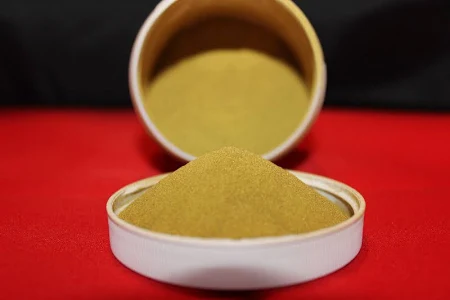
Product Overview
Spherical brass powder (CuZn alloy) is a gas-atomized copper-zinc alloy powder available in three standard compositions — CuZn20 (80/20), CuZn30 (70/30), and CuZn40 (60/40) — engineered for thermal spray coating, metal additive manufacturing (LPBF/SLM), powder metallurgy pressing, and brazing filler metal applications. The spherical particle morphology ensures excellent powder flowability (Hall flow <15 s/50g) for consistent AM powder spreading and uniform thermal spray feed rates. Princeton Powder supplies in particle sizes from 15-45µm (LPBF) to 75-150µm (HVOF/plasma spray).
CuZn20 vs CuZn30 vs CuZn40 — Which Grade for Your Application?
| Grade | Cu% | Zn% | Density | Melting | Best For |
|---|---|---|---|---|---|
| CuZn20 | 80 | 20 | 8.67 | 980-1000°C | Brazing filler metal, highest conductivity, conductive coatings |
| CuZn30 | 70 | 30 | 8.53 | 940-980°C | Best all-around — thermal spray, AM, PM pressing, general purpose |
| CuZn40 | 60 | 40 | 8.41 | 900-940°C | Max corrosion resistance, brightest gold for decorative coatings |
Chemical Composition & Specifications
Particle Size Availability
| PSD Range | Application | Key Advantage |
|---|---|---|
| 15-45 µm | LPBF/SLM, binder jetting AM | >99% achievable density, 30-60µm layer thickness |
| 45-106 µm | EBM, DED, laser cladding | Higher deposition rates, reduced cost per kg |
| 75-150 µm | HVOF/Plasma spray, PM pressing | High deposition efficiency, optimal feeder flow |
Custom PSD available. All ranges verified by laser diffraction with D10/D50/D90 per lot.
CuZn20 Composition
Product | Copper-Zinc CuZn Spherical Alloy Brass Powder | |||||||
Purity | >99.5% | |||||||
Particle Size | 15-45 um, 45-105 um, can be customized upon request | |||||||
Chemical Composition (ppm) | ||||||||
Zn | Mg | Cr | Ni | Bi | Sb | Cu | Al | |
22.44 | 0.001 | 0.005 | 0.009 | <0.001 | <0.001 | 76.29 | <0.001 | |
Co | Cd | Pb | Sn | As | Fe | O | ||
0.002 | <0.001 | <0.001 | 0.015 | <0.001 | 0.042 | 0.051 | ||
Material Properties by Grade
| Property | CuZn20 | CuZn30 | CuZn40 |
|---|---|---|---|
| Density | 8.67 g/cm³ | 8.53 g/cm³ | 8.41 g/cm³ |
| Melting Range | 980-1000°C | 940-980°C | 900-940°C |
| Conductivity | ~33% IACS | ~27% IACS | ~22% IACS |
| Corrosion Resistance | Good | Better | Best (marine/industrial) |
| Color | Copper-gold | Gold | Bright gold |
Applications
Thermal Spray Coatings
Brass powders — particularly CuZn30 and CuZn40 — are widely used in HVOF and plasma spray for corrosion-resistant, antimicrobial, and decorative coatings on steel structures, architectural hardware, and marine components. Published research (Surface & Coatings Technology, 2018) achieved 92% deposition efficiency with <2% porosity using 45-75µm CuZn30. Our 45-106µm and 75-150µm PSD ranges provide optimal particle size for HVOF equipment.
Metal Additive Manufacturing (3D Printing)
Spherical CuZn30 powder at 15-45µm is the standard feedstock for LPBF/SLM printing of brass electrical connectors, heat exchangers, decorative consumer goods, and antimicrobial touch surfaces. Published research (Mater. Sci. Eng. A, 2020) achieved >99% density with 15-45µm gas-atomized CuZn30, producing UTS comparable to wrought brass. For production AM fleets, our 15-45µm CuZn30 is supplied in bulk with lot-to-lot consistency verified.
Powder Metallurgy & Brazing
75-150µm brass powder is used in press-and-sinter PM for self-lubricating bearings, gears, and lock components. CuZn20 (80/20) is the preferred brazing filler metal composition due to higher Cu content providing better wetting on steel and Cu alloy substrates. Custom Cu:Zn ratios available for specific brazing requirements.
Frequently Asked Questions
CuZn20 vs CuZn30 vs CuZn40 — which grade?
CuZn20: highest conductivity, best for brazing. CuZn30: best all-around for thermal spray, AM, PM. CuZn40: max corrosion resistance, brightest gold for decorative coatings. Custom ratios available.
What particle size for LPBF 3D printing?
15-45µm for LPBF/SLM. 45-106µm for EBM/DED. 75-150µm for HVOF/plasma spray. Custom PSD for specific AM machines.
Is brass powder suitable for thermal spray?
Yes — CuZn30 and CuZn40 at 45-150µm achieve >90% deposition efficiency with <2% porosity in HVOF and plasma spray. Ideal for architectural, marine, and antimicrobial coatings.
Can you customize the Cu:Zn ratio?
Yes — custom ratios (CuZn15, CuZn35, CuZn45) for specific brazing, color, or corrosion requirements. Higher MOQ may apply. Contact with your target composition.
What documentation is provided?
ICP-OES CoA, laser diffraction PSD, SEM morphology, Hall flow rate, ISO 9001 CoC with every order. Additional XRD, titration, microbial testing available.
MOQ and lead time?
MOQ: 1 kg standard grades. Lead: 1-2 weeks stock; 3-4 weeks custom. Bulk pricing 100 kg+. Contact +1 (646) 749-1791 for same-day quote.
Research & Technical References
The following peer-reviewed research demonstrates brass powder performance. Princeton Powder brass meets the material specifications used in these studies.
HVOF-Sprayed CuZn30: Microstructure & Deposition Efficiency
Surface & Coatings Technology (Elsevier), 2018 — 92% deposition efficiency, <2% porosity with 45-75µm CuZn30. Practical takeaway: Our 45-106µm CuZn30 targets the PSD validated for high-efficiency thermal spray brass coatings.
LPBF of CuZn30 Brass: Process-Structure-Property
Materials Science & Engineering A (Elsevier), 2020 — >99% density with 15-45µm CuZn30, UTS comparable to wrought brass. Practical takeaway: Our 15-45µm CuZn30 with tight Zn control supports the validated LPBF process window.
Contact for full reference list and application-specific recommendations.