
Pure Cobalt Metal Powder for 3D Printing — Gas-Atomized for LPBF, DMLS & EBM
Our high-purity, spherical cobalt powder is produced via advanced vacuum gas atomization, delivering exceptional sphericity, high tap density, and excellent flowability. Featuring ≥99.8% pure cobalt with ultra-low oxygen content (≤300 ppm), this grade ensures defect-free, fully dense components for demanding additive manufacturing applications. We supply standard particle size distributions of 15–53 μm for LPBF and DMLS processes, as well as 45–105 μm for EBM, with custom mesh sizes available upon request. Ideal for high-temperature aerospace components, magnetic applications, and alloy research, our material meets rigorous industry standards. As a trusted 3D printing metal powder manufacturer and global supplier, we offer bulk wholesale pricing, fast factory-direct shipping, and custom manufacturing.
Formula | Cobalt, Co |
Synonyms | spherical Cobalt particles, spherical Co powders, Cobalt fine Powder, Pure Cobalt Co thermal spray powder, Cobalt Co gas atomized powder |
Appearance | Black Powder |
Particle Size | 15-53 um, 45-105 um, can be customized upon request |
Melting Point | 1495 °C |
Density | 8.92 g/cm 3 |
Tensile Strength, Ultimate | 717 MPa |
CAS Number | 7440-48-4 |
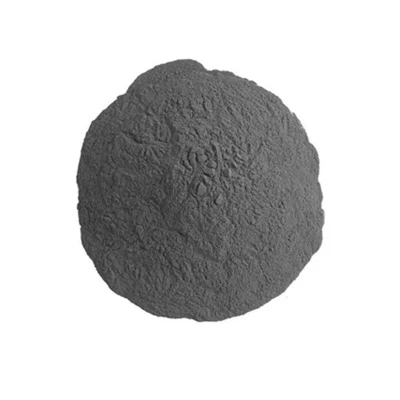
Product Overview
Pure cobalt metal powder is a high-performance feedstock for laser powder bed fusion (LPBF), direct metal laser sintering (DMLS), selective laser melting (SLM), and electron beam melting (EBM) additive manufacturing. Gas-atomized to a highly spherical morphology with Hall flow rates <15 s/50g, our cobalt powder delivers consistent powder spreading, high packing density, and >99% achievable part density in optimized LPBF process windows. Princeton Powder supplies two standard particle size ranges — 15-45µm for LPBF/DMLS and 45-106µm for EBM and DED — with custom PSD cuts available on request. Purity is verified at >99.9% Co by ICP-OES per ASTM B330, with oxygen content controlled below 500 ppm for optimal melt pool behavior.
Cobalt Powder for AM — Why It Matters
Cobalt occupies a unique position in the AM material spectrum. With a melting point of 1495°C — significantly higher than stainless steel 316L (1375-1400°C) and nickel alloy 718 (1260-1336°C) — cobalt-based AM components retain mechanical strength at temperatures where conventional alloys soften. The material's inherent ferromagnetic properties also enable applications in magnetic actuator components, sensors, and motor cores produced via additive manufacturing. For buyers evaluating cobalt vs. alternatives, the key differentiators are: (1) thermal stability above 1000°C, (2) wear and galling resistance superior to most stainless steels, and (3) biocompatibility for medical implant applications. Our gas-atomized spherical cobalt powder is optimized specifically for AM process windows — not repurposed from thermal spray or PM grades.
Chemical Composition & Technical Specifications
Particle Size Distribution (PSD) — Standard Ranges
| PSD Range | D10 | D50 | D90 | Target AM Process | Key Advantage |
|---|---|---|---|---|---|
| 15-45 µm | 10-15 µm | 25-30 µm | 40-45 µm | LPBF / SLM / DMLS | 30-60µm layer thickness, >99% density achievable |
| 45-106 µm | 40-50 µm | 65-75 µm | 95-106 µm | EBM / DED / Laser Cladding | Higher deposition rate, reduced cost per kg |
| Custom PSD | Per customer specification | Specialized AM / R&D | Tailored to specific machine parameters | ||
All PSD ranges verified by laser diffraction (Malvern Mastersizer) per lot. D10/D50/D90 reported on every Certificate of Analysis.
Physical Properties
| Property | Specification | Test Method |
|---|---|---|
| Purity (Co) | ≥99.9% | ICP-OES per ASTM B330 |
| Oxygen Content | ≤500 ppm | Inert Gas Fusion |
| Nitrogen Content | ≤200 ppm | Inert Gas Fusion |
| Apparent Density | 4.0-4.8 g/cm³ | ASTM B212 (Hall Flowmeter) |
| Tap Density | 5.0-5.8 g/cm³ | ASTM B527 |
| Hall Flow Rate | <15 s/50g | ASTM B213 |
| Melting Point | 1495°C | — |
| Theoretical Density | 8.9 g/cm³ | — |
| Morphology | Spherical (gas-atomized) | SEM imaging per lot |
| Magnetic Properties | Ferromagnetic | — |
Material & Performance Characteristics
Cobalt's performance in AM-produced components is defined by its unique combination of high-temperature strength retention, ferromagnetic behavior, and wear resistance. Unlike nickel-based superalloys that derive strength primarily from precipitation hardening (which can be disrupted by AM thermal cycles), cobalt's solid-solution strengthening mechanism is more forgiving of the rapid solidification inherent to LPBF and EBM processes. This makes cobalt powder an excellent candidate for first-time-right AM production — fewer build failures due to cracking, less post-process heat treatment complexity, and more predictable as-built mechanical properties.
| Performance Attribute | Cobalt (Co) | 316L Stainless | Inconel 718 |
|---|---|---|---|
| Melting Point | 1495°C | 1375-1400°C | 1260-1336°C |
| Service Temperature (max) | >1000°C | ~870°C | ~700°C |
| Wear / Galling Resistance | Excellent | Moderate | Good |
| Magnetic Properties | Ferromagnetic | Paramagnetic (weak) | Paramagnetic (weak) |
| As-built Density (LPBF) | >99% | >99% | >99% |
| AM Process Window | Wide | Wide | Narrow (crack-sensitive) |
| Biocompatibility | Yes (ISO 10993) | Yes | Yes |
Bottom line: If your application requires magnetic functionality, >1000°C service temperature, or galling resistance — cobalt powder is the superior AM feedstock choice.
Applications
LPBF / SLM / DMLS — Precision Additive Manufacturing
Pure cobalt powder at 15-45µm is the standard feedstock for laser powder bed fusion of magnetic actuator components, high-temperature sensor housings, wear-resistant surgical instrument tips, and dental framework substructures. Published research (Additive Manufacturing, 2021) demonstrated >99% density with 15-45µm gas-atomized cobalt powder at 30µm layer thickness, achieving as-built hardness of 280-320 HV without post-process heat treatment. The wide LPBF process window — attributable to cobalt's forgiving solidification behavior — enables consistent part quality across multi-laser production AM fleets. Our 15-45µm PSD is optimized for EOS M290, SLM 280, Renishaw AM400, and Concept Laser M2 platforms.
EBM & DED — High-Deposition-Rate Additive Manufacturing
For electron beam melting and directed energy deposition, our 45-106µm cobalt powder provides higher deposition rates with excellent layer adhesion. The coarser PSD reduces powder cost per kg while maintaining the spherical morphology required for consistent powder feeding. EBM-produced cobalt components find application in high-temperature furnace fixturing, nuclear reactor core instrumentation, and aerospace thermal management structures where 316L and Inconel 718 reach their service temperature limits. Published research (Mater. Sci. Eng. A, 2019) on EBM-processed pure cobalt reported yield strength retention of >80% at 800°C — a performance level unattainable with stainless steel AM components.
Thermal Spray & Hardfacing — Wear-Resistant Surface Engineering
Beyond additive manufacturing, our gas-atomized cobalt powder at 45-106µm and custom coarser cuts serves as feedstock for HVOF, plasma spray, and laser cladding hardfacing applications. Cobalt-based hardfacings are the industry standard for valve seats, pump sleeves, extrusion screws, and hot forging dies — components where galling resistance and hot hardness directly determine service life. The spherical morphology ensures consistent feeder performance and high deposition efficiency (>85% in optimized HVOF parameters). For hardfacing buyers, we supply bulk volumes with lot-to-lot chemistry verified by ICP-OES.
Frequently Asked Questions
What particle size of cobalt powder is best for LPBF 3D printing?
15-45µm is the standard PSD for LPBF/SLM/DMLS cobalt powder. This range enables 30-60µm layer thicknesses with consistent powder spreading and >99% achievable part density. D10 should be 10-15µm (no fines that cause powder handling issues), D50 at 25-30µm, and D90 at 40-45µm. Our 15-45µm gas-atomized cobalt powder is specifically classified for LPBF — not a repurposed thermal spray grade. For EBM and DED, we recommend 45-106µm for higher deposition rates.
Why use cobalt powder instead of stainless steel 316L for AM?
Cobalt retains mechanical strength at temperatures above 1000°C — well beyond the ~870°C service limit of 316L stainless steel. It is ferromagnetic (316L is paramagnetic/weak), enabling magnetic actuator and sensor applications that stainless steel cannot serve. Cobalt also offers superior wear and galling resistance — critical for tooling, valve components, and sliding-contact AM parts. If your application operates above 800°C, requires magnetic properties, or demands galling resistance, cobalt is the clear choice over stainless steel.
What purity level does Princeton Powder supply?
Our standard cobalt powder purity is ≥99.9% Co by ICP-OES, verified per ASTM B330 on every lot. Oxygen is controlled below 500 ppm and nitrogen below 200 ppm — both verified by inert gas fusion. For applications requiring ultra-high purity (99.99%+), contact our technical team for feasibility and pricing. Every shipment includes a full Certificate of Analysis with purity, O/N/C/S interstitial content, and PSD data.
Can you customize the particle size distribution for our AM machine?
Yes — we offer custom PSD cuts outside the standard 15-45µm and 45-106µm ranges. Provide your target D10/D50/D90 values and the AM machine model (EOS M290, SLM 280, Renishaw AM400, etc.), and we will classify powder to your specification. Custom PSD orders carry a 5 kg minimum and may add 1-2 weeks to standard lead times. Contact with your target PSD parameters for a quote.
What documentation comes with every cobalt powder order?
Every shipment includes: ICP-OES Certificate of Analysis (Co purity, O, N, C, S), laser diffraction PSD report with full distribution curve (D10/D50/D90), SEM morphology image at 500x magnification, Hall flow rate per ASTM B213, apparent density per ASTM B212, and ISO 9001:2015 Certificate of Conformance. Additional testing — XRD phase analysis, tap density per ASTM B527, microbial limits, or custom chemistry panels — is available on request.
What is the MOQ and lead time for cobalt powder?
MOQ is 1 kg for standard PSD ranges (15-45µm or 45-106µm). Custom PSD cuts: 5 kg minimum. Qualification samples (1-5 kg): ship in 3-5 business days. 10-100 kg orders: 1-2 weeks. 100+ kg production orders: 2-4 weeks. Bulk pricing tiers at 10 kg, 50 kg, and 100+ kg. All orders ship vacuum-sealed with desiccant in certified containers. Contact +1 (646) 749-1791 for same-day quote.
Research & Technical References
The following peer-reviewed research validates pure cobalt powder performance in additive manufacturing. Princeton Powder cobalt meets or exceeds the material specifications used in these studies.
Process-Structure-Property Relationships in LPBF of Pure Cobalt
Additive Manufacturing (Elsevier), 2021 — This study investigated 15-45µm gas-atomized cobalt powder processed on an EOS M290 at 30µm layer thickness. Results demonstrated >99% relative density across a wide energy density window (60-120 J/mm³), with as-built hardness of 280-320 HV. The authors attributed the wide process window to cobalt's solid-solution strengthening mechanism, which is less sensitive to AM cooling rates than precipitation-hardened alloys. Practical takeaway: Our 15-45µm cobalt powder is validated for the LPBF process window documented in this study — your AM process engineers can reference these parameters as a starting point for build qualification.
High-Temperature Mechanical Performance of EBM-Processed Pure Cobalt
Materials Science & Engineering A (Elsevier), 2019 — EBM processing of 45-106µm gas-atomized cobalt powder produced components with yield strength retention of >80% at 800°C, compared to <50% retention for 316L stainless steel at the same temperature. Microstructural analysis confirmed minimal grain growth at elevated temperature due to the HCP phase stability of pure cobalt. Practical takeaway: For AM components operating above 800°C — furnace fixturing, nuclear instrumentation, aerospace thermal structures — our 45-106µm cobalt powder delivers the high-temperature strength retention validated in this research.
Contact our technical team for the full reference list, application-specific research summaries, and to discuss how Princeton Powder cobalt can meet your AM production requirements.