
Co/Fe/B Sputtering Target (Co40Fe40B20) — Cobalt Iron Boron for Amorphous Soft Magnetic Films
Our Co40Fe40B20 cobalt‑iron‑boron sputtering target is specially optimized for PVD deposition of high‑performance amorphous soft‑magnetic thin films. Featuring 40 wt% cobalt, 40 wt% iron and 20 wt% boron, this alloy delivers superior saturation magnetization, low coercivity and excellent amorphous‑forming capability. High‑density, fine‑grained target microstructure ensures stable sputtering rate, minimal particle defects and homogeneous film thickness across substrates. Sputtered Co‑Fe‑B amorphous layers are widely utilized for magnetic sensors, MRAM, high‑frequency inductors and spin‑electronic components. Tight compositional tolerance and low gaseous impurities are maintained through advanced metallurgical processing, offering dependable batch repeatability for industrial‑scale magnetron sputtering production.
CoFeB Sputtering Targets Technical Specifications
| Parameter | Value |
| Product | Co/Fe/B Sputtering Target — Cobalt–Iron–Boron alloy (Co40Fe40B20) for amorphous soft magnetic thin films |
| Composition | Co40Fe40B20 (40:40:20 at%) standard | Co20Fe60B20, Co32Fe48B20, Co60Fe20B20, 60:20:20 and custom ratios |
| Component Elements | Cobalt (Co, Z=27) + Iron (Fe, Z=26) + Boron (B, Z=5) |
| CAS | Co 7440-48-4 / Fe 7439-89-6 / B 7440-42-8 (alloy — no single CAS) |
| Purity Grades | 99.9% (3N) | 99.95% (3N5) | up to 99.99% (4N) |
| Density | ~8.8 g/cm³ |
| Melting Point | ~1,250°C |
| Crystal Structure | Amorphous (as-deposited) → bcc CoFe + Fe-B (after annealing at 300–400°C) |
| Key Magnetic Property | Amorphous soft magnetic: low coercivity, high permeability, high spin polarization (~70%) |
| Grain Size | N/A (amorphous as-deposited); <100 μm for crystallized films |
| Target Forms | Planar round, planar rectangular, rotary targets, bonded assemblies |
| Backing Plate | OFHC Copper / Ti backing — indium bonding, elastomer bonding, or solder bonding |
| Manufacturing | Vacuum melting / powder metallurgy → HIP → machining → inspection |
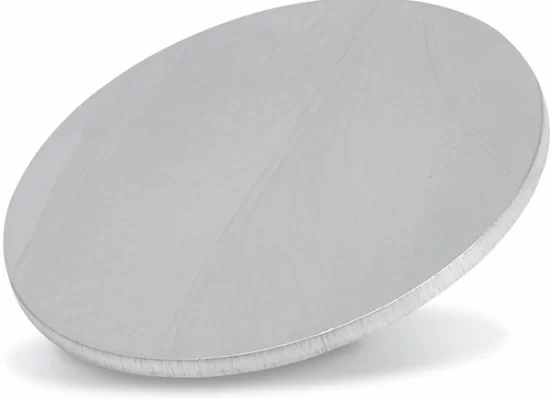
Product Overview
CoFeB sputtering targets — also known as cobalt iron boron sputtering targets — are high-purity cobalt–iron–boron alloy consumable cathode materials used in physical vapor deposition (PVD), primarily DC/RF magnetron sputtering, to deposit amorphous soft magnetic thin films for spintronic and magnetic recording devices. Princeton Powder supplies the standard Co40Fe40B20 sputtering target (40:40:20 atomic percent) — along with Co20Fe60B20, Co32Fe48B20, Co60Fe20B20, and fully custom ratios — at purities of 99.9% (3N) to 99.95% (3N5), with up to 99.99% (4N) available. CAS: Co 7440-48-4 / Fe 7439-89-6 / B 7440-42-8.
CoFeB is the workhorse high-spin-polarization soft magnetic material of the spintronics era: as-deposited films are amorphous with low coercivity, high permeability, and a spin polarization near 70%, making them ideal free and reference layers for magnetic tunnel junctions (MTJs) in MRAM. As a CoFeB sputtering target supplier with ISO 9001:2015 certification, Princeton Powder delivers bonded CoFeB sputtering targets on OFHC copper or titanium backing plates for optimal thermal management, plus planar and rotary configurations. Whether you need a custom CoFeB sputtering target for a perpendicular-MTJ line or a small R&D target for spintronics research, our team adjusts composition and microstructure to your exact deposition recipe. Buy CoFeB sputtering targets directly from the manufacturer with application-specific process guidance included.
Applications
CoFeB for MRAM — Magnetic Tunnel Junction Free & Reference Layers
CoFeB for MRAM is the flagship application: Co40Fe40B20 films serve as the free and reference layers of magnetic tunnel junctions (MTJs) in STT-MRAM and SOT-MRAM memory cells. When deposited on a crystalline MgO tunnel barrier and annealed, amorphous CoFeB crystallizes into a coherent bcc phase with a high spin polarization (~70%) that produces the large tunnel magnetoresistance (TMR) ratios essential for high-density, low-power memory. The soft magnetic character (low coercivity, high permeability) enables low switching currents, while the high spin polarization maximizes the read signal.
Peer-reviewed research confirms CoFeB's behavior: annealing studies (IEEE, 2018) show that post-deposition annealing crystallizes ferromagnetic CoFeB and improves its magnetic and transport properties, while thin (≤20 nm) films retain the softest magnetic character needed for MTJ free layers. Princeton Powder's Co40Fe40B20 sputtering targets deliver the composition accuracy and oxygen/boron control that reproduce these results in production. Pair CoFeB targets with our MgO barrier targets for complete MTJ stacks.
CoFeB for Recording Heads & Sensors — High-Bs Soft Magnetic Films
CoFeB for recording heads and magnetic sensors leverages the alloy's high saturation magnetization and soft magnetic behavior. In magnetic recording write heads, high-Bs CoFeB films form the write pole that concentrates magnetic flux to switch the recording medium at ever-higher areal densities. In magnetic field sensors, the CoFeB sputter target supplies the low-coercivity, high-permeability sensing layer whose magnetization responds linearly to external fields.
Research on obliquely sputtered CoFeB amorphous films (Journal of Magnetism and Magnetic Materials) shows the permeability spectrum — and therefore sensor sensitivity — can be tuned through deposition geometry and composition. This tunability makes custom CoFeB sputtering targets valuable for sensor designers optimizing frequency response and sensitivity. Compare with our NiFe (permalloy) targets for lower-Bs, lower-magnetostriction sensor layers.
CoFeB for High-Frequency & EMI Applications — Soft Magnetic Thin Films
For high-frequency and electromagnetic interference (EMI) applications, the CoFeB sputter target deposits soft magnetic thin films with tunable ferromagnetic resonance and broad absorption bandwidth — used in EMI shielding and suppression components for mobile and RF electronics. The amorphous CoFeB films provide high permeability at gigahertz frequencies with low eddy-current loss, and their magnetic properties can be engineered by adjusting the Co:Fe:B ratio and deposition conditions.
Studies of the magnetic and electric properties of amorphous Co40Fe40B20 thin films (Journal of Nanomaterials, 2012) confirm the alloy's soft magnetic character and high-frequency response. Princeton Powder supplies small research-format targets (1″–3″ diameter) with full CoA and ICP-OES composition verification, enabling systematic studies across the Co–Fe–B composition space. Browse our full sputtering target catalog for matching magnetic and protective targets.
Frequently Asked Questions About Custom CoFeB Sputtering Target
What is a CoFeB sputtering target used for?
A CoFeB (cobalt–iron–boron) sputtering target is used in magnetron sputtering to deposit amorphous soft magnetic thin films for three main applications: (1) MRAM / spintronics — free and reference layers in magnetic tunnel junctions (MTJs) for STT-MRAM and SOT-MRAM; (2) magnetic sensors and recording heads — high-Bs write poles and low-coercivity sensing layers; and (3) high-frequency / EMI devices — soft magnetic films for shielding and suppression. CoFeB is valued for its high spin polarization (~70%) and amorphous soft magnetic character.
How is a CoFeB sputtering target made?
CoFeB sputtering targets are made by vacuum melting or powder metallurgy of precisely weighed high-purity cobalt, iron, and boron feedstock, followed by hot isostatic pressing (HIP) to close porosity and achieve uniform composition, then CNC machining to final dimensions. Vacuum processing is essential because Fe and Co oxidize readily, and oxygen contamination degrades the film's soft magnetic properties and spin polarization. Every target ships with a full CoA and ICP-OES composition report.
What is the composition of CoFeB?
The standard composition is Co40Fe40B20 (40:40:20 atomic percent), but other ratios are common, including Co20Fe60B20, Co32Fe48B20, Co60Fe20B20, and 60:20:20. The exact Co:Fe:B ratio controls the film's saturation magnetization, magnetostriction, and crystallization temperature, so composition is chosen to match the device design. Princeton Powder supplies both the standard ratio and fully custom compositions.
Why is CoFeB amorphous?
CoFeB is amorphous as-deposited because boron acts as a glass-forming element — it disrupts the crystalline ordering of the CoFe alloy during deposition. This amorphous state is highly desirable: it produces films with low coercivity, high permeability, and a smooth interface with MgO tunnel barriers. Upon annealing at 300–400°C, boron segregates and the film crystallizes into a bcc CoFe phase that retains high spin polarization — the basis for high TMR in MTJs.
What is the annealing temperature for CoFeB?
CoFeB is typically annealed at 300–400°C to crystallize the amorphous film into the bcc CoFe phase. This annealing step is critical for MTJ fabrication: it drives boron segregation, establishes the crystalline orientation on the MgO barrier, and maximizes the tunnel magnetoresistance. The optimal annealing temperature and time depend on the exact composition, film thickness, and device stack.
What composition of CoFeB target do I need for MRAM?
The standard choice for MRAM free and reference layers is Co40Fe40B20, which balances high spin polarization with good thermal stability and low magnetostriction when paired with MgO barriers. Other ratios (e.g., Co20Fe60B20) may be chosen to tune saturation magnetization or magnetostriction for specific stack designs. Princeton Powder's engineering team can recommend the optimal composition for your perpendicular-MTJ or in-plane-MTJ architecture.
Research & Technical References
The following peer-reviewed research validates the performance of CoFeB alloy sputtering targets and CoFeB thin films in spintronic, magnetic sensor, and high-frequency applications. Princeton Powder CoFeB targets meet or exceed the material specifications used in these studies.
Magnetic and Electric Properties of Amorphous Co40Fe40B20 Thin Films
Journal of Nanomaterials, 2012 — Characterized the magnetic and electrical properties of amorphous Co40Fe40B20 thin films, confirming their soft magnetic character (low coercivity, high permeability) and high-frequency response. Practical takeaway: Princeton Powder's Co40Fe40B20 targets reproduce the amorphous soft magnetic behavior validated in this study.
Post-Deposition Annealing Effects on Ferromagnetic CoFeB Thin Films
IEEE, 2018 — Investigated how post-deposition annealing crystallizes ferromagnetic CoFeB and improves its magnetic and transport properties, a key step for achieving high tunnel magnetoresistance in MTJs. Practical takeaway: CoFeB's spintronic performance is annealing-dependent — target composition and purity control determine how reliably this occurs in your process.
Double peaks of the permeability spectra of obliquely sputtered CoFeB amorphous films
Journal of Magnetism and Magnetic Materials, 2018 — Showed that the permeability spectrum of obliquely sputtered CoFeB amorphous films can be tuned through deposition geometry, affecting sensor sensitivity and frequency response. Practical takeaway: custom CoFeB composition and deposition control enable optimized sensor and high-frequency performance.
Contact our technical team for the complete reference list and to discuss CoFeB alloy sputtering target specifications for your specific deposition process.