
Spherical CoCr Alloy Powder Gas-Atomized Cobalt-Chromium for Dental, Orthopedic and Aerospace Additive Manufacturing
Our gas‑atomized spherical CoCr alloy powder is tailored for metal additive manufacturing across dental, orthopedic and aerospace industries. Produced via high‑pressure inert‑gas atomization, the powder exhibits excellent spherical morphology, low satellite content and well‑controlled particle‑size distribution. It delivers outstanding flowability and high packing density, ensuring stable powder‑bed spreading and consistent print performance during SLM and EBM processing. The alloy features remarkable biocompatibility, high mechanical strength, wear and corrosion resistance, ideal for dental crowns, orthopedic prostheses and lightweight aerospace structural parts. Rigorous chemical impurity control and strict powder‑lot qualification guarantee reliable mechanical properties and batch repeatability for high‑precision 3D‑printing production workflows.
Cobalt-Chromium alloy spherical powder Technical Specifications
| Product | Spherical CoCr Alloy Powder — gas-atomized cobalt–chromium alloy (CoCrMo F75 / CoCrW) for laser powder bed fusion (LPBF), electron beam melting (EBM), MIM and thermal spray |
| Composition | CoCrMo: Co balance, Cr 27–30%, Mo 5–7% (ASTM F75 / ISO 5832-4 / UNS R31538) | CoCrW: Co balance, Cr 27–30%, W 7–8% | CoCrNi (Co-33Cr-2Ni, ISO 5832-12) |
| Component Elements | Cobalt (Co, Z=27) + Chromium (Cr, Z=24), with Molybdenum (Mo, Z=42) or Tungsten (W, Z=74) additions |
| CAS | Co 7440-48-4 / Cr 7440-47-3 / Mo 7439-98-7 (alloy CoCr — 11114-92-4) |
| Density | ~8.4 g/cm³ (true/solid density, 8.2–8.5 g/cm³ range) |
| Melting Point | Solidus ~1378°C / Liquidus ~1419°C (CoCrMo F75); ~1350–1450°C range |
| Particle Size | 15–45 μm & 15–53 μm (LPBF/SLM) | 45–105 μm & 45–150 μm (EBM/DED/thermal spray) |
| Morphology | Spherical — vacuum induction melting (VIGA) + inert gas atomization; high sphericity, high flowability |
| Apparent Density | >4.0 g/cm³ (typical for gas-atomized powder) |
| Tap Density | ≥5.10 g/cm³ (datasheet reference value) |
| Hall Flowability | ~16–20 s/50g (typical gas-atomized) — lot-specific |
| Oxygen Content | Low oxygen (≤0.1% typical); exact ppm lot-specific |
| Standards | ASTM F75, ASTM F799, ISO 5832-4, ISO 5832-12 |
| Production Method | Vacuum induction melting → inert gas atomization → sieving/classification → inspection |
| Related Products | CoCrMo, CoCrW, CoCrNi powders; Stellite-type CoCr powders; pure Co & Cr powders |
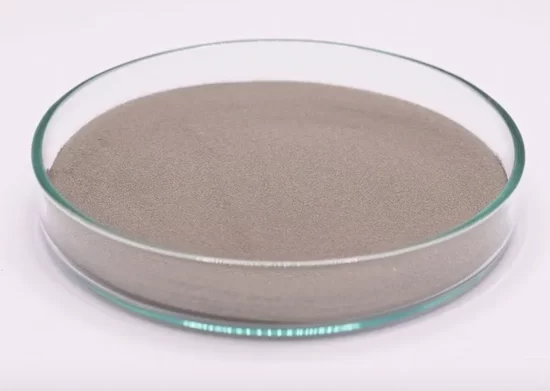
Product Overview
CoCr alloy powder — also known as cobalt chromium alloy powder — is a spherical, high-purity metal powder used as feedstock for additive manufacturing (AM), primarily laser powder bed fusion (LPBF / selective laser melting), electron beam melting (EBM), metal injection molding (MIM), and thermal spray. Princeton Powder supplies spherical CoCrMo powder in the standard ASTM F75 composition (Co balance, Cr 27–30%, Mo 5–7%) — along with CoCrW and CoCrNi grades — at particle sizes of 15–45 μm and 15–53 μm for LPBF, and 45–105 μm / 45–150 μm for EBM and DED. CAS: Co 7440-48-4 / Cr 7440-47-3 / Mo 7439-98-7.
CoCr alloys are the biocompatible, wear- and corrosion-resistant material family of choice for medical implants and dental restorations: with ~8.4 g/cm³ density, a ~1378–1419°C melting range, and exceptional resistance to body-fluid corrosion and galling, CoCrMo (F75) is the workhorse for load-bearing hip and knee components, while CoCrW serves high-wear dental frameworks. As a CoCr alloy powder supplier and CoCrMo powder manufacturer with ISO 9001:2015 certification, Princeton Powder produces powder by vacuum induction melting + inert gas atomization (VIGA), delivering the highly spherical particles, tight size distribution, and low oxygen content that LPBF machines require for dense, crack-free parts. Whether you need a custom CoCr alloy powder for a dental SLM line or a 15–45 μm gas atomized CoCr powder for orthopedic implant research, our team adjusts composition, particle size, and oxygen spec to your exact build recipe. Buy CoCr alloy powder directly from the manufacturer with application-specific process guidance included.
Manufacturing Process & Quality Control
7-Step Manufacturing Process (Gas Atomization)
Every Princeton Powder spherical CoCr alloy powder lot is manufactured through a controlled gas-atomization sequence designed to achieve the sphericity, size distribution, and low oxygen content that reliable LPBF/EBM deposition demands:
- Raw Material Selection: High-purity cobalt, chromium, and molybdenum feedstock is sourced, verified against CoA, and precisely weighed to the target alloy composition (Cr 27–30%, Mo 5–7%, balance Co for F75). Feedstock purity directly determines final powder impurity and oxygen levels.
- Vacuum Induction Melting (VIM): The charge is melted under high vacuum to eliminate dissolved gases (O, N, H) and volatile impurities. Vacuum processing is essential because chromium and molybdenum oxidize readily — atmospheric contamination would degrade powder purity and form oxide inclusions.
- Inert Gas Atomization (VIGA): The molten alloy is poured through a refractory nozzle and disintegrated by a high-pressure stream of inert gas (argon or nitrogen), producing rapidly solidified, highly spherical droplets that solidify into powder.
- Sieving & Classification: The atomized powder is sieved and air-classified to the target size cut (15–45 μm, 15–53 μm, 45–105 μm, or 45–150 μm), removing oversize, fines, and satellites to deliver a tight, process-ready distribution.
- Deoxidation / Conditioning: Powder is handled under controlled atmosphere to maintain low oxygen content and free-flowing behavior, preventing moisture uptake and agglomeration that would impair spreading.
- Quality Inspection: 100% lot testing includes ICP-OES full chemistry, laser diffraction particle size distribution (D10/D50/D90), Hall flow, apparent and tap density, oxygen/nitrogen analysis, and SEM morphology/sphericity verification.
- Packaging & Traceability: Powder is vacuum-sealed or inert-gas backfilled in moisture-barrier containers with desiccant. Every lot is individually serialized for full traceability to raw material heats and atomization batch records.
Available Particle Size Grades
| Grade | Particle Size | Typical Processes |
|---|---|---|
| LPBF / SLM Grade | 15–45 μm | Laser powder bed fusion (EOS, SLM Solutions, Concept Laser, Trumpf, Renishaw) |
| LPBF / SLM Grade (coarse) | 15–53 μm | Laser powder bed fusion, larger layer thickness |
| EBM / DED Grade | 45–105 μm / 45–150 μm | Electron beam melting, directed energy deposition, laser cladding |
| Thermal Spray / MIM Grade | 45–106 μm / custom | HVOF, plasma spray, metal injection molding feedstock |
Applications
CoCr Alloy Powder for Dental — Crowns, Bridges & Removable Partial Dentures (SLM)
CoCr alloy powder for dental applications is the dominant use case for 15–45 μm spherical CoCrMo/CoCrW powder: selective laser melting of metal-ceramic crowns, bridges, frameworks, and removable partial dentures (RPDs). In dental SLM, CoCr offers the biocompatibility, high strength, and porcelain-bonding behavior clinicians require, at a lower cost and weight than precious alloys. Gas-atomized 15–45 μm CoCrMo powder spreads into thin, uniform layers and produces dense, high-surface-quality frameworks with minimal porosity.
Research on SLM CoCrMo dental alloys confirms the material's process robustness: optimized laser power and scan speed yield relative densities above 99% and hardness up to ~36.9 HRC, while defect-tolerant dental SLM parts reach tensile strengths up to ~1300 MPa — exceeding cast CoCr alloy properties. Princeton Powder's spherical CoCrMo powder delivers the composition and size consistency that reproduce these results on production dental SLM lines. See our CoCrMo metal powder product page for dental-grade specifications.
CoCrMo Powder for Orthopedic Implants — Hip, Knee & Bone-Fixation Devices
CoCrMo powder for implants extends to the load-bearing orthopedic devices — total hip and knee replacement components (femoral heads, acetabular cups, tibial/knee trays) and bone-fixation hardware — where CoCrMo (ASTM F75) is the material of choice for its excellent corrosion resistance in body fluid, high wear resistance, and proven long-term biocompatibility. Additive manufacturing enables patient-specific and porous-lattice implants that promote osseointegration and reduce stress shielding, geometries impossible to cast.
The mechanical case is well documented: LPBF-built CoCrMo achieves yield strength ~870 MPa and ultimate tensile strength up to ~1300 MPa, with microstructure and properties tunable by post-build heat treatment — aging after solution treatment raises elongation to ~23% while retaining UTS ~1020 MPa. The spherical CoCrMo powder is the source material that determines the implant's chemistry and therefore its biocompatibility and mechanical integrity. Browse our full advanced materials catalog for matching biomedical and aerospace feedstock.
CoCr Alloy Powder for Aerospace & Wear Parts — Turbine Components & Thermal Spray Coatings
Beyond medical, spherical CoCrMo powder and Stellite-type CoCr grades serve aerospace gas-turbine hot-section components and industrial wear parts. CoCr alloys retain strength, hardness, and oxidation resistance at elevated temperature, making them suitable for turbine vanes, nozzles, valves, and high-wear tooling. In thermal spray (HVOF / plasma) and laser cladding, CoCr powders deposit wear- and corrosion-resistant coatings for surface restoration and repair of gas-turbine and industrial components.
Gas-atomized spherical powder is preferred for these routes because high sphericity maximizes flowability and deposition consistency, while inert-gas atomization minimizes oxygen pickup that would otherwise embrittle coatings. For R&D, the custom CoCr alloy powder approach — tuned Cr/Mo/W content and tailored size distribution — lets laboratories screen alloy variants across the Co–Cr system. Explore our cobalt-based materials for complementary sputtering and thermal spray grades.
Why Choose Princeton Powder Spherical CoCr Alloy Powder
- Gas Atomization — High Sphericity & Low Oxygen: Vacuum induction melting + inert gas atomization (VIGA) produces highly spherical particles with minimal satellites, hollows, and oxygen pickup — the powder quality LPBF machines require for dense, crack-free builds.
- Custom Composition — CoCrMo, CoCrW, CoCrNi & Beyond: From standard ASTM F75 (Co-28Cr-6Mo) to CoCrW, CoCrNi, and fully custom Cr/Mo/W ratios, Princeton Powder engineers the exact chemistry to your device spec, verified by ICP-OES.
- Process-Ready Particle Sizes — 15–45 μm to 45–150 μm: Tight LPBF (15–45 μm / 15–53 μm) and EBM/DED (45–105 μm / 45–150 μm) cuts with D10/D50/D90 reported on every CoA, matched to EOS, SLM Solutions, Trumpf, and Renishaw platforms.
- Validated Performance — Published SLM Data: CoCrMo powder reproduces the ~870 MPa yield / ~1300 MPa tensile strength and 99%+ relative density reported in peer-reviewed SLM studies (Materials Science & Engineering A, 2018) — real performance, not marketing claims.
- CoCrMo vs CoCrW — Guidance Built Into Our Support: CoCrMo (F75) for load-bearing implants, CoCrW for high-wear dental frameworks — our application engineers help you select the right grade for your build and post-processing route.
- Medical-Grade Documentation — ASTM F75 / ISO 5832-4: Full Certificate of Analysis (ICP-OES chemistry, PSD, Hall flow, apparent/tap density, O/N content) on every lot, with ISO 9001:2015 quality management and full lot traceability.
- Direct Engineering Support — No Distributor Middleman: Powder metallurgists who understand CoCr gas atomization and AM process parameters help you optimize size cut, oxygen spec, and build recipe for your system.
Frequently Asked Questions About Cobalt Chromium powder
What is CoCr alloy powder used for?
Spherical CoCr (cobalt–chromium) alloy powder is used as feedstock for metal additive manufacturing — primarily laser powder bed fusion (LPBF/SLM), electron beam melting (EBM), metal injection molding (MIM), and thermal spray. Its main applications are dental restorations (crowns, bridges, removable partial dentures), orthopedic implants (hip and knee components), and aerospace/wear parts (turbine components and wear-resistant coatings). CoCr alloys are chosen for their biocompatibility, corrosion resistance, high strength, and wear resistance.
How is spherical CoCrMo alloy powder made?
Spherical CoCrMo powder is produced by gas atomization: high-purity cobalt, chromium, and molybdenum are melted under vacuum (vacuum induction melting), then the molten alloy is disintegrated by a high-pressure stream of inert gas (argon or nitrogen) into rapidly solidified, highly spherical droplets. The powder is then sieved and air-classified to the target size cut (e.g., 15–45 μm). Vacuum processing is essential because chromium and molybdenum oxidize readily — atmospheric contamination would form oxide inclusions that degrade part quality.
CoCrMo vs CoCrW alloy powder: which should I choose?
Choose CoCrMo (ASTM F75) for load-bearing orthopedic implants (hip/knee) and general dental frameworks — it offers the best balance of strength, ductility, and corrosion resistance for implants. Choose CoCrW (ASTM F90) for high-wear dental frameworks where tungsten's extra hardness and wear resistance are advantageous, at some cost to ductility. CoCrNi (Co-33Cr-2Ni, ISO 5832-12) is a lower-modulus alternative. Our engineers can recommend the right grade for your device and post-processing route.
Why is CoCr used for medical implants?
CoCr alloys are used for medical implants because they combine excellent biocompatibility with high strength, wear resistance, and corrosion resistance in body fluid. The passive chromium-oxide surface layer resists corrosion, while the alloy's high hardness resists wear and galling at articulating surfaces (e.g., femoral heads and knee trays). This is why CoCrMo (ASTM F75) has been the standard implant alloy for decades, now extended to patient-specific and porous-lattice designs via additive manufacturing.
What particle size of CoCrMo powder do I need for SLM/LPBF?
For laser powder bed fusion (SLM/LPBF), the standard particle size is 15–45 μm or 15–53 μm. These fine cuts spread into thin, uniform layers (typically 20–50 μm) and produce dense, high-resolution parts. For EBM or DED, coarser 45–105 μm or 45–150 μm powders are used. Always confirm the size cut recommended by your machine manufacturer (EOS, SLM Solutions, Trumpf, Renishaw).
What is the difference between gas atomized and plasma spheroidized CoCr powder?
Gas atomization melts and atomizes the alloy into spherical droplets — the mainstream method, producing highly spherical powder with low oxygen, though with a wider size distribution and some satellites/hollows. Plasma spheroidization (RF plasma) re-melts irregular feedstock particles in a plasma torch to produce narrower size distribution, fewer internal pores, higher sphericity, and superior apparent density — at higher cost. Both produce usable LPBF powder; plasma spheroidization is favored when maximum flowability and density are critical.
Research & Technical References
The following peer-reviewed research validates the performance of CoCr alloy powder and CoCrMo parts produced by selective laser melting / laser powder bed fusion. Princeton Powder spherical CoCr powder meets or exceeds the material specifications used in these studies.
Morphology and properties of CoCrMo parts fabricated by selective laser melting
Materials Science and Engineering A, 2018 (Vol. 713, pp. 206–213) — Characterized the morphology, microstructure, and mechanical properties of CoCrMo parts built by selective laser melting, establishing the fcc γ-phase dominant as-built structure and the strength–ductility behavior of SLM CoCrMo. Practical takeaway: SLM CoCrMo achieves properties exceeding cast alloy — spherical powder with consistent composition is what reproduces this performance in production.
The effect of solution and aging treatments on the microstructure and mechanical properties of a selective laser melted CoCrMo alloy
Journal of Materials Science, 2022 (Vol. 57, pp. 6445–6457) — Investigated how post-build heat treatment transforms the cellular/columnar SLM microstructure; aging at 1173 K for 4 h precipitated σ-phase and yielded a UTS of ~1020 MPa, yield strength ~677 MPa, and ~23% elongation — roughly double the as-built elongation. Practical takeaway: CoCrMo powder's mechanical output is highly tunable via heat treatment, making composition-accurate powder the enabling input for implant-grade mechanical properties.
Mechanical properties and microstructural characterization of Cobalt-Chromium (CoCr) obtained by casting and Selective Laser Melting (SLM)
Materials Science Forum, 2017 (Vol. 899, pp. 534–539) — Compared cast versus SLM CoCr alloys, showing SLM's finer, rapidly solidified microstructure yields higher hardness and competitive mechanical properties relative to conventional casting. Practical takeaway: additive manufacturing with spherical CoCr powder produces a refined microstructure that outperforms cast CoCr — a direct manufacturing advantage for dental and implant components.
Contact our technical team for the complete reference list and to discuss CoCr alloy powder specifications for your specific build — including composition selection, particle size cut, oxygen spec, and post-build heat treatment optimization.