
Hydroxyapatite (CaHA) Microspheres —Microporous Injectable Medical Aesthetics Grade for Dermal Fillers & Collagen Stimulation
Unlock superior aesthetic performance with Medical-Grade Calcium Hydroxyapatite (CaHA) Microspheres, the premium active ingredient engineered for next-generation dermal fillers and biostimulatory injectables. Formulated with a precisely controlled microporous matrix, these high-purity CaHA microspheres deliver immediate volume restoration while actively triggering long-term natural collagen stimulation. The uniform microporous architecture creates an ideal scaffold for fibroblast migration and cellular tissue integration, ensuring smooth injectability, predictable degradation, and durable structural support. This medical aesthetics grade raw material offers dual-action rejuvenation through instant soft-tissue augmentation and sustained collagen generation. Its high biocompatibility and optimal rheology are specifically designed for seamless extrusion and natural-looking facial contouring. Ideal for cosmetic manufacturers and pharmaceutical formulators seeking clinical-grade CaHA materials for advanced anti-aging, deep-wrinkle correction, and long-lasting volumetric restoration solutions.
Technical Specifications
| Parameter | Value |
|---|---|
| Product | Hydroxyapatite (CaHA) Microspheres — Calcium Hydroxyapatite Spherical Particles for Injectable Medical Aesthetics & Dermal Fillers |
| Chemical Formula | Ca10(PO4)6(OH)2 — Calcium Hydroxyapatite |
| CAS Number | 1306-06-5 (Hydroxyapatite) / 12167-74-7 |
| Particle Size | 25–45 µm (standard dermal filler grade) |
| Types | Porous (1.2–1.5 g/cm³) | Microporous (1.4–1.6 g/cm³) | Smooth/Dense (1.6–1.9 g/cm³) |
| Purity | ≥99% CaHA — XRD + ICP-OES per lot |
| Ca/P Ratio | 1.67 ± 0.02 (stoichiometric hydroxyapatite) |
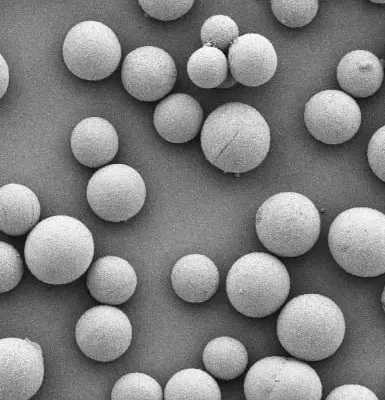
| Sphericity | ≥0.95 — SEM-verified (500+ particles per lot) |
| Key Mechanism | Dual-action: immediate volumization + long-term neocollagenesis (fibroblast mechanotransduction → Type I & III collagen + elastin) |
| Primary Application | Radiesse-type injectable dermal fillers — OEM raw material for aesthetic medicine manufacturers |
| Standards | ISO 13485:2016 | ISO 10993 Biocompatibility | ASTM F1185 |
Product Overview
Hydroxyapatite (CaHA) microspheres — Ca10(PO4)6(OH)2, CAS 1306-06-5, ≥99% purity, 25–45 µm — are precision-engineered spherical calcium phosphate bioceramic particles that form the active biostimulatory component of Radiesse®-type injectable dermal fillers — the second-largest category in the global medical aesthetics market after hyaluronic acid (HA) fillers. Unlike HA fillers that provide only passive volumization, CaHA microspheres deliver a dual mechanism of action: (1) immediate tissue volumization from the gel carrier (CMC or crosslinked HA) upon injection, and (2) long-term neocollagenesis — sustained stimulation of fibroblast-mediated Type I and Type III collagen production plus elastin synthesis — through mechanotransduction as dermal fibroblasts attach to, stretch across, and are activated by the CaHA microsphere scaffold. The result is tissue regeneration, not just volume replacement: clinical histology confirms 123-164% increases in Type I collagen, new elastin fibers, and angiogenesis at the injection site — effects persisting 12-24+ months, well beyond the 6-8 week carrier gel resorption window.
Princeton Powder supplies hydroxyapatite microspheres as the OEM raw material for aesthetic medicine manufacturers producing finished injectable CaHA fillers. We offer three surface morphology types — Porous (1.2–1.5 g/cm³), Microporous (1.4–1.6 g/cm³), and Smooth/Dense (1.6–1.9 g/cm³) — each optimized for specific gel carrier compatibility, fibroblast adhesion profile, and degradation kinetics. Particle size is controlled to the critical 25–45 µm window: above the ~15 µm phagocytosis threshold (preventing rapid macrophage clearance), below the ~50 µm threshold where particles become palpable nodules, and within the size range maximizing fibroblast mechanotransduction for collagen stimulation. All microspheres manufactured under ISO 13485:2016 with full ISO 10993 biocompatibility testing.
Microsphere Type Selection Guide
| Type | Density | Fibroblast Adhesion | Degradation | Best For |
|---|---|---|---|---|
| Porous (CaHA01) | 1.2–1.5 g/cm³ | Maximum — pore structure enhances cell attachment | 12-18 months | CMC-based fillers; body contouring; high-collagen-stimulation formulations |
| Microporous (CaHA02) | 1.4–1.6 g/cm³ | Balanced — optimized for controlled fibroblast activation | 18-24 months | HA-CaHA hybrid fillers; general facial volumization — mimics Radiesse® profile |
| Smooth/Dense (CaHA03) | 1.6–1.9 g/cm³ | Controlled — smooth surface minimizes inflammatory cytokines | 24-30+ months | Sensitive anatomical areas; longest duration; minimal immune activation |
All three types manufactured to ISO 13485:2016 with ISO 10993 biocompatibility testing and full lot traceability. PSD (laser diffraction), SEM morphology, Ca/P ratio (ICP-OES), and heavy metals analysis with every shipment. Contact our technical team for type recommendation based on your gel carrier chemistry and target clinical profile.
Material Properties & Biostimulatory Mechanism
CaHA vs HA vs PLLA — Comparing Biostimulatory Dermal Filler Mechanisms
| Property | CaHA Microspheres (this product) | HA Fillers | PLLA (Sculptra®-type) |
|---|---|---|---|
| Primary Action | Biostimulatory + Volumizing — dual mechanism | Volumizing only — passive space-filling | Biostimulatory only — no immediate volume; relies on inflammatory response |
| Collagen Stimulation | Type I + III + elastin — fibroblast mechanotransduction; 123-164% increase | None — HA does not stimulate neocollagenesis | Type I collagen — via inflammatory foreign-body response and granulomatous reaction |
| Inflammatory Response | Minimal — smooth spherical morphology; mechanotransduction is non-inflammatory | Minimal — HA is non-immunogenic | Moderate-High — deliberate inflammatory response; risk of granuloma (5-10%) |
| Immediate Effect | Yes — gel carrier provides instant volumization | Yes — instant volumization from HA gel | No — 4-8 weeks for collagen; multiple sessions; no immediate result |
| Duration | 12-24+ months — collagen persists beyond microsphere resorption | 6-18 months — enzymatically degraded | 2+ years — collagen persists; requires patience |
| Elastic Modulus (G') | ~1,407 Pa (CMC carrier) — highest among all fillers; superior lift | 30-500 Pa (crosslinking-dependent) | N/A — not a gel filler |
| Reversibility | No — CaHA is a mineral; cannot be dissolved with hyaluronidase | Yes — hyaluronidase reversal | No — collagen irreversible; nodules may require surgery |
| Key Risk | Nodules if injected superficially or microspheres fracture (mitigated by smooth morphology + shear-thinning carrier) | Vascular occlusion if intra-arterial (rare but serious) | Granuloma formation; delayed results frustrate patients |
The Neocollagenesis Mechanism — How CaHA Microspheres Stimulate Tissue Regeneration
The CaHA microsphere's collagen-stimulating mechanism is fundamentally different from other biostimulatory agents. Rather than relying on an inflammatory foreign-body response (PLLA's mechanism), CaHA microspheres activate fibroblasts through mechanotransduction — a direct physical cell-scaffold interaction. Dermal fibroblasts attach to the 25-45 µm CaHA surface via integrin-mediated focal adhesions, spread across the microsphere, and experience cytoskeletal tension. This mechanical stretch signal is transduced to the nucleus, triggering an anabolic state with upregulated expression of: (1) Type I collagen (long-lasting structural collagen — 123-164% increase documented histologically), (2) Type III collagen (early-stage ECM organization), (3) Elastin (restoring skin elasticity lost with aging), and (4) Angiogenic factors (new capillary formation). The critical design parameters determining mechanotransduction efficiency: (a) particle size — 25-45 µm is empirically optimized; <15 µm = phagocytosed; >50 µm = reduced cell contact; (b) surface morphology — controlled microporosity enhances focal adhesion vs smooth surfaces; (c) sphericity — irregular particles trigger inflammation instead of mechanotransduction. Princeton Powder's three microsphere types allow filler formulators to tune fibroblast activation intensity for their target indication.
Technical Specifications: Particle Size, Types, Quality & Packaging
Chemical Identity
| Parameter | Specification |
|---|---|
| Chemical Name | Calcium Hydroxyapatite — Ca10(PO4)6(OH)2 |
| CAS Number | 1306-06-5 (Hydroxyapatite) / 12167-74-7 |
| Synonyms | CaHA, hydroxylapatite, calcium phosphate tribasic, Radiesse®-equivalent microspheres |
| Molecular Weight | 1004.62 g/mol (stoichiometric) — ceramic bulk material |
Particle Size Distribution
| Grade | D10 | D50 | D90 | Span | Application |
|---|---|---|---|---|---|
| Standard Dermal Filler | ≥25 µm | 32-38 µm | ≤45 µm | ≤0.6 | Radiesse®-type facial filler — the industry standard PSD |
| Narrow PSD (Premium) | ≥28 µm | 33-37 µm | ≤42 µm | ≤0.4 | Premium formulations; tighter span reduces injection force variability |
| Custom PSD | Available within 15-75 µm range. Contact our technical team with your target D10/D50/D90. | ||||
Microsphere Types — Porosity & Density
| Type | Code | Density | BET Surface Area | Key Advantage |
|---|---|---|---|---|
| Porous | PP-CaHA-P | 1.2–1.5 g/cm³ | 15-30 m²/g | Highest fibroblast adhesion — fastest collagen response for body contouring |
| Microporous | PP-CaHA-MP | 1.4–1.6 g/cm³ | 8-15 m²/g | Balanced adhesion + controlled degradation — Radiesse®-mimetic profile |
| Smooth/Dense | PP-CaHA-S | 1.6–1.9 g/cm³ | 2-8 m²/g | Lowest inflammatory response — longest duration for sensitive areas |
Quality Control Specifications
| Parameter | Specification | Test Method |
|---|---|---|
| Purity (CaHA) | ≥99% | XRD phase analysis + ICP-OES |
| Ca/P Molar Ratio | 1.67 ± 0.02 | ICP-OES (Ca and P quantification) |
| Sphericity | ≥0.95 (aspect ratio <:1.1) | SEM image analysis (500+ particles per lot) |
| Heavy Metals (Pb) | ≤10 ppm | ICP-MS |
| Heavy Metals (As) | ≤2 ppm | ICP-MS |
| Heavy Metals (Cd, Hg) | ≤1 ppm each | ICP-MS |
| Endotoxin | ≤0.25 EU/mg | LAL Kinetic Chromogenic (USP <85>) |
| Bioburden (Pre-Sterilization) | ≤100 CFU/g | USP <61> / <62> |
| Sterilization Compatibility | Gamma (25-40 kGy), EtO, dry heat (250°C) | Validated per ISO 11137 / ISO 11135 |
| Biocompatibility | ISO 10993-5 (Cytotoxicity), ISO 10993-10 (Sensitization & Irritation) | MEM Elution / ISO 10993 protocols |
Packaging & Sterility Options
| Option | Description | Best For |
|---|---|---|
| Non-Sterile Bulk | 1g / 5g / 25g / 100g — double-bagged, desiccated, argon-flushed | Filler manufacturers performing in-house terminal sterilization |
| Gamma-Sterilized | 1g / 5g / 10g — pre-sterilized (25-40 kGy), ready for aseptic compounding | Aseptic manufacturing; reduced bioburden risk for injectable products |
| Custom / OEM Packaging | Custom fill weights, pre-weighed aliquots, branded packaging | White-label filler brands; pre-portioned aliquots per production batch |
All packaging: Vacuum-sealed with desiccant. Each unit labeled with lot number, CaHA type code, PSD (D10/D50/D90), Ca/P ratio, and ISO 13485 compliance. Full lot traceability. Shelf life: 36 months at room temperature, dry, protected from light.
Applications
Injectable Dermal Fillers — Facial Volumization & Contour Restoration
The primary application for CaHA microspheres (microporous type, 25-45 µm) is as the active biostimulatory component in Radiesse®-type injectable dermal fillers. In the finished formulation, CaHA microspheres are suspended at ~30% w/v in a carboxymethylcellulose (CMC) or crosslinked hyaluronic acid (HA) gel carrier — the gel provides immediate volumization while the microspheres initiate long-term collagen regeneration. The high elastic modulus (G' ~1,407 Pa for CaHA/CMC) — approximately 3× the highest G' HA fillers — provides superior lift capacity for deep tissue support: jawline definition, chin augmentation, malar volumization, and temple hollow correction. For deep structural applications, undiluted CaHA injected supraperiosteally leverages high G' for bone-mimicking support. For superficial applications (nasolabial folds, marionette lines), the filler is diluted 1:1 to 1:2 with saline or lidocaine to reduce G'. Princeton Powder CaHA microspheres are the OEM starting material for aesthetic medicine manufacturers developing branded CaHA filler product lines.
Biostimulatory Collagen Regeneration — The "Injectable Skincare" Revolution
The fastest-growing segment in medical aesthetics is biostimulatory injections — treatments that regenerate the skin's own collagen and elastin rather than simply filling wrinkles. CaHA microspheres are the most evidence-backed biostimulatory agent: when injected subdermally, they function as a fibroblast scaffold — dermal fibroblasts attach to, spread across, and are mechanically activated by the microsphere surface. This mechanotransduction triggers upregulated synthesis of Type I collagen (+123-164%), Type III collagen, and elastin — the three structural proteins whose age-related decline causes visible skin aging. The key clinical differentiator: regenerated tissue persists after microspheres degrade (18-30 months), meaning the aesthetic benefit outlasts the product itself — fundamentally different from HA fillers where results disappear as the gel resorbs. For filler manufacturers, this "beyond-the-product" duration is the most powerful marketing differentiator vs HA-only competitors — enabled entirely by the CaHA microsphere raw material.
Hand Rejuvenation, Body Contouring & Emerging Aesthetic Indications
Beyond facial aesthetics, CaHA microspheres address three growing market segments: (1) Hand rejuvenation: Dorsal hand volumization with diluted CaHA filler restores subcutaneous fat volume lost with aging — hiding prominent veins and bony landmarks. Radiesse® is FDA-cleared for hand augmentation — a regulatory precedent for CaHA filler 510(k) submissions. (2) Body contouring: Porous CaHA microspheres with faster-degrading CMC carrier for cellulite dimple correction, post-liposuction contour irregularities, and gluteal augmentation — combining immediate volume fill + long-term collagen deposition ideal for high-mobility areas. (3) Emerging indications: CaHA microspheres under investigation for androgenetic alopecia (scalp injection stimulates peri-follicular collagen), acne scar subcision + biostimulatory filling, and post-surgical scar remodeling. Princeton Powder supplies CaHA microspheres for all current and emerging aesthetic indications — contact our technical team for application-specific type and PSD recommendations.
Frequently Asked Questions
Why is 25-45 µm the standard particle size for CaHA dermal filler microspheres?
The 25-45 µm window is the result of 20+ years of clinical experience optimized at three biological boundaries: (1) Lower limit (~15-20 µm): Particles <15 µm are phagocytosed and cleared within days — providing no scaffold for fibroblast attachment. (2) Optimal range (25-45 µm): Too large for phagocytosis, sufficient surface area for fibroblast mechanotransduction, and small enough to pass through a 27G needle. (3) Upper limit (~50 µm): Particles >50 µm become palpable through skin as visible nodules and create injection inconsistency. Princeton Powder's PSD (D10 ≥25 µm, D90 ≤45 µm) ensures every microsphere falls within the clinically validated window.
What is the difference between porous, microporous, and smooth CaHA microspheres?
The three types differ in surface morphology and fibroblast interaction profile: Porous (1.2-1.5 g/cm³): High surface area with internal pores — maximum fibroblast adhesion, fastest collagen response, 12-18 month degradation. Best for body contouring. Microporous (1.4-1.6 g/cm³): Moderate surface roughness — the balanced type most closely mimicking Radiesse® properties. 18-24 month degradation. Best for general facial volumization. Smooth/Dense (1.6-1.9 g/cm³): Minimal porosity — lowest inflammatory cytokine release, 24-30+ month duration. Best for sensitive areas and patients with inflammatory predisposition.
How does CaHA neocollagenesis compare to PLLA (Sculptra®) collagen stimulation?
The mechanism and clinical experience are fundamentally different: CaHA: Fibroblast mechanotransduction — direct physical activation, non-inflammatory. Immediate volumization + progressive collagen regeneration. Radiesse® track record: ~20 years, >10 million units. PLLA: Inflammatory foreign-body response — deliberate granulomatous reaction. No immediate result; 2-3 sessions spaced 4-6 weeks. Granuloma incidence 5-10%. CaHA's dual mechanism provides immediate patient satisfaction + long-term regeneration without PLLA's inflammatory risk profile.
What sterilization methods are compatible with CaHA microspheres?
CaHA is thermally stable to 250°C and radiation-stable to 40 kGy — compatible with all three common medical device sterilization modalities: Gamma (25-40 kGy): Most common for finished dermal fillers. CaHA's crystalline structure is unaffected. EtO: Compatible per ISO 11135. Dry heat (160-250°C): Compatible but less common for fillers. Princeton Powder supplies CaHA microspheres non-sterile (bulk) for in-house terminal sterilization, or pre-sterilized (gamma, SAL 10⁻⁶ certified) for aseptic compounding.
Can we use CaHA microspheres for our own OEM/private-label dermal filler product?
Yes — this is our primary business model. Princeton Powder supplies CaHA microspheres as OEM raw material for aesthetic medicine manufacturers: (1) Three microsphere types to differentiate your product; (2) ISO 13485 + ISO 10993 documentation for FDA 510(k) or CE Mark; (3) Custom PSD and packaging; (4) Private-label documentation — your brand on CoA and certificates; (5) R&D-to-commercial scaling from 1g samples to kilogram-level production. Contact our OEM team at [email protected].
What regulatory documentation do you provide for FDA 510(k) and CE Mark submissions?
Every order includes: ISO 13485:2016 Certificate, ISO 10993 Biocompatibility Summary (Cytotoxicity, Sensitization, Irritation), XRD Phase Purity (≥99% CaHA), ICP-OES Ca/P Ratio (1.67 ± 0.02), Laser Diffraction PSD (D10/D50/D90 + span), SEM Morphology (sphericity ≥0.95), Endotoxin Certificate (LAL ≤0.25 EU/mg), Heavy Metals Analysis (ICP-MS — Pb/As/Cd/Hg), Gamma Sterilization Validation (SAL 10⁻⁶ if pre-sterilized), Full Lot Traceability. For 510(k) substantial equivalence to Radiesse®, we provide a microsphere equivalence comparison table. Contact our regulatory support team.
Research & Technical References
The following peer-reviewed clinical and preclinical research establishes the safety, efficacy, and mechanism of CaHA microspheres in medical aesthetics. Princeton Powder CaHA microspheres meet or exceed the material specifications used in these studies.
Comparison of Physicochemical Characteristics and Biostimulatory Functions in Two Calcium Hydroxyapatite-Based Dermal Fillers
Journal of Cosmetic Dermatology, 2023 — This head-to-head comparison demonstrated that microsphere integrity is the critical determinant of biocompatibility and biostimulatory function. CaHA/CMC microspheres remained intact, smooth, and defect-free in situ, eliciting minimal inflammatory cytokine release and robust Type I collagen deposition. CaHA/HA microspheres showed surface fragmentation triggering unwanted immune responses. Practical takeaway: Princeton Powder's sphericity ≥0.95 (SEM-verified per lot) and controlled surface morphology deliver the smooth, intact microsphere profile essential for safe, effective biostimulation.
The Use of Calcium Hydroxyapatite in Aesthetic Medicine — Properties, Mechanism of Action, and Clinical Safety
Quality in Sport / Aesthetic Medicine Review, 2024 — A comprehensive clinical review confirming CaHA microspheres persist 18-30 months, stimulate Type I collagen increases of 123-164%, and demonstrate an adverse event rate of ~3% across 5,081 treatments in 2,779 patients. The review identified particle size (25-45 µm), sphericity, and carrier gel composition as the raw-material-level factors determining clinical performance. Practical takeaway: Three parameters are non-negotiable when specifying CaHA microspheres: (1) PSD within 25-45 µm with D90 ≤45 µm, (2) sphericity ≥0.95 with SEM verification, and (3) ISO 10993 biocompatibility on the finished microsphere raw material. Princeton Powder provides all three with every shipment.
Global Recommendations for Facial Rejuvenation Using a Hyaluronic Acid and Calcium Hydroxyapatite Hybrid Injectable
Journal of Cosmetic Dermatology, 2025 — An international expert consensus on HA-CaHA hybrid fillers combining crosslinked HA (immediate hydration) with CaHA microspheres (long-term neocollagenesis). The consensus confirmed CaHA microsphere surface porosity determines HA-CaHA interfacial compatibility in hybrid gel matrices. Practical takeaway: For next-generation HA-CaHA hybrid fillers, the microporous CaHA type (1.4-1.6 g/cm³) provides the optimal surface for HA crosslinking compatibility while maintaining fibroblast activation. Princeton Powder's microporous type is purpose-designed for hybrid formulations.
Contact our medical aesthetics technical team for the full reference list and to discuss CaHA microsphere type selection, PSD optimization, sterilization validation, and regulatory submission support for your dermal filler development program.