
Hydroxyapatite (HAP) Bone Graft — Porous Granules, Scaffolds & Coating Powder, Osteoconductive Bioceramic for Orthopedic & Dental Bone Defect Repair
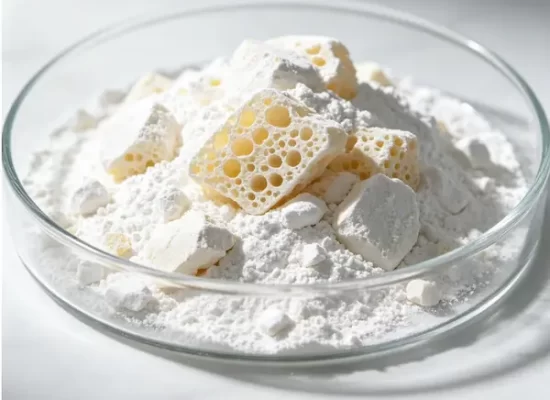
Engineered for high-performance orthopedic and dental bone defect repair, Medical-Grade Hydroxyapatite (HAP) Bioceramic serves as an advanced osteoconductive solution available in porous granules, structural scaffolds, and thermal coating powders. Featuring a naturally biomimetic chemical composition and interconnected porous architecture, this crystalline HAP facilitates rapid cell attachment, blood vessel invasion, and accelerated new bone formation.
As a scaffold or granule matrix, it provides durable structural support and reliable volume maintenance while undergoing controlled bioresorption. As a high-purity coating powder, it optimizes implant osseointegration, ensuring strong mechanical anchorage at the bone-implant interface. Highly biocompatible, non-immunogenic, and sterile-grade ready, this versatile HAP raw material empowers medical device manufacturers and clinical formulators to develop next-generation bone graft substitutes, periodontal regeneration matrices, and durable orthopedic implant surfaces.
Technical Specifications
| Parameter | Value |
|---|---|
| Product | Hydroxyapatite (HAP) — Synthetic Calcium Phosphate Bioceramic for Bone Defect Repair, Orthopedic Grafting & Dental Regeneration |
| Chemical Formula | Ca10(PO4)6(OH)2 — Calcium Hydroxyapatite |
| CAS Number | 1306-06-5 |
| Ca/P Ratio | 1.67 ± 0.02 (stoichiometric — identical to human bone mineral) |
| Product Forms | Porous Granules (0.5–5mm) | Scaffold Blocks/Cylinders | Coating Powder (<100µm) | Custom 3D-Printed Shapes |
| Purity | ≥99% HAP phase — XRD verified per lot |
| Porosity Range | 40–80% (macroporous 200–500µm + microporous <50µm — interconnected pore network) |
| Compressive Strength | 0.5–56 MPa (porosity-dependent — tunable to match cancellous bone 2–12 MPa) |
| Key Mechanism | Osteoconductive scaffold — supports osteoblast adhesion, proliferation, and new bone ingrowth; non-inflammatory, non-immunogenic |
| Primary Applications | Orthopedic bone void filler, dental socket grafting, spinal fusion cage coatings, maxillofacial reconstruction, implant osseointegration coatings |
| Standards | ISO 13485:2016 | ISO 10993 Biocompatibility | ASTM F1185 (Surgical HA Ceramics) | ASTM F1581 (Bone Void Filler) |
Product Overview
Hydroxyapatite (HAP) — Ca10(PO4)6(OH)2, CAS 1306-06-5, Ca/P ratio 1.67, ≥99% phase purity — is a synthetic calcium phosphate bioceramic chemically and structurally identical to the mineral component of human bone (70 wt% of bone, 97% of tooth enamel, 70% of dentin). This biomimetic identity gives HAP its defining clinical properties: exceptional biocompatibility, intrinsic osteoconductivity (direct bone-to-material bonding without intervening fibrous tissue), and a non-inflammatory, non-immunogenic host response — making it the most clinically validated synthetic bone graft material with over 40 years of successful use in millions of orthopedic, spinal, and dental procedures worldwide. Unlike autograft (limited supply, donor site morbidity), allograft (disease transmission risk, variable quality), or xenograft (bovine-derived — religious/cultural restrictions in some patient populations), synthetic HAP is unlimited in supply, pathogen-free by manufacture, and universally acceptable — the regulatory and logistical gold standard for bone regeneration raw material.
Princeton Powder supplies hydroxyapatite as the OEM raw material for medical device manufacturers producing finished bone graft products. We offer four product forms: (1) Porous Granules (0.5–5mm, 40–80% interconnected porosity, 200–500µm macropores + <50µm micropores) — the standard bone void filler format for packing irregular defects; (2) Scaffold Blocks & Cylinders — pre-formed porous shapes for structural grafting with compressive strength tunable from 0.5–56 MPa to match cancellous bone (2–12 MPa); (3) Coating Powder (<100µm, spherical spray-dried) — for plasma-sprayed HA coatings on titanium implants that accelerate osseointegration; (4) Custom 3D-Printed Scaffolds — patient-specific geometries from CT/MRI data for complex craniofacial and maxillofacial reconstruction. All forms are manufactured under ISO 13485:2016 with ISO 10993 biocompatibility testing and full lot traceability from synthesis to finished bioceramic.
Product Form Selection Guide
| Form | Size Range | Porosity | Pore Size | Compressive Strength | Best For |
|---|---|---|---|---|---|
| Porous Granules | 0.5–5mm (sieved fractions) | 40–75% | 200–500µm macro + <50µm micro | N/A (loose fill) | Bone void filler — packing irregular defects in trauma, tumor resection, and revision arthroplasty; highest surface area for osteoblast attachment |
| Scaffold Blocks / Cylinders | 5–30mm (custom dimensions) | 50–80% | 250–500µm interconnected | 2–12 MPa (cancellous) / 20–56 MPa (cortical-mimetic) | Structural bone grafting — spinal fusion cages, tibial plateau reconstruction, alveolar ridge augmentation requiring load-bearing capacity |
| Coating Powder | <100µm (spray-dried spherical) | N/A (dense particles) | N/A | N/A (coating) | Plasma-sprayed HA coatings on Ti/Ti-6Al-4V implants — 50-150µm coating thickness accelerates osseointegration 2-3× vs uncoated implants |
| 3D-Printed Custom Scaffolds | Patient-specific (CT/MRI-derived) | 50–80% | 300–1200µm (design-controlled) | 5–30 MPa | Complex craniofacial / maxillofacial reconstruction — anatomically matched implant from patient imaging data; 70-80% bone ingrowth at 18 weeks |
All forms manufactured to ISO 13485:2016 with ISO 10993 biocompatibility testing and full lot traceability. XRD phase purity, SEM pore morphology, mercury intrusion porosimetry, and ICP-OES Ca/P ratio analysis provided with every shipment. Contact our technical team for form recommendation based on your target clinical indication, required resorption rate, and mechanical load requirements.
Material Properties & Bone Graft Performance
HA vs β-TCP vs Biphasic Calcium Phosphate — Bone Graft Resorption Rate Comparison
| Property | Hydroxyapatite HA (this product) | β-Tricalcium Phosphate (β-TCP) | Biphasic HA/β-TCP (BCP) |
|---|---|---|---|
| Chemical Formula | Ca10(PO4)6(OH)2 | Ca3(PO4)2 | HA + β-TCP blend (e.g., 60:40, 70:30, 90:10) |
| Ca/P Ratio | 1.67 — identical to bone mineral | 1.50 — lower than bone mineral | 1.50–1.67 (tunable by blend ratio) |
| Resorption Rate | Slow (years) — provides long-term scaffold persistence; suitable for indications where scaffold must support load during full bone remodeling cycle | Fast (6-12 months) — fully resorbed and replaced by native bone within ~1 year; ideal for pediatric/young patients with high bone turnover | Tunable (6 months to years) — blend ratio determines resorption rate: more TCP = faster; more HA = slower |
| Osteoconductivity | Excellent — direct bone apposition without fibrous interposition; 70-80% bone ingrowth in porous scaffolds at 18 weeks | Excellent — slightly more osteoinductive than HA due to Ca²⁺/PO₄³⁻ ion release during resorption | Excellent — combines HA's scaffold persistence with TCP's ionic stimulation |
| Mechanical Strength | Higher — 2-56 MPa (porosity-dependent); matches cancellous bone at 50-70% porosity | Lower — faster resorption reduces structural integrity over time | Intermediate — HA component maintains structural scaffold while TCP resorbs |
| pH at Implant Site | Neutral (~7.3) — minimal pH disturbance; non-inflammatory resorption | Mildly acidic during rapid resorption — may cause transient inflammation in some patients | Near-neutral — HA buffers TCP's acidic resorption byproducts |
| Best Clinical Indication | Structural grafting requiring long-term scaffold persistence — spinal fusion, large segmental defects, implant coatings, dental ridge augmentation | Rapid-turnover sites — pediatric bone defects, sinus lift, extraction socket preservation in young patients | General-purpose bone grafting where tunable resorption is desired — the "one-graft-fits-most" solution |
| Regulatory Precedent | 40+ years clinical use; FDA-cleared devices: Pro Osteon®, OsteoGen®, NanOss® | 30+ years; FDA-cleared: Vitoss®, ChronOS®, Cerasorb® | FDA-cleared: MasterGraft®, Inroad® (90:10 HA:TCP), Actifuse® (silicate-substituted) |
The Osteoconduction Mechanism — How HAP Scaffolds Guide Bone Regeneration
Hydroxyapatite's osteoconductivity is not a passive "space-filling" effect — it is an active biological guidance process. When implanted into a bone defect, the HAP surface undergoes a sequence of molecular events: (1) Protein adsorption — within seconds of implantation, blood serum proteins (fibronectin, vitronectin, osteopontin) adsorb onto the HAP surface via calcium-mediated ionic bonding and hydroxyl-group hydrogen bonding; (2) Osteoblast precursor recruitment — circulating mesenchymal stem cells (MSCs) and pre-osteoblasts are chemotactically attracted to the protein-conditioned HAP surface; (3) Cell attachment and spreading — integrin receptors on osteoblast membranes bind to the adsorbed protein layer, triggering focal adhesion kinase (FAK) signaling cascades that commit the cell to the osteogenic lineage; (4) Matrix mineralization — differentiated osteoblasts deposit Type I collagen matrix onto the HAP surface, and the elevated local Ca²⁺ and PO₄³⁻ concentrations (from HAP's equilibrium solubility of ~10⁻⁵ M) nucleate hydroxycarbonate apatite crystallization within the collagen fibrils — effectively "welding" new bone directly to the HAP scaffold without an intervening fibrous tissue layer. The critical scaffold design parameters controlling this process: (a) Pore size — 250-500µm macropores are the empirically validated optimum for vascular penetration and osteoblast migration; micropores <50µm dramatically increase surface area for protein adsorption and osteoinductive signaling; (b) Interconnectivity — closed-cell porosity obstructs cell migration and vascularization regardless of pore size; interconnected pore throats ≥100µm are necessary for capillary infiltration; (c) Surface roughness — microscale roughness (Ra 1-5µm) enhances osteoblast adhesion vs polished surfaces. Princeton Powder's controlled porosity architecture — verified by mercury intrusion porosimetry and SEM per lot — delivers the interconnected macro/micro-pore network that decades of clinical research have shown maximizes osteoconduction and bone ingrowth.
Technical Specifications: Forms, Porosity, Purity & Packaging
Chemical Identity
| Parameter | Specification |
|---|---|
| Chemical Name | Calcium Hydroxyapatite — Ca10(PO4)6(OH)2 |
| CAS Number | 1306-06-5 |
| Synonyms | HAP, hydroxylapatite, calcium phosphate tribasic, synthetic bone mineral, osteoconductive bioceramic |
| Crystal Structure | Hexagonal (P63/m space group) — identical to biological apatite |
Granule Size Fractions (Bone Void Filler)
| Grade | Granule Size | Porosity | Pore Size Range | Defect Type |
|---|---|---|---|---|
| Fine (Dental) | 0.5–1.0mm | 40–60% | 100–250µm | Extraction socket preservation, periodontal defects, small periapical lesions |
| Medium (Ortho) | 1.0–2.0mm | 55–75% | 200–400µm | Standard bone void filler — benign tumor cavities, trauma defects, non-union grafting |
| Large (Reconstruction) | 2.0–5.0mm | 65–80% | 300–500µm | Large segmental defects, revision arthroplasty, spinal interbody fusion cages |
Scaffold Block Specifications
| Grade | Porosity | Pore Size | Compressive Strength | Clinical Match |
|---|---|---|---|---|
| Cancellous-Mimetic | 65–80% | 250–500µm | 2–12 MPa | Cancellous bone (2-12 MPa) — ideal for metaphyseal defects and spinal fusion |
| Cortical-Mimetic | 40–55% | 200–400µm | 20–56 MPa | Mandibular reconstruction, load-bearing long bone segmental defects |
Quality Control Specifications
| Parameter | Specification | Test Method |
|---|---|---|
| Phase Purity (HAP) | ≥99% | XRD — no β-TCP, CaO, or CaCO3 impurity peaks |
| Ca/P Molar Ratio | 1.67 ± 0.02 | ICP-OES |
| Porosity (Total) | 40–80% (grade-dependent) | Mercury Intrusion Porosimetry (ASTM D4404) |
| Pore Size Distribution | As specified per grade | Mercury Intrusion + SEM image analysis |
| Interconnectivity | ≥90% open porosity (pore throats ≥100µm) | Mercury Intrusion (hysteresis loop analysis) |
| BET Surface Area | 10–80 m²/g (porosity-dependent) | Nitrogen Adsorption (BET) |
| Heavy Metals (Pb) | ≤10 ppm | ICP-MS |
| Heavy Metals (As) | ≤2 ppm | ICP-MS |
| Heavy Metals (Cd, Hg) | ≤1 ppm each | ICP-MS |
| Endotoxin | ≤0.25 EU/mg | LAL Kinetic Chromogenic (USP <85>) |
| Bioburden (Pre-Sterilization) | ≤100 CFU/g | USP <61> / <62> |
| Sterilization | Gamma (25-40 kGy), EtO, dry heat (250°C), steam autoclave (134°C) | Validated per ISO 11137 / ISO 11135 / ISO 17665 |
| Biocompatibility | ISO 10993-5 (Cytotoxicity), ISO 10993-10 (Sensitization & Irritation), ISO 10993-11 (Systemic Toxicity) | ISO 10993 protocols |
| Sintering Temperature | 900–1,250°C (grade-dependent) | Process-controlled ±10°C |
Packaging Options
| Format | Pack Sizes | Best For |
|---|---|---|
| Non-Sterile Bulk | 5g / 25g / 100g / 500g — double-bagged, desiccated | Graft manufacturers performing in-house terminal sterilization |
| Pre-Sterilized (Gamma) | 0.5cc / 1cc / 2.5cc / 5cc / 10cc — ready-to-use sterile packaging | Direct clinical use; aseptic manufacturing facilities |
| Custom / OEM | Custom volumes, pre-filled syringes, branded packaging | White-label bone graft brands; surgical kit integration |
Shelf life: 36 months at room temperature, dry, protected from light. Each unit labeled with lot number, form code, porosity grade, Ca/P ratio, sterilization status, and ISO 13485 compliance. Full lot traceability from synthesis to finished bioceramic.
Frequently Asked Questions
Hydroxyapatite vs autograft — why use synthetic HA instead of the patient's own bone?
Autograft (iliac crest harvest) has been the "gold standard" for decades but carries significant drawbacks: (1) Donor site morbidity — 10-30% of patients report chronic pain at the harvest site; (2) Limited supply — approximately 20cc of cancellous bone is obtainable from a single iliac crest procedure; (3) Variable quality — autograft osteogenicity declines with patient age, smoking status, and metabolic health. Synthetic HA eliminates all three limitations: unlimited supply, consistent quality (every granule has identical porosity, pore size, and Ca/P ratio), and zero harvest morbidity. For manufacturers, synthetic HA provides the batch-to-batch consistency that regulatory submissions require — autograft cannot be standardized.
What pore size and porosity are optimal for bone ingrowth?
The empirically validated optimum from 40+ years of bone graft research: Macropores 250-500µm for vascular penetration, osteoblast migration, and osteoclast-mediated remodeling — this is the "Goldilocks zone" for bone ingrowth. Micropores <50µm dramatically increase surface area for protein adsorption and osteoinductive signaling — clinical studies show 4× more bone ingrowth in microporous vs dense-strut scaffolds. Total porosity 55-75% for non-load-bearing granules; 50-65% for load-bearing scaffolds — balancing mechanical strength with osteoconduction. Interconnectivity ≥90% with pore throats ≥100µm is non-negotiable — closed-cell porosity obstructs cell migration regardless of pore size. Princeton Powder verifies all four parameters (total porosity, pore size distribution, interconnectivity, microporosity) by mercury intrusion porosimetry with every lot.
How does HA compare to β-TCP for bone graft resorption rate?
The fundamental difference: HA resorbs slowly (years) — providing a persistent scaffold that maintains graft volume during the full bone remodeling cycle. Ideal for structural grafting where long-term mechanical support is needed (spinal fusion, large segmental defects). β-TCP resorbs quickly (6-12 months) — fully replaced by native bone within ~1 year. Ideal for rapid-turnover sites (pediatric defects, sinus lift). For manufacturers, biphasic calcium phosphate (BCP) blends — mixing HA and β-TCP in ratios from 90:10 to 60:40 — allow tunable resorption: more TCP = faster resorption; more HA = longer scaffold persistence. Princeton Powder supplies both pure HA and custom HA/β-TCP biphasic blends — contact our technical team for resorption rate matching to your target clinical indication.
What sterilization methods are compatible with hydroxyapatite?
HA is the most sterilization-tolerant bioceramic — stable under gamma irradiation (25-40 kGy) without phase change or property degradation, ethylene oxide (EtO) per ISO 11135, dry heat (up to 250°C), and steam autoclave (134°C) per ISO 17665 — compatible with every common medical device sterilization modality. This broad compatibility gives manufacturers flexibility in terminal sterilization process selection. Princeton Powder supplies HA non-sterile (bulk) for in-house terminal sterilization, or pre-sterilized (gamma, SAL 10⁻⁶ certified).
Can we use HA bone graft for our own OEM/private-label product?
Yes — OEM supply is our primary business model for bone graft raw materials. Princeton Powder supplies HA in all four forms (granules, scaffolds, coating powder, custom 3D-printed) as OEM raw material: (1) Multiple porosity grades and granule sizes for product differentiation; (2) ISO 13485 + ISO 10993 documentation for FDA 510(k)/CE Mark; (3) Custom sizes, custom porosity, and custom packaging including pre-filled syringes; (4) Private-label documentation with your brand on CoA and certificates; (5) R&D-to-commercial scaling from 5g samples to kilogram production. Contact [email protected].
What regulatory documentation for FDA 510(k) and CE Mark bone graft submissions?
Every order includes: ISO 13485 cert, ISO 10993 biocompatibility (Cytotoxicity 10993-5, Sensitization/Irritation 10993-10, Systemic Toxicity 10993-11), XRD phase purity (≥99% HA), ICP-OES Ca/P ratio (1.67 ± 0.02), Mercury Intrusion Porosimetry (total porosity, pore size distribution, interconnectivity ≥90%), SEM morphology (pore architecture), BET surface area, Endotoxin (≤0.25 EU/mg), Heavy metals (ICP-MS), Sterilization validation (SAL 10⁻⁶ if pre-sterilized), full lot traceability. For 510(k) substantial equivalence to predicate bone void filler devices (Pro Osteon®, OsteoGen®), we provide an HA equivalence comparison table. Contact our regulatory support team.
Applications
Orthopedic Bone Void Filler & Trauma Reconstruction
The single largest-volume application for HAP porous granules (1-2mm, 55-75% porosity, 200-400µm pores) is as a synthetic bone void filler in orthopedic trauma, tumor resection, and revision arthroplasty. Granules are packed into irregular bone defects where they function as an osteoconductive scaffold: the interconnected pore network (≥90% open porosity, pore throats ≥100µm) enables capillary infiltration, mesenchymal stem cell migration, and osteoblast colonization throughout the entire graft volume — not just at the periphery. The clinical advantages over autograft (the historical gold standard): (1) no donor site morbidity — eliminating the 10-30% chronic pain rate at iliac crest harvest sites; (2) unlimited supply — a single HAP production batch yields kilograms vs the ~20cc obtainable from an iliac crest harvest; (3) consistent quality — every granule has the same porosity, pore size, and Ca/P ratio, vs autograft which varies by patient age, bone health, and harvest technique. For manufacturers, porous HAP granules are the OEM raw material for 510(k)-cleared bone void filler products with well-established predicate devices (Pro Osteon®, OsteoGen®) and a clearly defined regulatory pathway.
Dental Bone Grafting & Maxillofacial Reconstruction
In dentistry, HAP fine granules (0.5-1.0mm, 40-60% porosity, 100-250µm pores) serve as the osteoconductive foundation for: Extraction socket preservation — packing HAP granules into a fresh extraction socket maintains alveolar ridge height and width for subsequent implant placement; without grafting, 40-60% of buccal bone width is lost within 6 months. Sinus floor elevation — HAP granules provide a stable, non-resorbing scaffold in the elevated Schneiderian membrane space, supporting new bone formation for posterior maxillary implant placement. Periodontal defect repair — HAP granules packed into infra-bony pockets and furcation defects restore lost periodontal attachment. Maxillofacial reconstruction: 3D-printed HAP scaffolds (300-1200µm pores, 50-80% porosity, anatomically matched from CT data) achieve 70-80% bone ingrowth at 18 weeks in mandibular and midface reconstruction — matching autograft outcomes without the harvest morbidity. Princeton Powder supplies HAP granules and custom 3D-printed scaffolds as OEM raw material for dental graft manufacturers and maxillofacial implant companies.
Implant Coatings, Spinal Fusion & 3D-Printed Patient-Specific Scaffolds
Three additional applications round out HAP's bone repair portfolio: (1) Plasma-sprayed implant coatings: HAP coating powder (<100µm, spherical spray-dried) is plasma-sprayed onto titanium hip stems, acetabular cups, and dental implants to create a 50-150µm bioactive surface layer. The HA coating accelerates osseointegration 2-3× vs uncoated titanium by providing a calcium-phosphate-rich surface that osteoblasts recognize as "bone-like" — eliminating the 3-6 month "biological lag" period of uncoated implant integration. This is the most commercially mature HAP application with 30+ years of clinical use and hundreds of FDA-cleared HA-coated implant systems. (2) Spinal interbody fusion cages: HAP scaffold blocks and granules packed into PEEK or titanium interbody cages promote fusion across the disc space — the osteoconductive scaffold bridges the vertebral endplates while the cage provides mechanical support. (3) 3D-printed patient-specific implants: The newest and fastest-growing segment — HAP powder is formulated into a printable slurry, 3D-printed into the exact geometry of the patient's defect (from CT/MRI segmentation), sintered to the target porosity/strength, and implanted. This technology has transformed craniofacial surgery — where every defect is unique and off-the-shelf shapes never fit. Princeton Powder supplies HAP in all forms for all current and emerging bone repair applications — contact our technical team for application-specific form, porosity, and pore size recommendations.
Research & Technical References
The following peer-reviewed research establishes the osteoconductive performance of hydroxyapatite scaffolds in bone defect repair. Princeton Powder HAP products meet or exceed the material specifications used in these studies.
3D-Printed HA-Based Scaffolds for Bone Regeneration: Microporosity, Osteoconduction and Osteoclastic Resorption
International Journal of Molecular Sciences, 2024 — This study on 3D-printed hydroxyapatite scaffolds demonstrated that microporosity (<50µm) within scaffold struts dramatically enhanced osteoconduction versus dense-strut controls — producing four times more bone ingrowth and seven times higher bone-to-scaffold contact in human maxillary bone. Microporous HA scaffolds shifted the bone formation pattern from "distant osteogenesis" (bone forming away from the scaffold surface) to "contact osteogenesis" (bone forming directly on the scaffold surface). Practical takeaway: Princeton Powder's controlled dual-scale porosity (200-500µm macropores + <50µm micropores, verified by mercury intrusion porosimetry per lot) delivers the microporous strut architecture that this study identified as essential for maximizing bone-to-scaffold contact — the critical metric for graft-to-host integration.
CAD/CAM Hydroxyapatite Scaffolds for Bone Reconstruction in Jawbone Atrophy — Systematic Review and Case Report
Maxillofacial Plastic and Reconstructive Surgery, 2023 — A systematic review and clinical case series of patient-specific HA scaffolds for jawbone reconstruction reporting that HA scaffolds with 400-1,200µm pores achieved 40-50% bone ingrowth at 6 weeks and 70-80% at 18 weeks — matching autograft outcomes without donor site morbidity. Compressive strengths of 2 to >56 MPa were documented depending on porosity, with the 50-65% porosity range providing the best strength-osteoconduction balance for load-bearing craniofacial applications. Practical takeaway: For load-bearing bone graft applications (mandibular reconstruction, spinal fusion), specifying scaffold porosity in the 50-65% range with 400-800µm interconnected pores delivers the optimal balance of mechanical competence and osteoconduction — the "sweet spot" that Princeton Powder's Cancellous-Mimetic scaffold grade targets.
Silicate-Substituted Bovine-Derived Hydroxyapatite as a Bone Substitute in Regenerative Dentistry
Journal of Applied Biomaterials & Functional Materials, 2025 — A comparative study of silicon-substituted HA vs pure HA scaffolds (70.54% ± 1.14% porosity, 120-650µm pores) confirming that HA scaffold porosity and interconnectivity — not just chemical composition — are the primary determinants of osteoblast colonization and new bone formation. Pure HA scaffolds achieved equivalent cell viability to Si-substituted HA at 24, 48, and 72 hours, confirming that properly porous pure HA is fully biocompatible without ionic doping. pH stabilized to neutral (7.32) after 14 days in simulated body fluid. Practical takeaway: While silicon and other ionic substitutions offer incremental bioactivity improvements, the fundamental requirements for successful bone grafting — interconnected porosity, appropriate pore size (250-500µm), and phase purity — are met by pure stoichiometric HA when manufactured to the quality standards that Princeton Powder maintains. Ionic doping is available upon request for manufacturers seeking product differentiation.
Contact our orthopedic biomaterials technical team for the full reference list and to discuss HAP form selection, porosity optimization, and regulatory submission support for your bone graft device development program.