
Sodium Acetylated Hyaluronate (AcHA) Powder — Amphiphilic HA for Skin Barrier & Anti-Aging
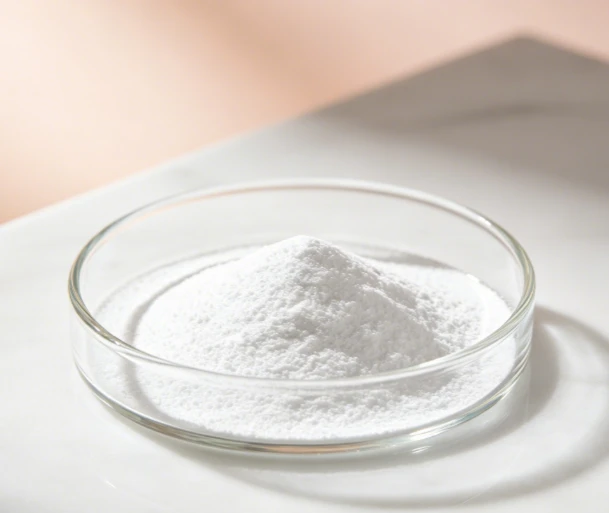
Sodium acetylated hyaluronate (AcHA) is an amphiphilic derivative of hyaluronic acid, produced by partially replacing the hydroxyl groups on the HA backbone with acetyl groups. With a controlled acetyl content of 23–29% and low molecular weight (typically below 100 kDa), AcHA combines both hydrophilic and lipophilic properties, enabling superior skin affinity and deep penetration into the stratum corneum — unlike conventional high-molecular-weight HA, which remains on the skin surface. This unique dual nature makes AcHA a high-performance cosmetic active for long-lasting moisturization, skin barrier repair, cuticle softening, and visible anti-wrinkle effects. As a leading bulk supplier and manufacturer of cosmetic-grade AcHA, we provide high-purity powder with full specification documentation, competitive pricing, and custom molecular weight options for skincare formulators worldwide.
Specifications — Acetyl Content & Molecular Weight
| Parameter | Specification |
|---|---|
| INCI Name | Sodium Acetylated Hyaluronate |
| CAS Number | 158254-23-0 |
| Appearance | White to slightly yellowish powder or granules |
| Acetyl Content | 23.0% – 29.0% |
| Degree of Substitution (DS) | ~2.5 – 3.0 (per disaccharide unit) |
| Molecular Weight (Mw) | 10 kDa – 100 kDa (customizable) |
| Purity (HPLC) | ≥ 95.0% |
| pH (0.1% solution) | 5.5 – 7.5 |
| Loss on Drying | ≤ 10.0% |
| Residual Solvent | ≤ 0.5% |
| Heavy Metals | ≤ 10 ppm |
| Total Plate Count | ≤ 100 CFU/g |
| Yeast & Mold | ≤ 10 CFU/g |
| Surface Tension (0.1% aq.) | ≤ 55 mN/m |
What Is Sodium Acetylated Hyaluronate (AcHA)?
Sodium acetylated hyaluronate, commonly known as AcHA (INCI name: Sodium Acetylated Hyaluronate, CAS: 158254-23-0), is a chemically modified derivative of sodium hyaluronate in which a portion of the hydroxyl groups on the HA disaccharide repeating unit are esterified with acetyl groups.
Each HA disaccharide unit contains four hydroxyl groups available for acetylation, giving a theoretical degree of substitution (DS) range of 0 to 4. Commercial AcHA typically achieves an average DS of approximately 2.5–3.0, corresponding to an acetyl content of 23–29%.
The key innovation of AcHA lies in its amphiphilic structure: the retained carboxylate and unmodified hydroxyl groups maintain HA’s natural hydrophilicity, while the introduced acetyl groups impart lipophilic character. This dual nature allows AcHA to:
- Reduce the surface tension of water (0.1% AcHA lowers surface tension to ~55 mN/m)
- Interact with both the aqueous and lipid phases of the stratum corneum
- Penetrate deeper into the epidermis compared to unmodified HA of equivalent molecular weight
- Form a breathable, non-greasy moisturizing film on the skin surface
Originally developed by Shiseido and now produced by leading biotech manufacturers worldwide, AcHA has become a premium active ingredient in high-end skincare formulations.
Applications — Skincare Formulations & Recommended Usage
- AcHA + High-MW HA: Surface film + deep penetration = multi-layer hydration system
- AcHA + Panthenol (Vitamin B5): Enhanced barrier repair and soothing
- AcHA + Niacinamide: Improved barrier function + brightening
- AcHA + Ceramide NP: Lipid barrier reinforcement + hydration
- AcHA + Peptides (Matrixyl, Argireline): Anti-aging synergy
| Product Type | Recommended Usage Level | Key Benefit |
|---|---|---|
| Serums & Essences | 0.1% – 0.5% | Deep hydration, barrier repair, lightweight texture |
| Creams & Lotions | 0.05% – 0.3% | Long-lasting moisturization, improved skin elasticity |
| Facial Masks (sheet & wash-off) | 0.1% – 1.0% | Intensive hydration, soothing, skin softening |
| Eye Creams | 0.1% – 0.3% | Fine line reduction, gentle hydration around eye area |
| Toner & Mist | 0.01% – 0.1% | Refreshing hydration, prep skin for subsequent products |
| Sun Care & After-Sun | 0.05% – 0.2% | Barrier support, soothing, post-UV recovery |
| Body Lotions & Hand Creams | 0.05% – 0.2% | Softening rough skin, long-lasting body hydration |
| Hair Care (scalp serums) | 0.05% – 0.2% | Scalp hydration, barrier support |
Frequently Asked Questions Sodium Acetylated Hyaluronate (AcHA)
Q: What is the difference between AcHA and regular sodium hyaluronate?
A: AcHA is a chemically modified derivative of HA where acetyl groups are attached to the HA backbone, making it amphiphilic (both water- and oil-loving). Regular HA is purely hydrophilic and stays on the skin surface. AcHA penetrates deeper into the epidermis, provides longer-lasting hydration, and offers additional barrier repair and anti-wrinkle benefits that regular HA cannot match at the same concentration.
Q: Is AcHA vegan and cruelty-free?
A: Yes. Our AcHA is produced from microbial fermentation-derived hyaluronic acid (not rooster comb or other animal sources). The acetylation process uses no animal-derived reagents. We can provide vegan and cruelty-free declarations upon request.
Q: How does AcHA compare to other HA derivatives like hydrolyzed HA or crosslinked HA? A: Each HA derivative serves a different purpose:
- Hydrolyzed HA (oligo-HA): Very low MW (<5 kDa) for maximum penetration, but lacks the amphiphilic film-forming and barrier repair properties of AcHA.
- Crosslinked HA (HA filler gel): Used in injectable dermal fillers and some topical gel products, providing long residence time but not deep penetration.
- AcHA: Unique in combining low-MW penetration with amphiphilic dual action, barrier repair, and anti-wrinkle efficacy — making it the premium choice for leave-on skincare formulations targeting multi-layer hydration and anti-aging.
Sodium Acetylated Hyaluronate (AcHA) Reference
Acetylated Hyaluronic Acid: Enhanced Bioavailability and Biological Studies
- Hyaluronic acid (HA), a macropolysaccharidic component of the extracellular matrix, is common to most species and it is found in many sites of the human body, including skin and soft tissue. Not only does HA play a variety of roles in physiologic and in pathologic events, but it also has been extensively employed in cosmetic and skin-care products as drug delivery agent or for several biomedical applications. The most important limitations of HA are due to its short half-life and quick degradation in vivo and its consequently poor bioavailability. In the aim to overcome these difficulties, HA is generally subjected to several chemical changes. In this paper we obtained an acetylated form of HA with increased bioavailability with respect to the HA free form. Furthermore, an improved radical scavenging and anti-inflammatory activity has been evidenced, respectively, on ABTS radical cation and murine monocyte/macrophage cell lines.