
Spherical Tantalum Powder (99.9% Pure) — Gas-Atomized for LPBF, EBM & DED Additive Manufacturing
Princeton Powder is a leading supplier of high-purity tantalum metal powder, offering particle sizes ranging from Tantalum nanopowder to 325 mesh and 15-53 µm tantalum micron powder. Our ASTM B708 spherical Tantalum Powder, with low oxygen content, high sphericity, and excellent flowability, is used in various applications, including powder metallurgy, thermal spray processes, and additive manufacturing (3D printing).
We provide a wide range of Tantalum powder products including Tantalum Carbide (TaC) Powder, Tantalum Nitride (TaN) Powder, Tantalum(V) oxide Powder, and Tantalum Disilicide powder. Our Satellite-Free Spherical Tantalum Ta powder is for sale at a competitive price in the USA.
Formula | Tantalum Ta |
CAS Number | 7440-25-7 |
Purity | 99.95% min |
Synonyms | Tantalum nano powder, Tantalum spherical powders, Tantalum meta powder, Tantalum thermal spray powder, Ta microns powder |
Particle Sizes | 325 mesh or be customized |
Appearance | Black Color |
Melting Point | 2996°C |
Boiling Point: | 5425°C |
Apparent Density | >9.5 |
Tap Density | >10.5 |
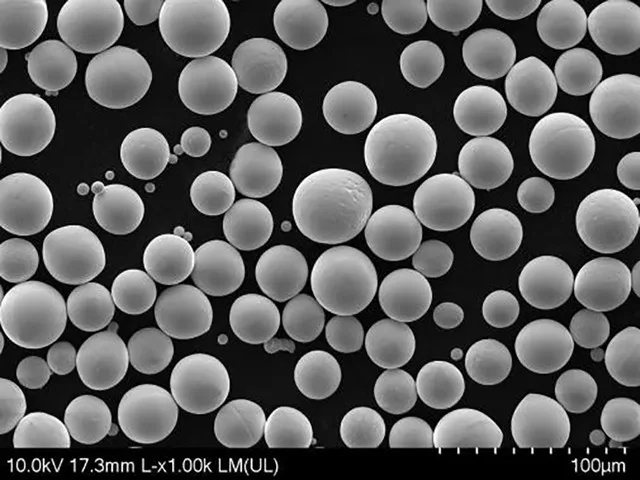
Description of Spheroidized Tantalum Powder
Spherical tantalum powder (CAS 7440-25-7, 99.9% min purity) is a gas-atomized refractory metal powder engineered for laser powder bed fusion (LPBF), electron beam melting (EBM), and directed energy deposition (DED) additive manufacturing. With a melting point of 3,017°C and density of 16.65 g/cm³, tantalum combines exceptional high-temperature performance with outstanding biocompatibility — making it one of the few metals approved for long-term implantable medical devices. In AM, tantalum is primarily used for patient-specific orthopedic and craniofacial implants, aerospace propulsion components, and chemically resistant industrial parts. Princeton Powder supplies Ta powder in 15-45µm (standard LPBF) and 45-106µm (EBM/DED) with custom PSD available.
Why Tantalum for AM?
| Property | Tantalum | Ti-6Al-4V (Reference AM Alloy) | Advantage |
|---|---|---|---|
| Density | 16.65 g/cm³ | 4.43 g/cm³ | Higher radiopacity for medical imaging |
| Melting Point | 3,017°C | 1,660°C | Far superior high-temp performance |
| Biocompatibility | Excellent (FDA-approved implant material) | Good | Osseointegration superior to Ti |
| Corrosion Resistance | Near-platinum level | Good | Immune to most acids except HF |
Chemical Composition of Spherical Tantalum Powder
|
Chemical Composition |
Wt % |
|
Ta |
≥ 99.95 |
|
Ti |
<0.01 |
|
Mo |
<0.005 |
|
W |
<0.01 |
|
Nb |
<0.01 |
|
Si |
<0.005 |
|
Ni |
<0.005 |
|
Fe |
<0.01 |
|
Mg |
<0.001 |
|
Cu |
<0.001 |
|
Al |
<0.001 |
|
Ca |
<0.001 |
|
Gas Impurities |
|
|
O |
≤0.03 |
|
N |
≤0.001 |
|
C |
≤0.001 |
|
H |
≤0.001 |
Particle Size Distribution
| PSD | Application | Key Advantage |
|---|---|---|
| 15-45 µm | LPBF/SLM — medical implants, aerospace | High resolution, >99% achievable density |
| 45-106 µm | EBM, DED — large components | Higher deposition rates, lower cost per kg |
Material & Performance Properties
| Density | 16.65 g/cm³ |
| Melting Point | 3,017 °C |
| Thermal Conductivity | 57.5 W/(m·K) |
| Electrical Resistivity | 13.5 µΩ·cm at 20°C |
| Elastic Modulus | 186 GPa — closer to cortical bone (~18 GPa when porous AM) than Ti or CoCr |
| Biocompatibility | Excellent osseointegration; FDA-approved for permanent implants |
| Corrosion Resistance | Immune to all acids except HF; stable passive Ta₂O₅ oxide layer |
Biocompatibility — Ta's Key Differentiator
Tantalum is one of the most biocompatible metals known — its stable tantalum pentoxide (Ta₂O₅) surface oxide is bioinert, promotes osteoblast adhesion and proliferation, and achieves superior osseointegration compared to titanium. LPBF-printed porous tantalum structures (trabecular metal) with 70-80% porosity produce an elastic modulus of ~3-20 GPa — closely matching human cancellous and cortical bone, eliminating stress shielding that causes implant loosening. This unique combination of AM-enabled porosity + Ta biocompatibility is the primary clinical advantage of tantalum over Ti-6Al-4V for orthopedic implants.
Applications
Medical Implants — LPBF Patient-Specific Orthopedics
Tantalum's primary AM application: LPBF-printed patient-specific orthopedic implants — acetabular cups, spinal fusion cages, craniofacial reconstruction plates, and dental implants. The ability to print trabecular (bone-like) porous structures with 70-80% porosity creates an elastic modulus of 3-20 GPa that matches bone — eliminating stress shielding. Ta's superior osseointegration vs Ti means faster bone ingrowth and stronger implant fixation. FDA-cleared Ta AM implants are in clinical use from Zimmer Biomet and Smith+Nephew.
Aerospace & Defense — EBM High-Temperature Components
Tantalum's 3,017°C melting point and exceptional corrosion resistance make it suitable for AM-printed rocket nozzle liners, missile nose tips, and hypersonic leading edges where temperatures exceed the capability of nickel superalloys. EBM is the preferred process for larger Ta aerospace components due to the elevated build chamber temperature reducing thermal stress.
Chemical Processing — DED Corrosion-Resistant Equipment
Tantalum is immune to attack by most acids (except HF) — making DED-printed Ta heat exchangers, reactor liners, and thermowells the material of choice for chemical plants handling hot sulfuric acid, hydrochloric acid, and nitric acid. AM enables complex internal cooling channels impossible with conventional fabrication.
Frequently Asked Questions
Why use tantalum instead of titanium for AM medical implants?
Tantalum offers superior osseointegration (bone bonding), higher radiopacity (better CT/MRI visibility), and when AM-printed with 70-80% porosity, achieves an elastic modulus of 3-20 GPa — closely matching bone and eliminating stress shielding. Ti-6Al-4V has a modulus of ~110 GPa which is significantly stiffer than bone. Ta's modulus-matching capability is its primary clinical advantage.
What particle size for LPBF tantalum?
15-45µm is the standard LPBF range — achieving >99% density with optimized parameters. For EBM, 45-106µm is recommended due to the larger beam diameter. Custom PSD available.
Is tantalum powder biocompatible?
Yes — tantalum is one of the most biocompatible metals, with its stable Ta₂O₅ oxide layer promoting osteoblast adhesion without fibrous encapsulation. FDA-approved for permanent implants. ISO 10993 biocompatibility testing data available.
Why is tantalum powder more expensive than titanium?
Tantalum is a rare refractory metal with higher raw material cost, higher melting point (3,017°C vs 1,660°C for Ti), and higher density (16.65 vs 4.43 g/cm³). However, Ta's unique biocompatibility and corrosion resistance justify the premium for medical and chemical applications where performance is critical.
What oxygen content is acceptable for AM tantalum?
<300 ppm oxygen is the standard for AM-grade Ta powder. Higher oxygen causes embrittlement in as-printed parts. Princeton Powder Ta is certified <300 ppm O with LECO analysis per lot.
MOQ and lead time?
MOQ: 100 g for R&D; 1 kg for production. Lead: 2-3 weeks. Medical certification packages available. Contact +1 (646) 749-1791.
Research & Technical References
The following research demonstrates tantalum AM performance in medical and aerospace applications.
LPBF of Pure Tantalum: Densification, Microstructure & Mechanical Properties for Medical Implants
Additive Manufacturing (Elsevier), 2020 — Achieved 99.5% density with 15-45µm gas-atomized Ta powder. As-printed UTS of 490 MPa with 28% elongation. Porous structures (70-80% porosity) achieved elastic modulus of 3-20 GPa — matching cortical and cancellous bone. Practical takeaway: Princeton Powder's 15-45µm Ta targets the PSD and purity validated for dense, ductile LPBF medical implants.
Osseointegration of LPBF-Printed Porous Tantalum vs Titanium: In Vivo Comparative Study
Acta Biomaterialia (Elsevier), 2021 — 12-week sheep study: LPBF-printed porous Ta demonstrated 40% greater bone-implant contact and 60% higher pull-out force vs identically designed porous Ti. Histology confirmed osteoblast adhesion directly on Ta struts without fibrous tissue interposition. Practical takeaway: Our medical-grade Ta powder enables the osseointegration advantage documented in this study — critical for implant manufacturers seeking clinical differentiation.
Contact for full reference list and medical-grade certification documentation.