
Pyrolytic Boron Nitride (PBN) Crucible for MBE, OLED, Semiconductor
High purity PBN crucibles are specially engineered for MBE systems, OLED thermal evaporation processes, and compound semiconductor single crystal growth. Fabricated via advanced Chemical Vapor Deposition (CVD) technology, our pyrolytic boron nitride crucibles deliver exceptional ultra-high purity, superior high-temperature resistance, excellent thermal stability and outstanding thermal shock resistance. We offer fully customizable sizes, wall thicknesses, inner diameters, depths and complex geometries to match diverse industrial equipment and production requirements. Featuring non-wetting property against molten metals and semiconductor materials, great chemical inertness and low contamination risk, these CVD PBN crucibles have become the ideal consumables for molecular beam epitaxy, organic light-emitting diode evaporation, III-V group compound semiconductor crystal growth, rare earth material melting and high-vacuum thermal processing applications.
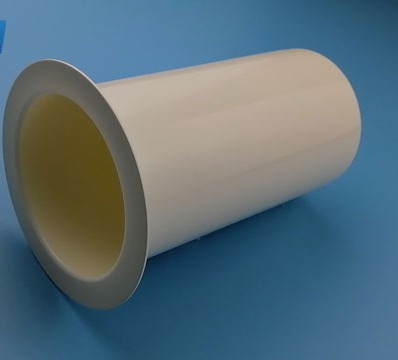
PBN Crucible Products & Grades
Princeton Powder supplies pyrolytic boron nitride (PBN) crucibles manufactured by chemical vapor deposition (CVD) for the highest purity and performance. Our PBN crucibles are used globally in molecular beam epitaxy (MBE), OLED thermal evaporation, GaAs/GaN crystal growth, and advanced semiconductor R&D.
Standard PBN Crucible
Pure pyrolytic boron nitride, CVD-manufactured
Purity: 99.99% (4N)
Density: 1.95-2.15 g/cm³
Wall thickness: 0.5-3.0 mm (customizable)
MBE Grade
High Purity PBN Crucible
Ultra-low impurity grade for critical processes
Purity: 99.999% (5N)
Total metallic impurities < 1 ppm
Suitable for GaN, SiC, and ultra-sensitive applications
Ultra-High Purity Semiconductor
Custom PBN Crucible
Tailored geometry, size, and configuration
Custom shapes: cylindrical, conical, boat, stepped
Flanged, threaded, and multi-zone options available
PBN Crucible Physical Properties
| Property | Typical Value | Unit |
|---|---|---|
| Density | 1.95 – 2.15 | g/cm³ |
| Maximum Service Temperature (Vacuum/Inert) | 1800 | °C |
| Maximum Service Temperature (N₂ atmosphere) | 2000 | °C |
| Thermal Conductivity (a-b plane) | 60 – 80 | W/m·K |
| Thermal Conductivity (c-axis) | 2 – 3 | W/m·K |
| Coefficient of Thermal Expansion (a-b) | -2.5 to +2.0 | ×10⁻⁶/K |
| Dielectric Strength | 40 | kV/mm |
| Volume Resistivity | >10¹⁼ | Ω·cm |
| Flexural Strength | 120 – 180 | MPa |
| Purity (Standard) | ≥99.99% (4N) | — |
PBN Crucible Standard Dimensions
| Shape | Outer Diameter (OD) | Height | Wall Thickness | Typical Application |
|---|---|---|---|---|
| Cylindrical | 10 – 200 mm | 20 – 300 mm | 0.5 – 3.0 mm | MBE Effusion Cell |
| Conical (Tapered) | 10 – 150 mm | 20 – 250 mm | 0.5 – 3.0 mm | Thermal Evaporation |
| Boat Type | Custom | Custom | 0.5 – 2.0 mm | Resistive Evaporation |
| Custom Geometry | Engineered to your specifications | R&D / Specialty | ||
PBN Crucible vs. Other Crucible Materials
| Property | PBN | Quartz (SiO₂) | Alumina (Al₂O₃) | Graphite |
|---|---|---|---|---|
| Max Temperature | 1800°C | 1100°C | 1750°C | 3000°C |
| Thermal Shock Resistance | Excellent | Poor | Fair | Excellent |
| Chemical Inertness | Excellent | Fair | Good | Fair (reactive) |
| Non-Wetting | Excellent | Poor | Fair | Poor |
| Purity | 99.99%+ | 99.9% | 99.7% | 99.9% |
| Oxygen Contamination Risk | None | High | Moderate | None |
| Reusability | High | Low | Moderate | Moderate |
| Cost | Higher initial | Low | Low | Moderate |
Quality Assurance & Manufacturing
CVD Manufacturing Process
Our PBN crucibles are manufactured using chemical vapor deposition (CVD), where high-purity BCl₃ and NH₃ gases react at approximately 1800°C to deposit dense, anisotropic pyrolytic boron nitride onto precision graphite mandrels. After deposition, the mandrel is removed, yielding a free-standing, full-density PBN crucible with uniform wall thickness and exceptional surface quality.
Purity Certification
Every lot is analyzed using GDMS (Glow Discharge Mass Spectrometry) to certify purity levels and elemental composition. Certificates of Analysis (COA) provided with each shipment.
Dimensional Inspection
100% dimensional inspection using CMM (Coordinate Measuring Machine) and laser profilometry to ensure compliance with your specifications.
Thermal Validation
Thermal cycling and outgassing testing available to validate performance under your specific process conditions.
Pyrolytic Boron Nitride (PBN) Crucible Applications by Industry
Molecular Beam Epitaxy (MBE): PBN crucibles are the gold standard for MBE effusion cells, used for GaAs, GaN, InP, and other III-V compound semiconductor growth. Zero outgassing ensures ultra-clean epitaxial layers.
OLED Evaporation: High-purity PBN crucibles for organic material evaporation in OLED display manufacturing. Non-reactive surface prevents contamination of sensitive organic compounds.
Compound Semiconductor Crystal Growth: Bridgman and Czochralski crystal growth of GaAs, InP, CdTe, and other compound semiconductors using PBN crucibles for superior purity and non-wetting performance.
Thin Film Deposition: Thermal and e-beam evaporation sources for metals, dielectrics, and optical coatings. PBN’s thermal shock resistance enables rapid cycling between deposition runs.
Optoelectronics: Laser diode, LED, and photodetector manufacturing using PBN crucibles for reliable, repeatable material evaporation with tight composition control.
Research & Development: University and industrial R&D labs choose PBN crucibles for their versatility, purity, and ability to handle a wide range of materials from low to ultra-high temperatures.
Pyrolytic Boron Nitride (PBN) Crucible scholar article
Influence of pyrolytic boron nitride crucibles on GaAs crystal growth process and crystal properties
Abstract: The influence of pyrolytic boron nitride (pBN) crucibles on the GaAs liquid encapsulated Crochralski (LEC) growth process and on the crystal properties was investigated. An increased boron concentration in the crystals is found to be caused by oxidation processes between B2O3 · xH2O, GaAs and impurity elements in GaAs as a function of water content and not by dissolution of boron from the crucible. Variations of pBN deposition parameters influence the texture and properties of pBN crucibles with regard to their suitability for the GaAs LEC crystal growth application. Correlations between pBN morphologies and thermal conditions of GaAs growth process and the crystal perfection were found. The best results are obtained by using so-called substrate nucleated pBN crucibles.
Frequently Asked Questions (FAQ)
People also ask about PBN crucibles:
A PBN crucible is a high-purity container made from pyrolytic boron nitride, an advanced ceramic material produced by chemical vapor deposition (CVD) of boron and nitrogen. Unlike conventional sintered ceramics, CVD PBN is fully dense, anisotropic, and contains no binders or sintering aids. PBN crucibles are known for their exceptional thermal stability, chemical inertness, and non-wetting properties, making them the preferred choice for molecular beam epitaxy (MBE), OLED evaporation, and compound semiconductor crystal growth where contamination control is critical.
PBN crucibles can withstand service temperatures up to 1800°C in vacuum or inert gas environments (argon, helium). In nitrogen atmospheres, the maximum operating temperature extends to approximately 2000°C. PBN exhibits excellent thermal shock resistance, enduring rapid heating and cooling cycles without cracking — a critical advantage over quartz and alumina crucibles. Note: PBN begins to oxidize above ~900°C in air, so it must be used in vacuum or inert atmospheres for high-temperature applications.
PBN crucibles outperform quartz crucibles in several key areas: (1) Thermal conductivity — PBN's anisotropic thermal conductivity (60-80 W/m·K in-plane) provides more uniform heating, while quartz is a poor thermal conductor. (2) Chemical inertness — PBN does not react with most molten metals and semiconductors; quartz can react and introduce silicon/oxygen contamination. (3) Thermal shock — PBN handles rapid temperature cycling without damage; quartz is prone to thermal shock cracking. (4) Non-wetting — PBN's surface prevents material adhesion; quartz wets with many materials. (5) Oxygen risk — PBN introduces zero oxygen; quartz can release oxygen at elevated temperatures, oxidizing sensitive materials.
PBN crucibles are the industry standard for MBE effusion cells because they deliver: (1) Ultra-high purity with no outgassing at MBE operating temperatures, ensuring the epitaxial layer is not contaminated. (2) Excellent thermal uniformity for stable, consistent evaporation flux rates. (3) Chemical inertness preventing any reaction with source materials (Ga, Al, In, As, etc.). (4) Non-porous, smooth surface that ensures reproducible beam flux characteristics. (5) Long service life — PBN crucibles can be reused for many growth cycles, reducing per-run cost and improving process consistency.
PBN crucibles are manufactured exclusively via chemical vapor deposition (CVD). The process involves reacting high-purity boron trichloride (BCl₃) gas with ammonia (NH₃) gas at approximately 1800°C inside a vacuum furnace. The reaction deposits pyrolytic boron nitride atom-by-atom onto a precision-machined graphite mandrel shaped to the desired crucible geometry. The CVD process continues until the target wall thickness is achieved (typically 0.5-3.0 mm, taking hours to days). After deposition, the crucible is cooled and the graphite mandrel is mechanically removed, leaving a free-standing, fully dense PBN crucible with extremely tight dimensional tolerances.
Yes, PBN crucibles are reusable — this is one of their key economic and operational advantages. The non-wetting surface allows easy removal of residual source materials after each run. Their excellent thermal shock resistance means they can withstand hundreds of heating/cooling cycles without degradation. With proper handling, cleaning (typically mechanical removal of residues followed by a bake-out cycle), and storage, a single PBN crucible can last for many deposition cycles, offering significantly lower total cost of ownership compared to single-use alternatives.
Standard PBN crucibles have a purity of 99.99% (4N) with total metallic impurities below 10 ppm. High-purity grades achieve 99.999% (5N) with total metallic impurities <1 ppm. The CVD manufacturing process inherently produces ultra-pure material because it uses high-purity gaseous precursors — there are no binders, sintering aids, or other additives that could introduce contaminants. For the most demanding applications like GaN power electronics and SiC crystal growth, high-purity PBN crucibles with individually certified GDMS impurity analysis are available.
Common PBN crucible shapes include: Cylindrical (straight-wall, most common for MBE effusion cells), Conical (tapered wall, preferred for thermal evaporation), Boat-type (rectangular, for resistive evaporation sources), Stepped/Flanged (for mounting in specific cell designs), and Fully custom geometries (multi-zone, partitioned, threaded). Because PBN crucibles are made by CVD onto custom graphite mandrels, nearly any axisymmetric shape can be produced. Non-axisymmetric and complex internal features are also achievable with multi-part mandrel designs.
PBN crucible pricing depends on size, shape complexity, wall thickness, purity grade, and order quantity. Small standard cylindrical crucibles (e.g., 20mm OD) for R&D MBE systems may start in the hundreds of dollars range, while large custom crucibles for production OLED or crystal growth systems can cost several thousand dollars each. Because PBN crucibles are reusable, the amortized cost per deposition run is competitive. Volume discounts are available for production quantities. Contact us with your specifications for a detailed quotation.
PBN crucibles are compatible with a wide range of materials including gallium, indium, aluminum, arsenic, antimony, silver, gold, germanium, silicon, selenium, tellurium, and many organic compounds. However, PBN is not compatible with: molten silicon at very high temperatures (Si reacts with BN to form Si₃N₄), strong oxidizing atmospheres above 900°C (PBN oxidizes to B₂O₃), and certain reactive metals (titanium, zirconium, hafnium at high temperatures). Always verify material compatibility for your specific application, or consult our technical team.