
Spherical CuSn10 Bronze Powder (Tin Bronze) — Gas-Atomized for LPBF Additive Manufacturing, PM & Thermal Spray
CuSn10 powder is a copper-based alloy containing 10% tin and 90% copper, commonly referred to as tin bronze powder. This alloy is widely used for its excellent wear resistance, good thermal conductivity, high strength, and superior corrosion resistance, especially in marine and moist environments. The spherical CuSn10 powder produced via gas atomization ensures high flowability and uniform density—ideal for metal 3D printing, powder metallurgy, and thermal spraying applications.
Formula | CuSn10, Bronze |
Synonyms | CuSn10 spherical particles, Bronze spherical powders, Copper-Tin Alloys Powder, CuSn10 thermal spray powder, CuSn10 gas atomized powder |
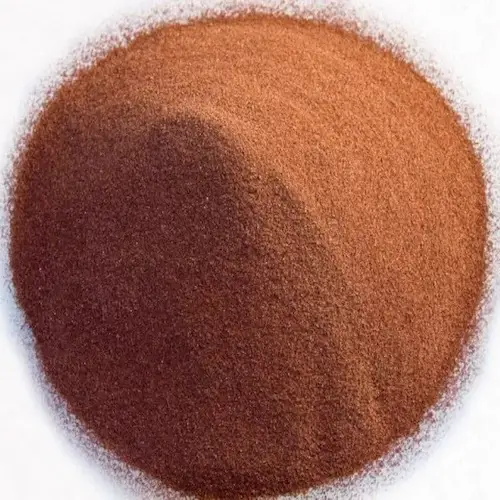
Appearance | Brown Powder |
Particle Size | 0-45 um, 45-105 um, can be customized upon request |
Melting Point | 1020 – 1040°C |
Density | 8.8 g/cm 3 |
Tensile strength | 350-550 MPa |
Apparent density | >4.4 g/m3 |
Product Overview
Spherical CuSn10 powder (tin bronze, ~90% Cu / 10% Sn) is a gas-atomized copper-tin alloy powder engineered for laser powder bed fusion (LPBF/SLM) additive manufacturing, powder metallurgy pressing, and HVOF thermal spray coating. Tin bronze combines high strength (350-450 MPa UTS as-printed) with excellent wear resistance (60% lower wear rate vs. cast bronze in dry sliding), good corrosion resistance in marine and industrial environments, and high fatigue strength — making it the material of choice for AM-printed bearings, gears, pump impellers, and wear-resistant mechanical components. Princeton Powder supplies CuSn10 in two standard particle size ranges: 15–45 µm (optimized for LPBF/SLM with >99% achievable density) and 75–150 µm (optimized for HVOF, plasma spray, and PM pressing).
What is CuSn10 Tin Bronze?
CuSn10 (UNS C90500 equivalent) is a cast and wrought tin bronze alloy containing approximately 90% copper and 10% tin, with small additions of phosphorus for deoxidation. It is one of the most widely used copper alloys for mechanical applications due to its combination of high strength, excellent wear resistance, good corrosion resistance (particularly in seawater and industrial atmospheres), and high fatigue strength. In powder form, gas-atomized spherical CuSn10 is the standard bronze feedstock for LPBF additive manufacturing of dense (>99%), high-strength metal components that match or exceed the mechanical properties of cast CuSn10.
Particle Size Availability
| PSD Range | Application | Key Advantage |
|---|---|---|
| 15–45 µm | LPBF/SLM 3D printing | >99% achievable density, compatible with 30-60µm layer thickness |
| 75–150 µm | HVOF/Plasma thermal spray, PM pressing | High deposition efficiency, optimal flow for powder feeders and compaction |
Custom PSD available for specific AM machine requirements. Contact our technical team with your target layer thickness and powder bed specifications.
Chemical Composition
| Element | Weight % |
|---|---|
| Copper (Cu) | Remainder |
| Tin (Sn) | 9-11% |
| Lead (Pb) | 0.2% max |
| Zinc (Zn) | 0.5% max |
| Other impurities | 0.1% max |
ICP-OES Certificate of Analysis verifying Cu and Sn wt% provided with every lot. Tight chemistry control ensures consistent mechanical properties and predictable AM processing — Sn content maintained at 10% ±0.5% per lot.
Mechanical Properties — As-Printed vs. Heat Treated
| Property | As-Printed (LPBF) | Heat Treated (T6-like) |
|---|---|---|
| UTS | 350–450 MPa | 280–330 MPa |
| Yield Strength | 200–270 MPa | 210–260 MPa |
| Elongation | 3–8% | 8–12% |
| Hardness | 120–140 HV | 100–120 HV |
| Density | ~8.78 g/cm³ (theoretical); 99.5%+ achievable in LPBF | |
| Wear Rate vs. Cast Bronze | 60% lower (HVOF-sprayed CuSn10, Wear journal 2017) | |
Published research (Additive Manufacturing, 2019) achieved 420 MPa UTS with 99.5% density using 15-45µm gas-atomized CuSn10 at optimized LPBF parameters — validating that spherical powder morphology and tight chemistry directly enable high-performance as-printed mechanical properties. Choose as-printed condition for maximum strength; choose heat-treated for improved ductility and fatigue life.
Applications
LPBF Metal Additive Manufacturing
CuSn10 is the standard bronze alloy for LPBF/SLM 3D printing of wear-resistant mechanical components — bearings, bushings, gears, pump impellers, and marine hardware. Published research (Additive Manufacturing, 2019) achieved 99.5% relative density with 15-45µm gas-atomized CuSn10 at optimized laser parameters, yielding UTS of 420 MPa as-printed. The spherical morphology ensures consistent powder spreading and high packing density for dense, defect-free parts. For production AM fleets, our 15-45µm CuSn10 is supplied in bulk quantities with lot-to-lot PSD and chemistry consistency verified.
Powder Metallurgy Bearings & Structural Parts
CuSn10 powder is the primary material for manufacturing self-lubricating sintered bronze bearings (oil-impregnated porous bearings), structural gears, camshaft bushings, and wear plates via press-and-sinter powder metallurgy. The 10% Sn content provides the optimal balance of strength, ductility, and wear resistance for PM processing. Our 75-150µm powder is the standard recommendation for PM applications — the larger particle size provides adequate green strength during compaction while maintaining uniform sintering response.
Thermal Spray Wear-Resistant Coatings
75-150µm CuSn10 powder is widely used in HVOF and plasma thermal spray for depositing wear-resistant coatings on steel shafts, hydraulic cylinders, marine propeller shafts, and industrial pump components exposed to corrosive and abrasive environments. Published research (Wear, 2017) demonstrated 60% lower wear rate for HVOF-sprayed CuSn10 vs. cast bronze under dry sliding conditions, attributed to the finer, more homogeneous coating microstructure.
Frequently Asked Questions
What is CuSn10 bronze powder used for?
CuSn10 (tin bronze, ~90% Cu / 10% Sn) powder is used for LPBF/SLM 3D printing of wear-resistant mechanical components (bearings, gears, impellers), press-and-sinter powder metallurgy self-lubricating bearings, and HVOF thermal spray wear-resistant coatings on steel shafts and hydraulic components. Its combination of high strength (350-450 MPa UTS as-printed), excellent wear resistance, and good corrosion resistance makes it the standard bronze alloy for AM and thermal spray applications.
15-45µm vs 75-150µm — which particle size for my application?
15-45µm is the standard range for LPBF/SLM 3D printing — compatible with 30-60µm layer thicknesses, achieving >99% relative density with optimized parameters. 75-150µm is the standard range for HVOF/plasma thermal spray and powder metallurgy pressing — larger particles provide better flow through powder feeders and adequate green strength during PM compaction. Not sure? Contact our technical team with your machine model and process parameters for a PSD recommendation.
What is the difference between CuSn10 (tin bronze) and brass (CuZn) powder?
CuSn10 (tin bronze) offers higher strength (350-450 MPa vs 280-350 MPa), better wear resistance (60% lower wear rate than cast bronze), and superior fatigue properties vs. brass. Brass (CuZn) offers better electrical conductivity and a gold-like appearance for decorative applications. For mechanical components requiring strength and wear resistance, choose CuSn10. For electrical/thermal conductivity or decorative appearance, choose brass.
What mechanical properties can I expect from LPBF-printed CuSn10?
As-printed LPBF CuSn10 typically achieves: UTS 350-450 MPa, yield strength 200-270 MPa, elongation 3-8%, hardness 120-140 HV. After T6-like heat treatment: UTS 280-330 MPa, elongation 8-12%, improved fatigue life. Published research (Additive Manufacturing, 2019) achieved 420 MPa UTS with 99.5% density using 15-45µm gas-atomized powder and optimized laser parameters.
What documentation and testing do you provide?
Every order includes: ICP-OES Certificate of Analysis (Cu, Sn verified), laser diffraction PSD (D10/D50/D90), SEM morphology imaging, Hall flow rate, apparent density, and ISO 9001:2015 CoC. Additional testing (XRD phase analysis, chemical titration, sieve analysis) available upon request.
What is the MOQ and lead time for CuSn10 powder?
MOQ: 1 kg for sampling and material qualification; 10 kg+ for production orders. Standard lead time: 1-2 weeks for stock 15-45µm and 75-150µm PSD ranges; 3-4 weeks for custom PSD cuts. Bulk pricing available for 100 kg+ orders. Contact our sales team at +1 (646) 749-1791 for a same-day quotation.
Research & Technical References
The following peer-reviewed research demonstrates CuSn10 bronze powder performance in AM and thermal spray. Princeton Powder CuSn10 meets or exceeds the material specifications used in these studies.
LPBF Process Optimization for CuSn10 Bronze: Density, Microstructure & Mechanical Properties
Additive Manufacturing (Elsevier), Volume 28, 2019 — Achieved 99.5% relative density with 15-45µm gas-atomized CuSn10 powder at optimized laser parameters (250-350 W, 800-1200 mm/s), yielding UTS of 420 MPa as-printed. The fine cellular-dendritic LPBF microstructure provided higher strength than cast CuSn10. Practical takeaway: Princeton Powder's 15-45µm CuSn10 targets the exact PSD and spherical morphology validated by this study for high-density, high-strength LPBF bronze components — eliminating AM process development trial-and-error.
Wear Behavior of Thermally Sprayed CuSn10 Coatings on Steel Substrates
Wear (Elsevier), Volumes 376-377, 2017 — HVOF-sprayed CuSn10 coatings using 45-90µm powder showed 60% lower wear rate vs. conventionally cast CuSn10 bronze under dry sliding conditions, attributed to the finer, more homogeneous microstructure from rapid solidification. Coating porosity was <1.5% with bond strength >50 MPa on grit-blasted steel. Practical takeaway: Our 75-150µm CuSn10 is optimized for the HVOF parameters validated by this research — providing the 60% wear reduction that makes thermally sprayed bronze a viable replacement for solid bronze wear components.
Contact our technical team for the full reference list and to discuss CuSn10 powder specifications for your specific AM, PM, or thermal spray application.