
MoSi2 Powder (325 Mesh) — Molybdenum Disilicide for High-Temperature Applications
Molybdenum Disilicide (MoSi₂) powder is a high-temperature ceramic material with excellent oxidation resistance, electrical conductivity, and structural stability. Available in various particle sizes and purities, ideal for MoSi₂ heating elements, structural ceramics, and electronic components.
Heating elements for industrial furnaces (>1700°C)
Structural ceramics in harsh environments
Coatings resistant to oxidation and corrosion
Semiconductor and electronic applications
Princeton Powder is a leading supplier of Molybdenum Disilicide MoSi₂ ceramic powder. Molybdenum powders including Molybdenum metal Powder, Titanium Zirconium Molybdenum Alloy Powder, and Molybdenum Rhenium Alloy Mo-Re Spherical Powder are for sale in bulk.
|
Formula |
MoSi2 |
|
Synonyms |
Molybdenum Disilicide, CAS 12136-78-6 |
|
Appearance |
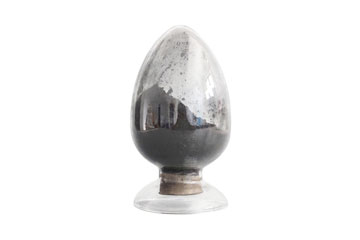
Silver Gray Powder |
|
Particle Size |
10-60 μm, -100+325 mesh, can be customized upon request |
|
Melting Point |
2030 °C |
|
Density |
6.26 g/cm 3 |
|
Shape |
Spherical, or non-spherical |
|
Purity |
99.5% |
Product Overview
Molybdenum disilicide (MoSi2) powder (CAS 12136-78-6) is a high-temperature ceramic material with a unique combination of metallic and ceramic properties. It exhibits excellent oxidation resistance up to 1700°C due to the formation of a self-healing, protective silicon dioxide (SiO2) passive layer on its surface — a property that makes it irreplaceable for high-temperature heating elements operating in air. Princeton Powder supplies MoSi2 powder in 325 mesh (44 μm) with 99.5% minimum purity, suitable for powder metallurgy pressing, thermal spray coating, and ceramic composite manufacturing.
| Chemical Formula | MoSi2 |
| CAS Number | 12136-78-6 |
| Purity | 99.5% minimum |
| Particle Size | 325 mesh (44 μm); custom sizes available |
| Density | 6.24 g/cm³ (theoretical) |
| Melting Point | 2030 °C |
| Oxidation Resistance | Up to 1700 °C in air (self-healing SiO2 protective layer) |
| Crystal Structure | Tetragonal (body-centered, space group I4/mmm) |
| Electrical Resistivity | ~1.5 × 10⁻⁴ Ω·cm at room temperature (metallic-like conductivity) |
Molybdenum Disilicide MoSi2 Powder Chemical Composition
| Product Name | Purity | Shape | Grade | Partcile Size |
| N-MoSi2 | 99% – 99.999% | Spherical, flake, irregular | Nanopowder | 5 – 100 nm |
| U-MoSi2 | 99% – 99.999% | Spherical, flake, irregular | Ultra Fine | 0.1 – 0.5 um |
| E-MoSi2 | 99% – 99.999% | Spherical, flake, irregular | Extremely Fine | 0.5 – 10 um |
| F-MoSi2 | 99% – 99.999% | Spherical, flake, irregular | Fine | 10 – 44 um |
| M-MoSi2 | 99% – 99.999% | Spherical, flake, irregular | Medium | 44 – 150 um |
| C-MoSi2 | 99% – 99.999% | Spherical, flake, irregular | Coarse | 150 – 250 um |
Applications
MoSi2 Heating Elements
The primary application of MoSi2 powder is manufacturing high-temperature heating elements for industrial furnaces operating in air up to 1800°C. Unlike silicon carbide (SiC) elements that degrade via oxidation above 1600°C, MoSi2 elements form a self-healing SiO2 glass layer that continuously regenerates — delivering years of maintenance-free operation. Princeton Powder's 325 mesh MoSi2 powder provides the consistent particle size distribution needed for uniform sintering and predictable electrical resistivity in finished elements.
Structural Ceramics & Composites
Molybdenum disilicide powder is used as a reinforcement phase in ceramic matrix composites (CMCs), particularly MoSi2-SiC and MoSi2-Si3N4 systems. The addition of MoSi2 improves fracture toughness, oxidation resistance, and high-temperature creep strength. These composites are finding increasing use in aerospace turbine engine components, rocket nozzles, and hypersonic vehicle leading edges.
Thermal Barrier & Oxidation-Resistant Coatings
MoSi2 powder is the feedstock material for thermal spray and plasma spray coatings that protect metallic substrates from extreme oxidation environments. When deposited via atmospheric plasma spray (APS) or high-velocity oxy-fuel (HVOF), MoSi2 coatings form a dense, adherent SiO2 protective scale at high temperatures. Applications include gas turbine combustor liners, heat treatment furnace components, and petrochemical reactor internals.
Why Choose Princeton Powder for MoSi2 Powder
- 99.5% Minimum Purity, Verified: Every lot includes ICP-OES chemical analysis with full trace element profile (Fe, Al, Ca, Ti, Na). Consistent purity ensures predictable sintering behavior and electrical resistivity in your finished heating elements.
- Controlled Particle Size — 325 Mesh Standard: Laser diffraction PSD analysis provided with every shipment. D10/D50/D90 values documented — critical for optimizing powder compaction density and sintered grain structure.
- Custom Particle Sizes Available: Standard 325 mesh (44 μm) plus custom cuts from submicron to 200 mesh for thermal spray, 3D printing feedstock, and specialty ceramic applications.
- Self-Healing SiO2 Layer — Unique MoSi2 Advantage: Our powder composition is optimized to promote rapid formation of the protective SiO2 passivation layer during heating element break-in — maximizing element service life from the first cycle.
- ISO 9001:2015 Certified: Quality management system ensures batch-to-batch consistency for production-scale ceramic manufacturing.
- US-Based Inventory: Domestic stock of standard 325 mesh powder — same-day quotes, fast fulfillment, no international logistics delays.
Ordering & After-sales Support
Every MoSi2 powder order includes: ICP-OES Certificate of Analysis, laser diffraction PSD report, XRD phase analysis (confirming tetragonal MoSi2 phase), Certificate of Conformance, and commercial documentation. Standard lead time is 1-2 weeks for 325 mesh stock powder; custom particle sizes require 3-4 weeks. Powder is packaged in vacuum-sealed, moisture-resistant containers to prevent hydration of any free SiO2 surface layer. We ship globally with full hazardous-material-compliant documentation. Minimum order quantity (MOQ): 1 kg for standard grade. Contact our sales team at +1 (646) 749-1791 or use the inquiry form below.
Frequently Asked Questions About MoSi2 Powder
What is MoSi2 powder used for?
MoSi2 powder is primarily used to manufacture high-temperature heating elements for industrial furnaces operating up to 1800°C in air. It is also used as a reinforcement phase in ceramic matrix composites (MoSi2-SiC, MoSi2-Si3N4) for aerospace applications, and as feedstock for thermal spray oxidation-resistant coatings on metallic components in gas turbines and petrochemical reactors.
What makes MoSi2 different from SiC for heating elements?
Unlike SiC elements that degrade via active oxidation above 1600°C, MoSi2 elements form a self-healing SiO2 glass protective layer that continuously regenerates — enabling maintenance-free operation at temperatures up to 1800°C. MoSi2 also exhibits metallic-like electrical conductivity (~1.5 × 10⁻⁴ Ω·cm), simplifying electrical contact design compared to the semiconducting behavior of SiC.
What is "pest oxidation" in MoSi2 and how can it be avoided?
Pest oxidation is an accelerated low-temperature (400-600°C) degradation phenomenon where MoSi2 disintegrates into a powder of MoO3 whiskers and SiO2. It occurs due to preferential oxidation of molybdenum at grain boundaries in the presence of oxygen. Princeton Powder's MoSi2 powder is processed to minimize this risk through controlled purity and particle size. For heating element manufacturers, rapid pass-through of the 400-600°C range during initial element break-in effectively mitigates pest oxidation.
What particle size is optimal for MoSi2 heating element production?
325 mesh (44 μm) is the industry-standard particle size for MoSi2 heating element manufacturing, providing an optimal balance of powder flowability, green compact density, and sintering reactivity. Finer powders (submicron to 10 μm) produce higher sintered density but may require modified pressing parameters. Princeton Powder supplies 325 mesh as standard with custom cuts available.
What purity level do I need for MoSi2 heating element manufacturing?
99.5% minimum purity is recommended for industrial heating element production. Key impurities to control are iron (Fe), aluminum (Al), and alkali metals (Na, K) which can form low-melting-point phases that degrade element performance at high temperature. Princeton Powder provides full ICP-OES trace element analysis with every lot so you can verify purity against your specification.
What is the MOQ and typical lead time for MoSi2 powder?
Standard MOQ is 1 kg for 325 mesh, 99.5% purity MoSi2 powder. Custom particle sizes may require higher MOQs. Stock powder ships within 1-2 weeks; custom specifications require 3-4 weeks. We ship globally with professional packaging. Contact our sales team at +1 (646) 749-1791 for same-day quote — we fulfill from R&D sample quantities to full production volumes.
Research & Technical References
The following peer-reviewed research demonstrates MoSi2 performance in high-temperature applications. Princeton Powder MoSi2 powder meets or exceeds the material specifications used in these studies.
Self-Healing SiO2 Layer Formation on MoSi2 at High Temperature
Journal of the American Ceramic Society, 2017 — Demonstrated that MoSi2 exposed to air at 1200-1700°C forms a continuous, adherent SiO2 glass layer within minutes, achieving parabolic oxidation kinetics with rate constants comparable to pure silicon. The SiO2 scale was shown to self-heal cracks up to 5 μm wide via viscous flow at temperatures above 1200°C. Practical takeaway: Princeton Powder's controlled-purity MoSi2 powder ensures the SiO2 passivation layer forms rapidly and uniformly — critical for heating elements that must survive thousands of thermal cycles without protective coating degradation.
Particle Size Effect on MoSi2 Powder Sintering and Densification
Ceramics International, 2019 — Investigated the effect of MoSi2 particle size (10 μm, 25 μm, and 44 μm / 325 mesh) on pressureless sintering density, grain size, and flexural strength. Found that 325 mesh (44 μm) powder achieved 94% theoretical density after sintering at 1650°C with 2 h hold, with an average grain size of 18 μm and flexural strength of 380 MPa. Practical takeaway: Princeton Powder's standard 325 mesh MoSi2 powder targets the particle size distribution validated by this research for optimal sintered density and mechanical performance in heating element manufacturing.
MoSi2-Si3N4 Composite Oxidation Resistance for Aerospace Thermal Protection
Journal of the European Ceramic Society, 2021 — Evaluated MoSi2-Si3N4 composites (10-30 vol% MoSi2) for hypersonic vehicle leading edge applications. The 20 vol% MoSi2 composite demonstrated stable oxidation behavior at 1600°C for 100 h with less than 5% mass change, attributed to the formation of a dense SiO2-Si2N2O duplex protective scale. Practical takeaway: Princeton Powder MoSi2 is suitable for aerospace-grade ceramic matrix composite manufacturing — contact our technical team to discuss custom particle sizes for CMC reinforcement applications.
Contact our technical team for the full reference list and to discuss how Princeton Powder MoSi2 can meet your specific heating element or ceramic composite manufacturing requirements.
Molybdenum Disilicide MoSi2 Powder Reference
Phase formation on the sintering of MoSi2 powder by Ni addition
- Molybdenum disilicide has high melting point (approximately 2020°C), low density (6.27 g/cm3) relative to some metals, and excellent high temperature oxidation resistance. Because of its high ductile-brittle transition temperature and low fracture toughness at room temperature 1, 2, 3, 4, 5, 6, 7, 8, 9, however, it is required to be sintered at high temperature to attain full densification [2]. There has been little work performed on the pressureless sintering of MoSi2. Recently, it has been reported that the MoSi2 sintering process is controlled by the diffusion of molybdenum and it needs to be sintered over 1800°C at which the sintered density was more than 90% of theoretical density [10].