
Hydrolyzed Sodium Hyaluronate Powder — Enzymatic Mini HA 3-5 kDa for Dermal Repair
Our hydrolyzed sodium hyaluronate powder, also known as mini HA, is an ultra-low molecular weight hyaluronic acid produced via a proprietary enzymatic hydrolysis process that precisely controls the molecular weight to 3–5 kDa — far smaller than standard HA (500–2,000 kDa) and even below the common <10 kDa hydrolyzed grade. This tiny molecular size enables genuine transdermal penetration through the stratum corneum into the epidermis and upper dermis, where it stimulates collagen and elastin synthesis, scavenges free radicals, exerts anti-inflammatory effects, and delivers deep, long-lasting hydration at the living skin layers. Unlike acid-hydrolyzed HA, our gentle enzymatic process preserves the native molecular structure and biological activity of HA fragments. As a leading bulk supplier and manufacturer, we provide high-purity cosmetic-grade mini HA with full documentation, custom MW options, and competitive pricing for skincare formulators worldwide.
Technical Specifications
| Parameter | Specification |
|---|---|
| INCI Name | Hydrolyzed Sodium Hyaluronate |
| CAS Number | 9067-32-7 |
| Common Names | Mini HA, Oligo HA, Ultra-Low MW HA, Hydrolyzed HA |
| Appearance | White or off-white powder or granules |
| Molecular Weight (Mw) | 3,000 – 5,000 Da (SEC-MALS verified) |
| Polydispersity (PDI) | ≤ 1.5 |
| Purity (HPLC / Glucuronic Acid) | ≥ 98.0% |
| pH (0.1% solution) | 5.5 – 7.5 |
| Loss on Drying | ≤ 10.0% |
| Protein Residue | ≤ 0.1% |
| Nucleic Acid (A260) | ≤ 0.6 |
| Heavy Metals | ≤ 10 ppm (Pb, As, Hg, Cd) |
| Residual Solvent | ≤ 0.5% |
| Total Plate Count | ≤ 100 CFU/g |
| Yeast & Mold | ≤ 10 CFU/g |
| Specific Pathogens | E. coli, P. aeruginosa, S. aureus — absent |
| Endotoxin | ≤ 0.5 EU/mg |
| Production Method | Enzymatic hydrolysis (hyaluronidase) |
| Origin | Microbial fermentation (Streptococcus equi), vegan, non-GMO |
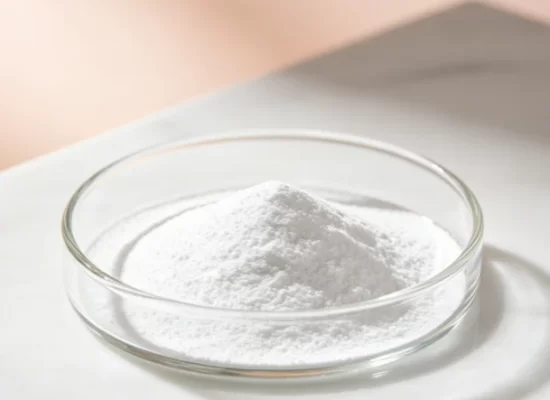
What Is Hydrolyzed Sodium Hyaluronate Mini HA ?
Hydrolyzed sodium hyaluronate (INCI: Hydrolyzed Sodium Hyaluronate, CAS: 9067-32-7), commonly known as mini HA, oligo HA, or ultra-low molecular weight hyaluronic acid, is produced by breaking down high-molecular-weight sodium hyaluronate into short-chain fragments through controlled hydrolysis.
Native hyaluronic acid typically ranges from 500 kDa to over 2,000 kDa. These large molecules cannot penetrate the skin barrier and function solely as surface humectants. Hydrolysis reduces the molecular weight dramatically:
- Low MW HA: 10 kDa – 100 kDa (penetrates upper epidermis)
- Hydrolyzed HA (standard): <10 kDa (penetrates epidermis)
- Mini HA (our grade): 3–5 kDa (penetrates to upper dermis)
At 3–5 kDa, the HA fragments are small enough to pass through the intercellular lipid channels of the stratum corneum and reach the viable epidermal layers and the papillary dermis — where fibroblasts, collagen, and elastin reside. This transdermal delivery is what distinguishes mini HA from all larger HA grades and unlocks its biological activities beyond simple moisturization.
Two production methods:
- Enzymatic hydrolysis (our process): Uses hyaluronidase enzymes (e.g., from Lactobacillus plantarum) to cleave HA at specific glycosidic bonds under mild temperature and pH conditions. This preserves the native molecular structure, avoids chemical residue, and retains full biological activity (collagen stimulation, antioxidant, anti-inflammatory).
- Acid/alkaline hydrolysis: Uses strong acids or bases at high temperature to randomly degrade HA. Faster and cheaper, but can damage the molecular structure, introduce residual chemicals, and reduce biological activity.
Our product is manufactured exclusively via the enzymatic process for maximum efficacy and safety.
Molecular weight accuracy
Every batch is verified by SEC-MALS (size-exclusion chromatography with multi-angle light scattering), the gold standard for HA molecular weight determination. We guarantee Mw within 3–5 kDa, ensuring consistent skin penetration and biological activity batch after batch.
Optional custom MW grades: 1–3 kDa, 5–8 kDa, 8–10 kDa available upon request for specific formulation targets.
Benefits for Skincare Formulations
| Benefit | Mechanism | Evidence Level |
|---|---|---|
| Deep, multi-layer hydration | Penetrates to epidermis + dermis, binds water at living skin layers | In vitro skin absorption, clinical corneometry |
| Anti-wrinkle & firming | Stimulates fibroblast collagen & elastin synthesis in dermis | In vitro cell studies, clinical wrinkle grading |
| Antioxidant protection | Scavenges DPPH, hydroxyl, superoxide free radicals | In vitro antioxidant assays |
| Anti-inflammatory & soothing | Modulates TNF-α, IL-6, NO; supports barrier recovery | Cell-based inflammation models |
| Skin barrier repair | Promotes keratinocyte proliferation & migration; reduces TEWL | Clinical TEWL, barrier recovery studies |
| Improved skin elasticity | Dermal matrix remodeling + sustained hydration | Clinical cutometry, elasticity measurements |
Applications — Skincare Formulations & Recommended Usage
| Product Type | Recommended Usage Level | Key Benefit |
|---|---|---|
| Anti-aging serums & essences | 0.1% – 1.0% | Dermal collagen stimulation, wrinkle reduction, deep hydration |
| Eye creams & eye serums | 0.2% – 0.8% | Fine line reduction, gentle dermal repair around delicate eye area |
| Facial creams & lotions | 0.05% – 0.5% | Sustained multi-layer hydration, improved elasticity, barrier support |
| Sheet masks & wash-off masks | 0.1% – 1.0% | Intensive dermal hydration, antioxidant boost, post-procedure soothing |
| Toner & essence water | 0.01% – 0.2% | Lightweight prep hydration, enhances subsequent active penetration |
| Sun care & after-sun | 0.1% – 0.5% | Antioxidant photo-protection, post-UV barrier repair, soothing |
| Acne & sensitive skin care | 0.05% – 0.3% | Anti-inflammatory, non-comedogenic hydration, barrier repair |
| Body lotions & hand creams | 0.05% – 0.2% | Deep hydration for rough body skin, improved texture |
| Scalp & hair care | 0.05% – 0.2% | Scalp hydration, follicle environment support, antioxidant protection |
| Wound care & post-procedure | 0.1% – 0.5% | Accelerated barrier recovery, anti-inflammatory, hydration (OTC/cosmetic grade) |
- Solubility: Readily and rapidly soluble in water and aqueous phases at room temperature. Low MW means much faster dissolution than high-MW HA (typically <15 minutes with gentle stirring).
- Viscosity: 3–5 kDa HA contributes minimal viscosity even at 1–2% concentration, making it ideal for lightweight serums and essences where a heavy, sticky texture is undesirable.
- pH stability: Stable across pH 3.5–8.5, compatible with most cosmetic formulations including acidic exfoliant products (AHAs/BHAs) and vitamin C (L-AA at pH 3–4).
Frequently Asked Questions (FAQ)
Q: What is the difference between hydrolyzed HA and regular HA?
A: Regular sodium hyaluronate has a high molecular weight (500–2,000 kDa) and cannot penetrate the skin — it only moisturizes the surface. Hydrolyzed HA is broken down into much smaller fragments (<10 kDa, and our grade is 3–5 kDa) through enzymatic or chemical hydrolysis. These small fragments can penetrate the stratum corneum and reach the epidermis and dermis, where they stimulate collagen synthesis, provide antioxidant and anti-inflammatory benefits, and deliver deep hydration beyond what surface-level HA can achieve.
Q: Why is 3–5 kDa better than <10 kDa hydrolyzed HA?
A: While any HA below 10 kDa can penetrate the epidermis, 3–5 kDa fragments penetrate significantly deeper — reaching the upper dermis where fibroblasts reside. This dermal delivery is essential for stimulating collagen and elastin synthesis. Standard <10 kDa hydrolyzed HA (often averaging 7–10 kDa) may not reach the dermis consistently. Our precise 3–5 kDa control with PDI ≤ 1.5 ensures maximum dermal penetration and biological activity.
Q: What is the difference between enzymatic and acid hydrolysis?
A: Enzymatic hydrolysis uses hyaluronidase enzymes to cleave HA at specific bonds under mild conditions (low temperature, neutral pH), preserving the native molecular structure and biological activity (collagen stimulation, antioxidant, anti-inflammatory). Acid hydrolysis uses strong acids at high temperature to randomly degrade HA — it is faster and cheaper but can damage the HA fragment structure, introduce residual chemicals, and significantly reduce biological activity. Our product is exclusively enzymatically hydrolyzed for maximum efficacy.
Q: Can mini HA be used with retinol, vitamin C, and acids?
A: Yes. Mini HA is stable across a wide pH range (3.5–8.5) and is compatible with retinol, L-ascorbic acid (vitamin C), AHAs/BHAs, niacinamide, peptides, and most other cosmetic actives. Its low molecular weight means it does not significantly increase formulation viscosity, making it easy to incorporate into active-rich serums. In fact, mini HA’s barrier-repair and anti-inflammatory properties can help mitigate irritation from retinol and acids.
Q: Is mini HA safe for sensitive and acne-prone skin?
A: Yes. Mini HA is non-comedogenic, non-irritating, and suitable for sensitive, dry, oily, and acne-prone skin types. Its anti-inflammatory properties can help soothe irritated skin, and its low viscosity avoids the heavy, occlusive feel that can aggravate oily skin. As with any ingredient, conduct standard cosmetic safety assessment and patch testing for your target market.
Q: Is mini HA vegan and cruelty-free?
A: Yes. Our mini HA is produced from microbial fermentation-derived hyaluronic acid (Streptococcus equi), not from animal sources (rooster combs, umbilical cords). The enzymatic hydrolysis process uses no animal-derived reagents. We provide vegan and cruelty-free declarations upon request.