
Spherical Vanadium Powder (≥99.7% Pure) — Gas-Atomized for LPBF, EBM & DED Additive Manufacturing
High-purity spherical vanadium powder (≥99.7% pure) specifically engineered for advanced additive manufacturing. Produced via gas atomization, this high-performance metal powder delivers exceptional sphericity, high flowability, and low oxygen content, ensuring optimal packing density for 3D printing. Perfectly tailored for Laser Powder Bed Fusion (LPBF), Electron Beam Melting (EBM), and Directed Energy Deposition (DED) processes across aerospace, defense, and nuclear applications. As a leading global supplier and trusted manufacturer, we offer custom particle size distributions, wholesale pricing, and reliable material consistency. Contact our technical sales team today to buy premium spherical vanadium metal powder.
Vanadium spherical powder is used in various applications, including powder metallurgy, thermal spray processes, and additive manufacturing (3D printing). We provide a wide range of Vanadium products including Vanadium Carbide Powder, Vanadium Nitride Powder, Vanadium Boride (VB2) Powder, and Vanadium disilicide powder . Our Vanadium micron and nano powder is for sale at a competitive price in the USA.
Formula | Vanadium, V |
CAS Number | 7440-62-2 |
Purity | 99.7% min |
Synonyms | Vanadium nano powder, Vanadium spherical powder, Vanadium meta powder, Vanadium microns powder |
Particle Sizes | 325 mesh, nano particles, or be customized |
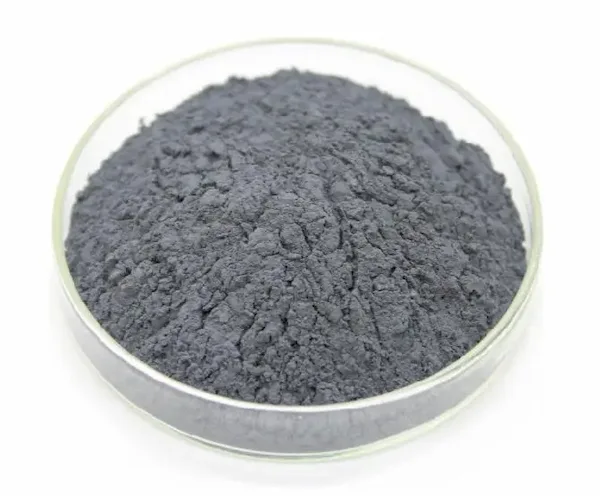
Appearance | Black Color |
Melting Point | 1910°C |
Apparent Density | >3.75 g/cm3 |
Tap Density | >4.83 g/cm3 |
Product Overview
Spherical vanadium powder (CAS 7440-62-2, ≥99.7% purity) is a gas-atomized metal powder engineered for laser powder bed fusion (LPBF), electron beam melting (EBM), and directed energy deposition (DED) additive manufacturing. Vanadium (V) is the most important β-phase stabilizer in titanium alloys — it is the critical 4% alloying element in Ti-6Al-4V, the dominant AM alloy globally. Vanadium's unique combination of moderate density (6.11 g/cm³), high melting point (1,910°C), and ability to form stable β-phase in Ti alloys makes it strategically irreplaceable for aerospace AM. Beyond titanium, vanadium powder is used in tool steel grain refinement (VₓCy nanoprecipitates), vanadium redox flow batteries (VRFB) for grid-scale energy storage, and high-temperature catalysts. Princeton Powder supplies V powder in 15-45µm (LPBF) and 45-106µm (EBM/DED) with custom PSD available.
Why Vanadium for Additive Manufacturing?
| Property | Vanadium (V) | Role in AM |
|---|---|---|
| β-Phase Stabilizer | Strongest β-stabilizer for Ti | Enables α+β duplex structure in Ti-6Al-4V — critical for AM processability |
| Density | 6.11 g/cm³ | Lightweight — optimal specific strength for aerospace components |
| Melting Point | 1,910°C | High thermal stability for in-situ alloying during LPBF |
| Carbide Formation | Forms VₓCy nanoprecipitates | Grain refinement in tool steels — hardness up to high-speed steel levels without post-treatment |
| Multi-Valent (V²⁺–V⁵⁺) | 4 stable oxidation states | Unique for VRFB energy storage — enables 25+ year electrolyte life |
Chemical Composition & Specifications
| Element | Specification | Test Method |
|---|---|---|
| Vanadium (V) | ≥99.7% | GDMS / ICP-OES |
| Oxygen (O) | ≤100 ppm (ultra-low grade) | LECO Inert Gas Fusion |
| Nitrogen (N) | <50 ppm | LECO |
| Iron (Fe) | <0.05% | ICP-OES |
| Aluminum (Al) | <0.05% | ICP-OES |
Particle Size Distribution & Flow
| PSD Range | AM Process | Apparent Density | Tap Density | Hall Flow | Sphericity |
|---|---|---|---|---|---|
| 15-45 µm | LPBF / SLM | ≥3.75 g/cm³ | ≥4.83 g/cm³ | ≤22 s/50g | ≥98% |
| 45-106 µm | EBM / DED | ≥4.0 g/cm³ | ≥5.0 g/cm³ | ≤18 s/50g | ≥98% |
| 15-53 µm | LPBF (alternative) | ≥3.75 g/cm³ | ≥4.8 g/cm³ | ≤22 s/50g | ≥98% |
Production Method: Gas atomization or RF plasma spheroidization — ≥98% sphericity, smooth surface, minimal satellites and hollow particles. Each lot: laser diffraction PSD (Malvern), SEM morphology, Hall flow, apparent/tap density. ULPA oxygen: ≤100 ppm for critical aerospace Ti alloy applications. Standards: ASTM B364 (Vanadium and Vanadium Alloy Ingots and Mill Products), AMS 4911 (Ti-6Al-4V composition reference).
Material & Performance Properties
| Property | Pure Vanadium | Significance for AM |
|---|---|---|
| Density | 6.11 g/cm³ | Lighter than Cr (7.19), Fe (7.87), Ni (8.9) — good strength/weight |
| Melting Point | 1,910°C | High — survives LPBF melt pool temperatures without volatilization |
| Crystal Structure | BCC (body-centred cubic) | BCC β-phase stabilizer for Ti — lowers β-transus temperature |
| Role in Ti-6Al-4V | ~4 wt% V content | Retains β-phase at room temp — enables α+β duplex structure essential for AM Ti64 |
| Carbide Hardness | VC: ~2,800 HV | VₓCy nanoprecipitates impart hardness comparable to high-speed steels |
| Electrical Resistivity | ~25 µΩ·cm | Relevant for VRFB electrode applications |
Vanadium as β-Phase Stabilizer — Why It Matters for AM
Vanadium is the most important β-phase stabilizer in titanium metallurgy. In Ti-6Al-4V — the single most-used alloy in metal additive manufacturing — V comprises ~4 wt% and enables the critical α+β duplex microstructure. Without vanadium, LPBF-processed Ti-6Al-4V would form a brittle α′ martensite structure with restricted dislocation movement and <10% elongation. V stabilizes sufficient β-phase at room temperature, enabling heterogeneous α′+β microstructures, multiple deformation modes (dislocation slip + twinning + stress-induced martensitic transformation), and ductility up to 13% with UTS exceeding 1,160 MPa (Song et al., 2024). For AM feedstock producers and alloy developers, V powder purity and particle size directly determine Ti64 printability and as-built mechanical properties.
Applications
Aerospace — Ti-6Al-4V AM Feedstock & In-Situ Alloying
Vanadium's primary AM application is as the critical β-phase stabilizing alloying element in Ti-6Al-4V powder feedstock for LPBF and EBM. Ti64 represents over 80% of all aerospace AM production. Research by Song et al. (2024, Materials Letters) demonstrated that in-situ alloying of pure V nanoparticles (4 wt%) with Ti-6Al-4V during LPBF produces Ti-6Al-8V alloy with UTS of 1,163 MPa and 13.1% elongation — significantly outperforming conventional LPBF Ti64. The heterogeneous α′+β microstructure from uneven V distribution enables both dislocation slip and stress-induced martensitic transformation — deformation mechanisms unattainable in single-phase α′ Ti64. Princeton Powder V powder is specified for aerospace AM feedstock blending and in-situ alloy development.
Tool Steels & Hard Metals — Grain Refinement via VₓCy
Addition of vanadium powder to tool steels (e.g., AISI H13 at 5 wt% V) during PBF/SLM processing enables in-situ formation of vanadium carbide (VₓCy) nanoprecipitates that refine grain structure and dramatically increase hardness — achieving hardness comparable to high-speed steels without post-heat treatment (Cruz et al., 2023, JMRT). V powder is used as an additive in LPBF-processed wear-resistant dies, cutting tools, and high-performance molds where conventional tool steels fail under thermal cycling.
Energy Storage — Vanadium Redox Flow Batteries (VRFB)
Vanadium's unique ability to exist in 4 stable oxidation states (V²⁺, V³⁺, V⁴⁺, V⁵⁺) makes it the foundational electrolyte material for vanadium redox flow batteries (VRFB) — the leading technology for grid-scale energy storage (MW/MWh scale) with 25+ year electrolyte lifespan and zero cross-contamination degradation. High-purity spherical V powder is used to produce VRFB electrolyte. With global VRFB capacity projected to grow at 20%+ CAGR, V powder for energy storage represents a fast-growing demand segment that few metal powder suppliers address.
Frequently Asked Questions
Why is vanadium important for additive manufacturing?
Vanadium is the most important β-phase stabilizer for titanium alloys — it is the 4% alloying element in Ti-6Al-4V, the dominant AM alloy globally. Without V, LPBF-processed Ti64 forms brittle α′ martensite with poor ductility. V enables the α+β duplex structure critical for AM Ti alloys. Additionally, V powder forms VₓCy nanoprecipitates in tool steels for extreme hardness, and is the electrolyte material for vanadium redox flow batteries (VRFB) — the leading grid-scale energy storage technology.
What is the recommended particle size for LPBF vanadium powder?
15-45µm is the standard LPBF range with ≥98% sphericity and Hall flow ≤22 s/50g. For in-situ alloying with Ti-6Al-4V, fine V powder ensures complete dissolution in the melt pool. For EBM, 45-106µm with coarser PSD is recommended. Custom PSD available.
How does vanadium improve Ti-6Al-4V AM properties?
Vanadium stabilizes the β-phase in Ti alloys — enabling an α+β duplex microstructure instead of brittle α′ martensite. In LPBF Ti-6Al-8V (in-situ alloyed), the heterogeneous V distribution creates multiple deformation modes: dislocation slip + twinning in α′ + stress-induced martensitic transformation in β phase. Research (Song et al., 2024) achieved UTS 1,163 MPa with 13.1% elongation — outperforming conventional LPBF Ti64 which typically shows <10% elongation.
What purity is required for AM-grade vanadium powder?
≥99.7% V minimum — ≤100 ppm oxygen for aerospace Ti alloy applications. Oxygen is the critical contaminant: any oxygen in V feedstock propagates directly into Ti64 melt pools and causes embrittlement. Princeton Powder controls O to ≤100 ppm via inert gas atomization with LECO verification per lot. Ultra-high purity (≥99.9%) is available for VRFB electrolyte and research applications.
Can vanadium powder be used for vanadium flow batteries?
Yes — high-purity spherical vanadium powder (≥99.9%) is used to produce VRFB electrolyte. VRFB is the leading grid-scale energy storage technology — MW/MWh scale systems with 25+ year electrolyte life and zero cross-contamination. Princeton Powder supplies VRFB-grade V powder — contact our technical team for electrolyte purity specifications.
Why is oxygen control more critical for vanadium powder than other metal powders?
Vanadium powder is primarily used as an alloying additive in Ti-6Al-4V — not as a standalone AM material. Any oxygen in the V powder becomes oxygen in the Ti64 melt pool, where it causes interstitial embrittlement. LPBF Ti-6Al-4V already operates near its oxygen embrittlement threshold — additional O from V feedstock compromises as-built ductility. Furthermore, V₂O₅ formation at powder surfaces reduces effective V content in the melt. Princeton Powder's ≤100 ppm O specification ensures negligible O contribution from V feedstock to Ti64.
Research & Technical References
The following peer-reviewed research demonstrates vanadium's critical role in LPBF additive manufacturing — from Ti-6Al-4V to next-generation Ti-V alloys. Princeton Powder spherical vanadium powder meets or exceeds the material specifications used in these studies.
Achieving Strength-Ductility Synergy in LPBF Ti-6Al-8V Alloy Through In-Situ Alloying
Materials Letters, Vol. 375, 2024 — Song et al. demonstrated in-situ alloying of pure vanadium nanoparticles (4 wt%) with Ti-6Al-4V during LPBF to produce Ti-6Al-8V with UTS of 1,163 ± 34 MPa and fracture elongation of 13.1 ± 2.0%. The heterogeneous α′+β microstructure from uneven V distribution enables dislocation slip and twinning in α′ phase plus stress-induced martensitic transformation in β phase. Practical takeaway: Fine V powder with precise PSD (15-45µm) enables complete melt pool dissolution and optimal V distribution for strength-ductility synergy — V powder quality directly determines the success of in-situ alloying for next-generation Ti alloys.
Laser Powder Bed Fusion of Titanium-Oxygen-Vanadium Alloys: Unraveling the Non-Monotonic Ductility Response
Materials Science & Engineering A, 2024 — This study on LPBF Ti-O-V alloys using (TiO₂+V)/CP-Ti mixed powder found that with increasing V content, UTS increased from 853 MPa to 1,165 MPa. At 2 wt% V, triangular α′ martensite variants provided additional deformation accommodation, restoring plasticity after an initial ductility drop. High-density dislocations and dislocation walls at α/β interfaces enhanced strain hardening capacity. Practical takeaway: The synergistic effect of V and O in Ti alloys is non-linear — precise V content control (within ±0.2 wt%) is essential. Princeton Powder's tight PSD and composition control enable alloy developers to hit target V concentrations consistently.
Direct Additive Manufacturing as Spring of New Tool Steels — In-Situ Vanadium Carbide Formation via PBF/SLM
Journal of Materials Research and Technology, 2023 — Cruz et al. added 5 wt% vanadium powder to AISI H13 tool steel for PBF/SLM processing, achieving in-situ formation of VₓCy nanoprecipitates that produced hardness comparable to high-speed steels without post-heat treatment. Practical takeaway: V powder as a tool steel AM additive enables "print-to-hardness" — eliminating post-build heat treatment and reducing total manufacturing time. Princeton Powder V powder is suitable for both Ti alloy and tool steel AM additive applications.
Contact our technical team for the full reference list and to discuss how Princeton Powder spherical vanadium powder can support your Ti-6Al-4V AM feedstock, in-situ alloy development, or VRFB electrolyte production.