
Spherical Chromium Powder (≥99.5% Pure) — PREP-Spheroidized for LPBF, EBM & DED Additive Manufacturing
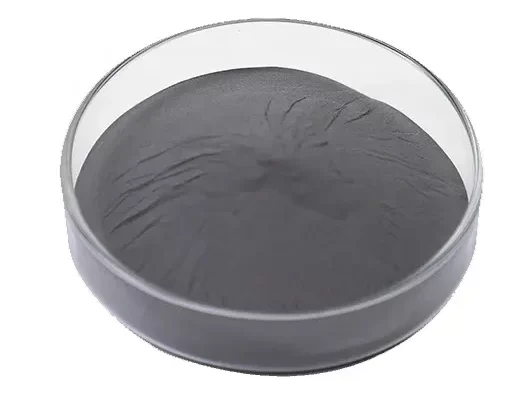
Premium PREP-spheroidized spherical chromium powder (≥99.5% purity) specifically engineered for high-performance metal additive manufacturing. Utilizing advanced Plasma Rotating Electrode Process (PREP) technology, this ultra-pure chromium powder features flawless spherical geometry, smooth surface morphology, zero satellites, and exceptional powder flowability. With low oxygen contamination and high tap density, it delivers consistent layer deposition and superior part density in Laser Powder Bed Fusion (LPBF), Electron Beam Melting (EBM), and Directed Energy Deposition (DED) systems.
Ideal for demanding aerospace, energy, chemical processing, and thermal spray coating applications requiring high temperature, oxidation, and corrosion resistance. Available in customized particle size distributions (15–45μm, 45–105μm, 15–150μm). As a leading global manufacturer and raw material supplier, we provide commercial-grade quality, reliable batch-to-batch consistency, competitive wholesale pricing, and worldwide shipping. Contact us today to request a quote or buy high-purity spherical chromium metal powder.
Formula | Chromium, Cr |
CAS Number | 7440-47-3 |
Purity | 99.9% min |
Synonyms | Chromium Spherical Powder, Chromium Nano Particles, Chromium Micron Powder |
Particle Sizes | 15-45μm, 15-53μm, or be customized |
Shape | Spherical or irregular |
Melting Point | 1857 °C |
Apparent Density | >4.2 g/cm3 |
Density | 7.19 g/cm 3 |
Product Overview
Spherical chromium powder (CAS 7440-47-3, ≥99.5% purity) is a PREP-spheroidized refractory metal powder for laser powder bed fusion (LPBF), electron beam melting (EBM), and directed energy deposition (DED) additive manufacturing. Chromium (Cr) is the hardest pure metal viable for AM (Mohs 8.5, ~195 HV as-built) with a high melting point of 1,907°C, BCC crystal structure, density of 7.19 g/cm³, and exceptional corrosion resistance via its self-healing Cr₂O₃ passive layer. Cr is a critical alloying element in nickel-based superalloys, stainless steels, and cobalt-chrome alloys — and as a standalone AM material, pure Cr offers unmatched wear and corrosion performance for extreme environments. The key LPBF challenge: chromium's high ductile-to-brittle transition temperature (DBTT) requires elevated preheat (≥200°C) and optimized short scan strategies to prevent cracking — a processing frontier that Princeton Powder supports with application-specific powder specifications. Available in 15-45µm (LPBF) and 45-106µm (EBM/DED) with custom PSD.
Why Chromium for AM?
| Property | Chromium (Cr) | Advantage for AM |
|---|---|---|
| Hardness | Mohs 8.5, ~195 HV as-built | Hardest pure AM metal — exceptional wear resistance without alloying |
| Melting Point | 1,907°C | High-temperature structural and thermal barrier applications |
| Corrosion Resistance | Self-healing Cr₂O₃ passive layer | Immune to oxidizing acids — ideal for chemical/nuclear environments |
| Density | 7.19 g/cm³ | Moderate — lighter than Ni (8.9) or CoCr (8.3) |
| Thermal Conductivity | ~94 W/(m·K) | Excellent thermal management for heat exchangers and thermal barriers |
| LPBF Challenge | High DBTT — cracking risk | Solved via 200°C preheat + short scan (5mm) — validated by 2024 research |
Chemical Composition & Specifications
| Element | Standard Grade | High-Purity Grade | Test Method |
|---|---|---|---|
| Chromium (Cr) | ≥99.5% | ≥99.9% | GDMS / ICP-OES |
| Oxygen (O) | <0.1% | <500 ppm | LECO Inert Gas Fusion |
| Nitrogen (N) | <0.05% | <200 ppm | LECO |
| Iron (Fe) | <0.5% | <0.1% | ICP-OES |
| Carbon (C) | <0.05% | <0.02% | Combustion |
Particle Size Distribution & Flow Characteristics
| PSD Range | AM Process | Apparent Density | Hall Flow | Sphericity | OEM Compatibility |
|---|---|---|---|---|---|
| 15-45 µm | LPBF / SLM | ≥4.5 g/cm³ | ≤20 s/50g | ≥95% | EOS, Renishaw, SLM Solutions |
| 15-53 µm | LPBF (alt.) | ≥4.8 g/cm³ | ≤18 s/50g | ≥95% | EOS (std), Concept Laser |
| 45-106 µm | EBM / DED | ≥5.0 g/cm³ | ≤15 s/50g | ≥95% | Arcam, Sciaky, Optomec |
Production Method: Plasma Rotating Electrode Process (PREP) or RF plasma spheroidization — ≥95% sphericity, smooth surface, minimal satellites. Each lot: laser diffraction PSD, SEM morphology, Hall flow, apparent/tap density. Standards: ASTM B168, ISO 9001. Note: Cr's reactivity and oxygen sensitivity demand tight atomization atmosphere control — a key differentiator between premium and commodity suppliers.
Material & Performance Properties
| Property | Pure Cr (LPBF As-Built) | Post-HIP | Significance |
|---|---|---|---|
| Density | 6.95 g/cm³ (97.2%) | 7.01 g/cm³ (98.1%) | HIP at 1,250°C/100 MPa improves densification |
| Hardness (Vickers) | 195 ± 17 HV | 155 ± 9 HV | As-built Cr is hardest — HIP reduces hardness but improves ductility |
| Grain Size | 16.3 µm | 22.6 µm | HIP coarsens grains — improves toughness, reduces hardness |
| Melting Point | 1,907°C — suitable for high-temperature structural applications | ||
| Mohs Hardness | 8.5 — hardest pure metal feasible for AM | ||
| Thermal Conductivity | ~94 W/(m·K) — high for a refractory metal | ||
| KAM (Residual Stress) | 2.09 | 1.04 (100 MPa HIP) | HIP relieves residual LPBF stress — critical for DBTT mitigation |
LPBF Processing: Solving the DBTT Cracking Challenge
Pure chromium's high ductile-to-brittle transition temperature (DBTT) — substantially above room temperature — is the primary technical challenge for LPBF. Without mitigation, thermal stresses during build cause intergranular cracking. Park et al. (2024, JMRT) demonstrated that optimized LPBF parameters — 200°C build plate preheat + 5 mm scan length + 6.25 J/mm² energy density (300 W, 600 mm/s, 20 µm layer, 80 µm hatch) — achieve 99.8% relative density with suppressed cracking. Short scan lengths combined with high preheat deepen and elongate the melt pool, promoting epitaxial grain growth and reducing thermal gradients that drive cracking. For LPBF Cr, preheating is not optional — it is essential. Princeton Powder provides application-specific PSD and purity specifications optimized for Cr LPBF processing.
Corrosion Resistance — The Self-Healing Cr₂O₃ Passive Layer
Chromium's exceptional corrosion resistance comes from its spontaneously formed, self-healing Cr₂O₃ (chromia) passive surface layer — only 1-3 nm thick but impervious to oxidizing acids and many corrosive media. This passive film is the reason Cr is the essential alloying element in stainless steel (≥10.5% Cr required). For AM components in chemical processing, nuclear, and marine environments, pure Cr's Cr₂O₃ passivation provides corrosion protection that no polymer coating or surface treatment can match.
Applications
Aerospace — Thermal Barrier Coatings & Superalloy Components
Chromium's combination of high melting point (1,907°C), excellent thermal conductivity (~94 W/m·K), and oxidation resistance (Cr₂O₃) makes Cr powder essential for LPBF-printed thermal barrier coatings, turbine blade repair via DED, and nickel-based superalloy feedstock (Inconel 718 contains ~19% Cr). Cr powder is used both as a standalone AM material and as a blending component for custom superalloy compositions. The ability to LPBF-print pure Cr thermal barriers with complex internal cooling channels — impossible with conventional casting — is a key AM advantage for next-generation jet engines.
Wear-Resistant Tooling, Hardfacing & Cutting Tools
As the hardest pure metal viable for AM (Mohs 8.5, ~195 HV as-built), chromium is the material of choice for LPBF-printed wear-resistant inserts, cutting tool edges, hardfacing overlays, and brake rotors. Cr's hardness approaches that of tool steels but without requiring post-build carburization or nitriding. For applications involving combined wear + corrosion (e.g., chemical plant valves, mining components, marine hardware), pure Cr AM parts outperform both hardened steels (no corrosion resistance) and stainless steels (lower hardness). HIP at 100 MPa optimizes the hardness-toughness balance for impact-loaded wear components.
Nuclear & Chemical Processing — Radiation Shielding & Corrosion
Chromium's corrosion resistance, radiation tolerance, and thermal stability make it suitable for LPBF-printed nuclear fuel cladding, reactor internals, and chemical processing equipment. Cr₂O₃ passivation protects against oxidizing acids (HNO₃, hot H₂SO₄) that attack stainless steels. In nuclear applications, Cr's moderate neutron cross-section and compatibility with liquid metal coolants position it as a candidate for Gen IV reactor components. AM enables complex flow channel geometries for heat exchangers and reactor internals impossible with conventional fabrication.
Frequently Asked Questions
Can pure chromium be 3D printed via LPBF without cracking?
Yes — with optimized parameters. Chromium's high DBTT is the primary LPBF challenge: without mitigation, thermal stresses cause intergranular cracking. Research by Park et al. (2024, JMRT) demonstrated crack-free LPBF Cr at 99.8% relative density using 200°C build plate preheat + 5 mm scan length + 6.25 J/mm² energy density (300 W, 600 mm/s, 20 µm layer, 80 µm hatch). Short scan lengths and high preheat elongate the melt pool, promote epitaxial grain growth, and reduce thermal gradients. Preheating is mandatory — not optional — for LPBF Cr. Princeton Powder provides Cr-specific LPBF parameter guidance based on published research.
What makes chromium powder valuable for wear-resistant AM applications?
Chromium is the hardest pure metal feasible for AM at Mohs 8.5 (~195 HV as-built) — exceeding the hardness of as-built stainless steels, tool steels, and even some cobalt-chrome alloys. For applications requiring combined wear + corrosion resistance (chemical valves, marine hardware, mining components), pure Cr AM parts outperform hardened steels (which corrode) and stainless steels (which are softer). HIP at 100 MPa optimizes the hardness-toughness balance for impact-loaded wear parts.
How does chromium's corrosion resistance work?
Chromium's corrosion resistance comes from its spontaneously formed, self-healing Cr₂O₃ (chromia) passive surface layer — only 1-3 nm thick. This oxide is impervious to oxidizing acids (HNO₃, hot concentrated H₂SO₄) and many corrosive media. If scratched, the passive layer reforms instantly in the presence of oxygen. This is the same mechanism that makes Cr the essential alloying element in stainless steel (≥10.5% Cr required). For LPBF Cr components, the Cr₂O₃ layer forms naturally on as-built surfaces without additional passivation treatment.
What particle size for LPBF chromium?
15-45µm or 15-53µm with sphericity ≥95% and Hall flow ≤20 s/50g. 15-45µm is compatible with Renishaw and SLM Solutions systems; 15-53µm is the EOS standard. PREP (Plasma Rotating Electrode Process) produces the highest sphericity with minimal satellites and no hollow particles. For EBM/DED, 45-106µm is recommended. Custom PSD available.
Does LPBF chromium require HIP post-processing?
Recommended but parameter-dependent. Research by Bulutsuz et al. (2024, IJRMHM) showed that HIP at 1,250°C / 100 MPa increases relative density from 97.2% to 98.1%, reduces residual stress (KAM from 2.09 to 1.04), and improves wear performance. However, higher HIP pressure (200 MPa) degraded properties — density dropped to 93.3% and wear performance worsened due to increased defects. HIP at 100 MPa is the sweet spot. For applications prioritizing hardness (as-built ~195 HV), skip HIP; for applications prioritizing toughness and wear performance, apply 100 MPa HIP.
What is the difference between PREP and gas-atomized chromium powder?
PREP (Plasma Rotating Electrode Process) produces superior sphericity (≥95%), smooth surfaces, and zero hollow particles — critical for LPBF because hollow particles cause porosity that cannot be eliminated by process parameters alone. Gas atomization is more cost-effective for larger volumes but may produce some satellites and hollow particles. For aerospace and nuclear Cr applications where defect-criticality is absolute, PREP is the preferred production method. Princeton Powder supplies PREP-spheroidized Cr powder as standard.
Research & Technical References
The following peer-reviewed research establishes the processing-structure-property relationships for LPBF pure chromium. Princeton Powder spherical chromium powder meets or exceeds the material specifications used in these studies.
Effects of Heat Accumulation Strategies on Defects and Microstructure of Pure Chromium Fabricated by Laser Powder Bed Fusion
Journal of Materials Research and Technology, Vol. 33, 2024 — Park, Gokcekaya, Nitomakida & Nakano demonstrated that optimized LPBF parameters (200°C preheat + 5 mm scan length + 6.25 J/mm² at 300 W / 600 mm/s) achieve 99.8% Archimedes relative density and 99.2% optical density in pure Cr. Short scan lengths combined with high preheat temperatures deepen and elongate the melt pool, promoting epitaxial grain growth and suppressing DBTT-driven cracking. The high-densification sample with strong crystallographic texture exhibited the highest compressive strength and strain. Practical takeaway: LPBF Cr is viable but requires elevated preheating (≥200°C) — a capability not all LPBF systems offer. Buyers should verify their system's preheat capability before ordering Cr powder. Princeton Powder's Cr powder is specified for LPBF systems with controllable build plate heating.
An Investigation Over Microstructure and HIP Processing Effects on Wear Performance of Pure Chromium Parts Fabricated by Laser Powder Bed Fusion
International Journal of Refractory Metals and Hard Materials, Vol. 120, 2024 — Bulutsuz, Gulec, Gokcekaya, Gardstam, Nakano & Yilmazer systematically studied HIP effects on LPBF Cr. As-built Cr achieved hardness of 195 ± 17 HV at 97.2% density. HIP at 1,250°C/100 MPa improved density to 98.1% and wear performance via crystallographic texture strengthening. Critical finding: HIP at 200 MPa degraded properties — density dropped to 93.3%, hardness fell to 144 HV, and wear performance worsened due to increased porosity. Lower HIP pressure (100 MPa) is optimal. Practical takeaway: When specifying HIP for LPBF Cr components, 100 MPa is the sweet spot. Higher pressure is counterproductive. Princeton Powder provides HIP parameter guidance based on this research for Cr LPBF users.
The Role of Chromium in Nickel-Based Superalloys for Additive Manufacturing — A Critical Review
Additive Manufacturing, 2023 — This review established Cr as the most critical alloying element in LPBF nickel superalloys (Inconel 718: ~19% Cr; Inconel 625: ~21% Cr). Cr provides the oxidation and hot-corrosion resistance enabling superalloy operation above 650°C. Cr powder quality (purity, PSD, O content) directly propagates into superalloy AM printability — Cr feedstock contamination is the #1 cause of LPBF superalloy micro-cracking. Practical takeaway: For superalloy AM feedstock blending, Cr powder purity and oxygen content are non-negotiable quality parameters. Princeton Powder's ≥99.5% Cr with controlled O meets superalloy-grade specifications.
Contact our technical team for the full reference list and to discuss LPBF parameter optimization, HIP processing, or superalloy feedstock requirements for Princeton Powder spherical chromium powder.