
Platinum Rhodium Crucible (Pt/Rh Crucible)
Engineered for extreme thermal stability and minimal sample contamination, our high-purity Platinum Rhodium (Pt-Rh) crucibles combine the chemical inertness of platinum with the elevated melting point and mechanical strength of rhodium. Available in Pt95/Rh5, Pt90/Rh10, and Pt80/Rh20 alloy compositions with 99.95%+ precious metal purity, these crucibles resist warping, high-temperature creep, and grain-growth embrittlement during continuous thermal cycling up to 1,650 °C. Ideal for optical glass melting, single crystal growth, TGA/DSC thermal analysis, and refractory oxide fusion, our Pt-Rh crucibles are supplied in standard laboratory capacities (5 mL–100 mL) and custom OEM geometries with full material certification and precious-metal buyback support.
Available in cylindrical, boat-shaped, and custom designs, they’re widely used for single crystal growth, precious metal refining, and corrosive flux reactions in labs and industry. Pt-Rh crucibles are for sale in competitive price.
Material | Platinum-Rhodium, PtRh5, PtRh10 |
Purity | 99.95%-99.99% |
Dimension | 5-100 ml |
Apperance | metallic silver |
Surface | Polished, Alkali Cleaning,Chemical Cleaning |
Form | Cylindrical platinum rhodium PtRh crucible Straight-walled platinum rhodium PtRh crucible Tapered platinum rhodium PtRh crucible Platinum rhodium PtRh boat crucible Platinum rhodium PtRh crucible with lid Platinum rhodium PtRh crucible with spout |
Certification | ISO9001 |
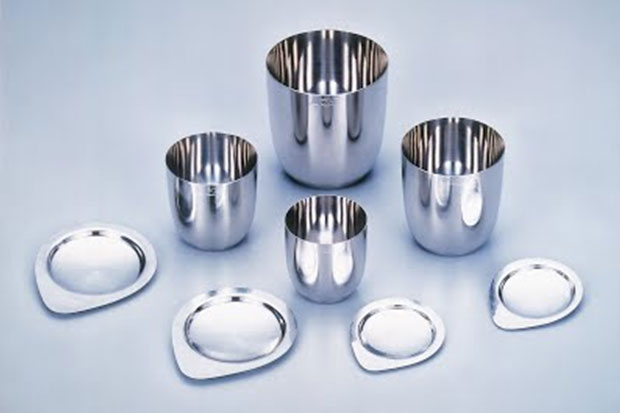
Description of Platinum Rhodium (PtRh) Crucible
The Platinum Rhodium (PtRh) Crucible is a high-temperature lab crucible crafted from premium Pt-Rh alloys (including PtRh5 and PtRh10), engineered to withstand extreme heat up to 1700°C+. Ideal for precious metal melting (gold, silver, platinum) and high-precision laboratory applications, this corrosion-resistant crucible delivers unmatched durability and oxidation resistance for long-term reliability. Widely used in metallurgy, material science, and semiconductor research, it excels in refining, alloying, and ultra-high-purity material testing. Princeton Powder offers tailored Pt-Rh crucible solutions to meet exact lab or industrial needs.
Alloy Compositions & High-Temperature Performance
Pt90/Rh10, Pt95/Rh5 and Pt80/Rh20 Alloy Grades
Pt95/Rh5 (5% Rhodium): Balances high ductility with improved mechanical rigidity and reduced grain growth—ideal for general analytical fusion, ashing, and XRF sample preparation.
Pt90/Rh10 (10% Rhodium — Industry Standard): Offers optimal high-temperature creep resistance and dimensional stability up to 1,600–1,650 °C, making it the preferred choice for optical glass melting and crystal growth.
Pt80/Rh20 (20% Rhodium): Engineered for ultra-demanding thermal environments and specialized furnace applications requiring maximum hot strength and corrosion resistance.
Reinforced Rim, Thick-Base & Lid Design Options
To maximize service life and handling safety, our Pt-Rh crucibles are precision-formed with:
Reinforced Top Rims: Thickened upper edges prevent distortion when gripped with platinum-tipped tongs at high temperatures.
Heavy-Duty Bottom Wall Construction: Extra base thickness resists thermal deformation and extends usable lifespan during prolonged glass melting or fusion cycles.
Matching Pt-Rh Lids: Available in standard flat, recessed, or vented configurations to minimize volatile loss and shield melts from furnace particulates.
Platinum Rhodium (PtRh) Crucible Sizes and Capacities
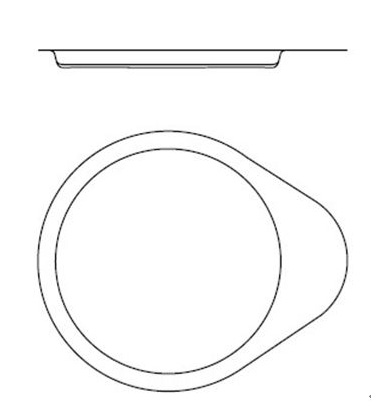
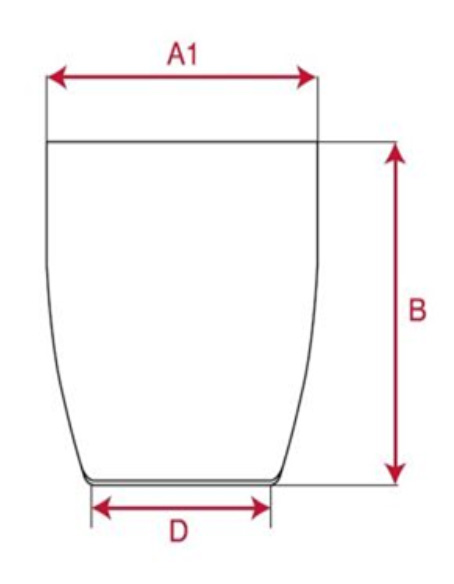
| Type | Top Diameter | Height | Bottom Diameter | Volume |
|---|---|---|---|---|
| PT-5 | A1=20 mm | B=22 mm | D=10 mm | 5 ml |
| PT-8 | A1=27 mm | B=22 mm | D=12 mm | 8 ml |
| PT-10 | A1=26 mm | B=27 mm | D=15 mm | 10 ml |
| PT-12 | A1=28 mm | B=31 mm | D=26 mm | 12 ml |
| PT-15 | A1=30 mm | B=33 mm | D=17 mm | 15 ml |
| PT-20 | A1=33 mm | B=35 mm | D=18 mm | 20 ml |
| PT-25 | A1=36 mm | B=36 mm | D=20 mm | 25ml |
| PT-30 | A1=36 mm | B=40 mm | D=22 mm | 30 ml |
| PT-35 | A1=41 mm | B=38 mm | D=24 mm | 35 ml |
| PT-40 | A1=42 mm | B=42 mm | D=25 mm | 40 ml |
| PT-45 | A1=43 mm | B=48 mm | D=26 mm | 45 ml |
| PT-50 | A1=45 mm | B=48 mm | D=27 mm | 50 ml |
| PT-60 | A1=45 mm | B=47 mm | D=29 mm | 60 ml |
| PT-70 | A1=49mm | B=53 mm | D=30 mm | 70 ml |
| PT-80 | A1=51 mm | B=53 mm | D=30 mm | 80 ml |
| PT-90 | A1=54 mm | B=57 mm | D=33 mm | 90 ml |
| PT-100 | A1=56 mm | B=57 mm | D=35 mm | 100 ml |
| PT-120 | A1=64 mm | B=66 mm | D=35 mm | 120 ml |
| PT-150 | A1=65 mm | B=69 mm | D=37 mm | 150 ml |
| PT-200 | A1=65 mm | B=80 mm | D=40 mm | 200 ml |
| PT-250 | A1=81 mm | B=73 mm | D=55 mm | 250 ml |
| PT-700 | A1=105 mm | B=105 mm | D=72 mm | 700 ml |
| The customized sizes can be porvided accroding to customers’ design. | ||||
Platinum Rhodium (PtRh) Crucible Crucible Industrial & Laboratory Applications
Optical, Laser & Specialty Glass Melting
Pt-Rh crucibles prevent metallic ion leaching and devitrification when melting high-index optical glass, laser host glass, fluoride/phosphate glasses, and fiberglass formulations.
Oxide Single Crystal Growth (Czochralski & Bridgman)
Widely utilized as melt containers for growing high-purity oxide single crystals—including YAG, lithium niobate (LiNbO3), BGO, and specialty scintillator crystals—where dimensional stability over multi-day growth cycles is critical.
High-Temperature Fusion, Ashing & Metallurgical Analysis
Ideal for borate and carbonate flux fusions of refractory oxides, geological ores, slags, and ceramics prior to ICP-OES or XRF elemental analysis.
Care, Cleaning & Handling Guidelines for Pt-Rh Labware
Incompatible Elements & Reducing Atmosphere Precautions
Never heat unknown metals or reducing agents in a Platinum-Rhodium crucible. Direct contact with lead (Pb), tin (Sn), bismuth (Bi), antimony (Sb), arsenic (As), phosphorus (P), silicon (Si), sulfur compounds, or free carbon/soot in reducing atmospheres forms low-melting-point eutectics that cause rapid embrittlement and pinhole failure. Always use platinum-tipped tongs and place crucibles on clean alumina or zirconia setters—never bare silica or iron surfaces.
Recommended Cleaning Fluxes & Mechanical Reshaping
Clean water-soluble residues by boiling in distilled water. For stubborn silicate or oxide deposits, fuse a small charge of sodium carbonate (Na2CO3) or potassium bisulfate (KHSO4), cool, and dissolve the cake in dilute hydrochloric acid (HCl). Never expose Pt-Rh alloys to aqua regia or scrape interiors with steel tools. Periodic gentle reshaping on a smooth wooden or polymer mandrel restores roundness and prevents stress cracking.
Platinum Rhodium (PtRh) Crucible scholar article
Comparison of Platinum Laboratory Crucibles for Glass Melting (Case Study)
Abstract: Because of high melting temperature, oxidation and corrosion resistance, platinum crucibles are key tools for wide range of analytical procedures like dissolving in hot hydrofluoric acid, loss on ignition, ash testing and fusion of slag, mineral, cement and glass samples. Pure platinum is the basic material choice, offering relatively low price, on the other hand is quite soft and vulnerable to grain coarsening after prolonged high temperature exposure. Alloying with rhodium increase the material hardness and slows down grain growth, but can be significantly more expensive.