
Niobium Foil, Strip, and Ribbon (Niobium metal and alloy)
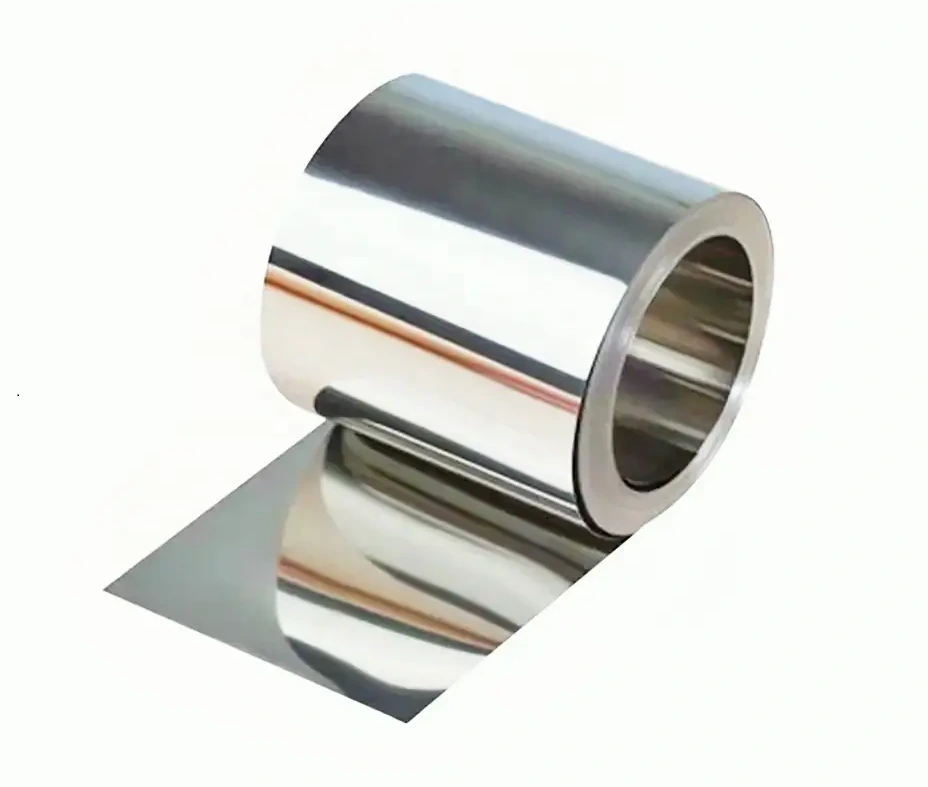
Niobium (Nb) foil, strip, and ribbon in 99.9% to 99.95%+ high-purity grades are precision-rolled to ASTM B393 (UNS R04200 & UNS R04210) standards in thicknesses from 0.01 mm to 0.50 mm. Engineered for superior room-temperature ductility, deep-drawing formability, acid corrosion resistance, and cryogenic superconductivity (Tc = 9.2 K), our flat-rolled niobium products are supplied in both vacuum-annealed (soft) and cold-rolled (hard) tempers with clean, burr-free slit edges. Ideal for superconducting magnets, RF cavities, solid electrolytic capacitors, vacuum furnace heat shields, and lamp feedthroughs, we offer R&D trial cuts, custom OEM slitting, and bulk coil shipments with full COA and SDS.
Princeton Powder is a top supplier of high-purity Niobium Foil and Strip, offering both pure Niobium and alloyed varieties like niobium-titanium (Nb-Ti) and niobium-zirconium (Nb-Zr) foils, all manufactured to meet ASTM B393 standards. The production of niobium foils and strips involves advanced techniques like rolling, annealing, and cold rolling, ensuring precise thickness and flexibility. Additionally, surface treatments such as chemical etching and polishing are applied to achieve a smooth, defect-free finish. These products are ideal for applications in superconducting technology, electronics, and the medical field. Niobium foil and strip are available at competitive pricing.
Material | Niobium Foil, Strip, Ribbon |
CAS Number | 7440-03-1 |
Standard | ASTM B392 |
Color/Appearance | Gray, Metallic |
| Density | 8.57 g/cm3 |
Melting Point | 2468 ℃ |
Diameter | Customized |
Surface Treatment | Pickling or Polishing |
Related Products:
Titanium Foil and Strip (Grade 1, Grade 2, and Grade 5)
Tantalum Foil and Tantalum Strip
Niobium Foil, Strip, and Ribbon
Tungsten Foil and Strip (Tungsten Tape)
ASTM B777 Tungsten Heavy Alloy (W-Ni-Fe) Foil & Strip
90W-NiCu Tungsten Alloy Foil and Strip
TZM Molybdenum Strip/Foil/Ribbon
Description of Niobium Foil, Strip, and Ribbon (Rolling and Annealing, Cold Rolling)
Niobium foil and strip are thin, flexible forms of niobium, prized for their strength, flexibility, corrosion resistance, and superconductivity. Niobium, with atomic symbol Nb and atomic number 41, is known for its stability under extreme conditions and its unique ability to become superconducting at low temperatures.
High-purity niobium foil (up to 99.9%) is ideal for superconducting and corrosion-resistant applications, while alloyed types like Nb-Ti and Nb-Zr offer enhanced ductility. Production methods such as rolling, annealing, and cold rolling achieve precise thickness and flexibility. Chemical etching and polishing provide a smooth, defect-free surface, essential for electronic and medical applications. These foils remain stable under extreme conditions and demonstrate superconductivity at cryogenic temperatures.
Chemical Compositions of Niobium Foil, Strip, and Ribbon
Material | Main elements(%) | Impurities (Maximum %) | ||||||||||
Nb | Fe | Si | Ni | W | Mo | Ti | Ta | O | C | H | N | |
RO4200 | Remainder | 0.004 | 0.004 | 0.002 | 0.005 | 0.005 | 0.002 | 0.07 | 0.015 | 0.0040 | 0.0015 | 0.003 |
RO4210 | Remainder | 0.01 | 0.01 | 0.005 | 0.02 | 0.01 | 0.004 | 0.10 | 0.02 | 0.01 | 0.0015 | 0.01 |
Physical Properties of Niobium Foil, Strip, and Ribbon
Grade | Tensile strength psi(MPa), ≥ | Yield strength δ0.2, psi (MPa),≥ | Elongation in 1″/2″ gage length, %, ≥ | |
>=0.010 | <0.010 | |||
RO4200, RO4210 | 18000 (125) | 12000 (85) | 25 | 20 |
Industrial & Scientific Applications
Superconducting Magnets, RF Cavities & Quantum Computing Circuits
Used as diffusion barriers in multifilamentary Nb3Sn and NbTi superconducting wires, superconducting shielding foils in MRI and particle accelerators, and sputtering/fabrication substrates in cryogenic electronics.
Solid Electrolytic Capacitors & Electronic Current Collectors
High-purity etched and anodized niobium foil and ribbon serve as stable, high-permittivity dielectric anodes in solid electrolytic capacitors and specialized battery assemblies.
High-Temperature Furnace Shields, Boats & Chemical Processing
Fabricated into multi-layer radiation heat shields, sintering boats, getter strips, and corrosion-resistant heat exchanger linings for vacuum metallurgy and chemical reactors.
High-Pressure Sodium Vapor Lamps, Medical Implants & Anodized Jewelry
Narrow niobium ribbon is widely utilized as current feedthrough seals in high-intensity discharge (HID) and sodium vapor lamps due to its close thermal expansion match with alumina ceramics, as well as in hypoallergenic surgical markers and anodized jewelry.
How to select Niobium Foil, Strip, and Ribbon
Niobium foil and strip are chosen for advanced applications across medical, electronic, and scientific fields. The key parameters are below for choosing a best Nb ribbon, foil, and strip
Alloy Content
- For certain applications, alloyed foils such as Nb-Ti or Nb-Zr might be chosen to achieve higher ductility, durability, or improved superconducting properties
Thickness and Width
- Thin foils (down to micrometers) are preferred for precise electronic applications, while thicker strips are suitable for structural uses in harsh environments
Purity
- High-purity niobium (99.9% or higher) is essential in applications like superconductors and medical devices where material purity directly affects performance
Surface Finish and Smoothness
- A defect-free, smooth surface is crucial for medical, electronic, and superconducting applications to ensure functionality and compatibility
Frequently Asked Questions About Niobium Foil, Strip & Ribbon
1. What is the difference between Niobium foil, strip, and ribbon?
While all three are flat-rolled niobium products manufactured to ASTM B393, they are distinguished primarily by thickness and width: Niobium foil refers to ultra-thin gauges typically under 0.10 mm (0.004″); Niobium strip covers thin flat-rolled coils generally between 0.05 mm and 0.50 mm thick in standard widths; and Niobium ribbon refers to narrow, precision-slit continuous coils (often 1 mm to 25 mm wide) used for lamp feedthroughs, capacitor leads, and winding applications.
2. What is the difference between ASTM B393 UNS R04200 and UNS R04210 Niobium?
UNS R04200 (Type 1 Reactor Grade) has stricter limits on tantalum (max 0.05%) and interstitial impurities such as oxygen, carbon, and nitrogen, making it suitable for nuclear, aerospace, and high-vacuum applications. UNS R04210 (Type 2 Commercial Grade) allows slightly higher trace tantalum (max 0.07%) while maintaining ≥99.9% niobium purity, offering a cost-effective choice for chemical equipment, electronics, and general industrial fabrication.
3. Should I order annealed or cold-rolled temper Niobium foil and strip?
Choose vacuum-annealed (soft) temper if your process involves deep drawing, bending, stamping, spinning, or wrapping around tight radii, as annealing maximizes ductility and elongation. Choose cold-rolled (hard) temper when higher tensile strength, flatness, and stiffness are needed for precision shims, spacers, or automated high-tension coil winding.
4. Can Niobium foil and ribbon be welded or anodized?
Yes. Niobium is readily weldable using electron-beam (EB) welding or TIG/GTAW welding under a high-purity argon shield to prevent oxygen and nitrogen embrittlement. In addition, niobium can be electrochemically anodized in dilute acidic electrolytes to produce durable, interference-colored oxide layers without dyes—widely used in medical identification and decorative applications.
5. What minimum order quantities, custom slitting, and certifications do you provide?
We supply both small R&D sample quantities (cut sheets or short sample rolls) and bulk commercial coil orders. Custom thickness rolling, precision narrow-width slitting, and cut-to-length shearing are available to your exact tolerances, and every shipment includes a batch-specific Certificate of Analysis (COA) and Safety Data Sheet (SDS).