
Tantalum Foil and Tantalum Strip (Thin or small thickness)
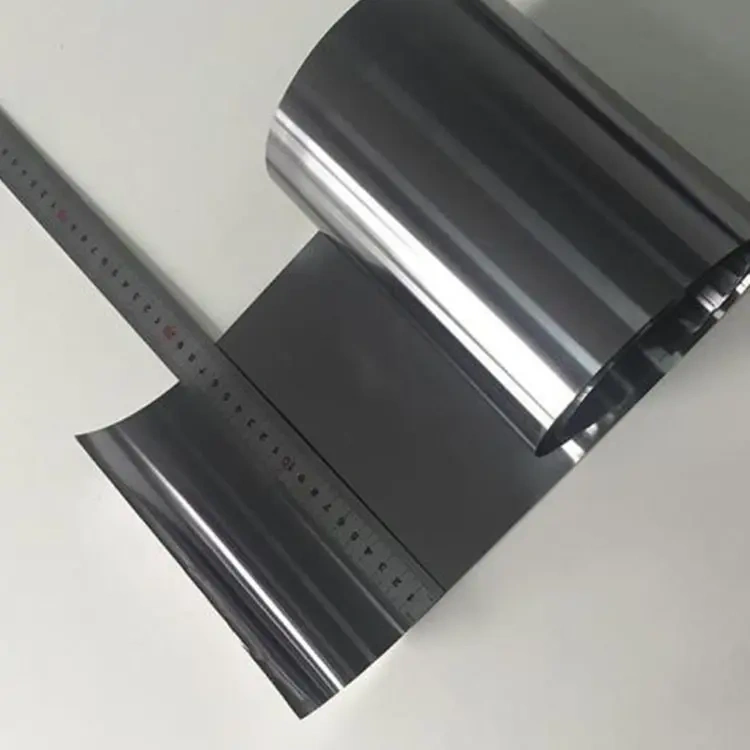
Princeton Powder is a main supplier of thin tantalum foil in the United States, offering materials that meet ASTM B365 standards. We provide tantalum strip in a variety of thickness according to customer’s request. Our manufacturing processes include hot or cold rolling. Tantalum Strip and Tantalum Foil are for sale at a competitive price.
Material | Tantalum Foil, Tantalum Strip |
CAS Number | 7440-25-7 |
Standard | ASTM B365, ASTM F560 (Medical Grade) |
Grade | R05200, R05400, R05252 (Ta2.5W), R05255 (Ta10W), R05240 (Ta40Nb) |
| Density | 16.65 g/cm3 |
Melting Point | 3020 ℃ |
Dimensions | Customized |
Form | Electronics Grade Tantalum Foil Medical Grade Tantalum Foil |
Surface Treatment | Pickling or Polishing |
Related Products:
Titanium Foil and Strip (Grade 1, Grade 2, and Grade 5)
Niobium Foil, Strip, and Ribbon
Tungsten Foil and Strip (Tungsten Tape)
ASTM B777 Tungsten Heavy Alloy (W-Ni-Fe) Foil & Strip
90W-NiCu Tungsten Alloy Foil and Strip
TZM Molybdenum Strip/Foil/Ribbon
Description of Ta Foil/Strip (Electronics Grade and Medical Grade)
Tantalum foil is made from the chemical element tantalum (Ta), a dense, blue-gray metal with atomic number 73. Tantalum is known for its exceptional corrosion resistance, high melting point (approximately 3,000°C), and biocompatibility. It is widely used in the electronics industry for manufacturing capacitors, where its conductive properties are essential. Due to its biocompatibility, tantalum wire is also utilized in medical applications, including implants and surgical devices. Its unique properties make it suitable for various demanding environments, such as chemical processing and aerospace.
Chemical Compositions of Pure Tantalum and Ta alloy Foil/Strip
Grade | Chemical Composition (≤%) | |||||||||||
Ta | Fe | Si | Ni | W | Mo | Ti | Nb | O | C | H | N | |
Ta1 | Bal. | 0.005 | 0.005 | 0.002 | 0.01 | 0.01 | 0.002 | 0.03 | 0.015 | 0.01 | 0.0015 | 0.01 |
Ta2 | Bal. | 0.03 | 0.02 | 0.005 | 0.04 | 0.03 | 0.005 | 0.1 | 0.02 | 0.01 | 0.0015 | 0.01 |
TaNb3 | Bal. | 0.03 | 0.03 | 0.005 | 0.04 | 0.03 | 0.005 | <3.5 | 0.02 | 0.01 | 0.0015 | 0.01 |
TaNb20 | Bal. | 0.03 | 0.03 | 0.005 | 0.04 | 0.03 | 0.005 | 17.0-23.0 | 0.02 | 0.01 | 0.0015 | 0.01 |
Ta2.5W | Bal. | 0.005 | 0.005 | 0.002 | 3.0 | 0.01 | 0.002 | 0.04 | 0.015 | 0.01 | 0.0015 | 0.01 |
Ta10W | Bal. | 0.005 | 0.005 | 0.002 | 11 | 0.01 | 0.002 | 0.04 | 0.015 | 0.01 | 0.0015 | 0.01 |
Physical Properties of Tantalum Foil and Strip
| Product condition | Tensile strength (MPa) | Elongation, % |
| Annealed | 300~600 | 10~30 |
| Half annealed | >600~1000 | <5 |
Unannealed | >1000 | <5 |
Application
Electronics: Tantalum foil is widely used in capacitors and connectors due to its excellent electrical conductivity and stability under high temperatures.
Medical Devices: The biocompatibility and corrosion resistance of tantalum make it ideal for use in surgical instruments, implants, and prosthetics.
Chemical Processing: Tantalum foil is employed as linings in reactors, piping systems, and other components that handle highly corrosive substances, ensuring durability and safety.
Aerospace: Used in various high-performance applications, including components for jet engines and spacecraft, where resistance to extreme temperatures and harsh environments is critical.
FAQ-antalum Foil and Tantalum Strip (Thin or Small Thickness)
1. What is the minimum thickness available for thin Tantalum foil and strip?
We supply ultra-thin Tantalum (Ta) foil rolled down to 0.005 mm (5 µm / 0.0002″) and small-thickness Tantalum strip ranging from 0.05 mm to 0.50 mm (0.002″ to 0.020″). Both continuous spooled coils and flattened cut-to-length sheets are manufactured with tight thickness tolerances and smooth, burr-free slit edges.
2. What is the difference between ASTM B708 UNS R05200 and UNS R05400 Tantalum?
UNS R05200 is unalloyed electron-beam (EB) or vacuum-arc melted tantalum featuring maximum ductility, ultra-low interstitial impurities, and superior weldability—making it ideal for deep drawing, electrolytic capacitors, and vacuum furnace shields. UNS R05400 is unalloyed powder-metallurgy sintered tantalum offering slightly higher annealed yield strength and finer grain stability for chemical processing equipment and high-temperature structural components.
3. Should I choose vacuum-annealed or cold-rolled temper for thin Tantalum foil?
Choose vacuum-annealed (soft) temper if your process involves deep drawing, stamping, bending, or wrapping parts for heat treatment, as annealing provides maximum elongation and formability. Choose cold-rolled (hard / as-rolled) temper when higher tensile strength, stiffness, and flatness are needed for precision shims, spacers, or automated coil winding.
4. Which chemicals and operating temperatures can thin Tantalum foil withstand?
Tantalum forms a dense, self-healing tantalum pentoxide (Ta2O5) passive layer that makes it virtually immune to corrosion by hydrochloric, nitric, sulfuric, and phosphoric acids at temperatures up to 150–200 °C (and aqua regia). Note: Avoid exposure to hydrofluoric acid (HF), free fluoride ions, fuming sulfuric acid (oleum), and strong hot alkalis, as well as air oxidation above 300 °C without vacuum or inert gas protection.
5. What are the primary applications of thin Tantalum foil and strip?
Thin Tantalum foil and strip are widely used as dielectric anode substrates in tantalum electrolytic capacitors, multi-layer radiation heat shields and getter wraps in high-temperature vacuum furnaces, corrosion-resistant chemical heat exchanger linings and rupture discs, sputtering targets, and biocompatible implantable medical devices.