
Chromium Sulfide Powder Cr₂S₃
Chromium Sulfide (Cr2S3 / CrS) powder is a high-purity (99%–99.9%) inorganic sulfide engineered with controlled stoichiometry, low moisture content, and uniform particle sizes ranging from submicron (0.5 um) to -325 mesh. Combining high thermal stability, low friction, and unique magnetic-semiconducting properties, this versatile powder is widely applied in high-temperature solid lubricants, automotive brake friction linings, self-lubricating metal bearings, hydrodesulfurization catalysts, and solid-state battery electrodes. Sourced directly from an ISO-certified manufacturer, our Chromium Sulfide powder is available for R&D samples, custom PSD processing, and bulk wholesale orders with full COA, SDS, and fast global shipping.
Princeton Powder is a major manufacturer of Chromium Sulfide ceramic powder. We provide Chromium Sulfide Micron Powder in different particle sizes. Chromium sulfide (Cr₂S₃) powder is for sale at a competitive price.
Technical Specifications and Chemical Composition
Formula | Chromium Sulfide, Cr2S3 |
CAS Number | 12018-22-3 |
Purity | 99.5% min |
Synonyms | Chromium Sulfide powder, Chromium Sulfide refractory powder, Chromium Sulfide thermal spray powder, Chromium Sulfide ceramic Powder |
Particle Sizes | 325 mesh or be customized |
Appearance | Brown to black powder |
Melting Point | 1350 °C |
Solubility in water | insoluble |
Density | 3.77 g/cm 3 |
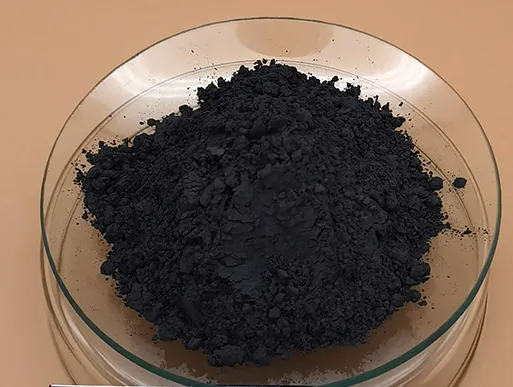
Description of Chromium Sulfide Powder
Chromium sulfide powder, represented by the chemical formula Cr₂S₃, is a compound formed by chromium (Cr) and sulfur (S), known for its thermal stability and ability to withstand high temperatures, making it suitable for high-temperature applications. It serves as an effective catalyst in various chemical processes and is utilized in pigments for paints and coatings due to its vibrant colors and opacity. Additionally, chromium sulfide exhibits magnetic properties and corrosion resistance, enhancing its versatility across industrial applications, particularly in catalysis, pigments, and advanced materials.
Manufacturing method of Chromium Sulfide Powder
Chemical Vapor Deposition (CVD): In this process, chromium-containing gaseous precursors react with sulfur vapor in a controlled environment to form chromium sulfide. This method allows for precise control over the powder’s properties and is often used to produce high-purity Chromium sulfide powder.
Solid-State Reaction: Chromium metal and sulfur powder can be mixed in stoichiometric ratios and heated at elevated temperatures (typically around 600-800°C) in an inert atmosphere. This solid-state synthesis results in the formation of chromium sulfide powder.
Hydrothermal Synthesis: In a hydrothermal method, chromium salts and sulfur sources are reacted in a high-pressure aqueous environment. This process facilitates the formation of nanoscale chromium sulfide, which can be advantageous for certain applications requiring fine particle sizes.
Milling of Bulk Cr₂S₃: Larger pieces of chromium sulfide can be ground down in a ball mill to produce fine powder. This mechanical method is often used for applications where high purity is less critical.
Key Material Properties of Chromium Sulfide Powder
Thermal Stability: Chromium sulfide exhibits good thermal stability, withstanding high temperatures without significant degradation, making it suitable for high-temperature applications.
Catalytic Activity: It serves as an effective catalyst for various chemical reactions, particularly in petroleum refining and organic synthesis, enhancing processes such as hydrogenation and hydrodesulfurization.
Magnetic and Electrical Properties: Chromium sulfide displays ferromagnetic behavior at certain temperatures and varying degrees of electrical conductivity, making it valuable for magnetic applications and electrochemical devices.
Corrosion Resistance: The compound offers resistance to oxidation and corrosion, contributing to its durability in harsh environments, especially in catalyst and coating applications.
Industrial Applications of Chromium Sulfide Powder
Catalysts: In catalytic applications, chromium sulfide is used to facilitate various chemical reactions, including hydrogenation and hydrodesulfurization. The powder is typically mixed with other materials, compacted, and sometimes shaped into pellets or extrudates for optimal reaction performance.
Pigments: As a pigment in paints, coatings, and plastics, chromium sulfide provides vibrant colors with good opacity. The powder is incorporated into formulations and processed to achieve the desired color quality, stability, and dispersion properties.
Magnetic Materials: Chromium sulfide can be used in magnetic applications due to its ferromagnetic properties. The powder may be sintered with other magnetic materials to form composite products suitable for electronics and data storage devices.
Refractory Materials: In high-temperature applications, chromium sulfide is incorporated into refractory ceramics and coatings. The powder is mixed with other ceramic materials, shaped, and sintered to produce components that can withstand extreme heat and corrosion.
Electrochemical Applications: Chromium sulfide powder is explored for its potential in batteries and sensors due to its conductivity and electrochemical properties. The powder can be processed into electrodes or conductive materials, enhancing charge transfer and performance in electrochemical devices.
Chromium Sulfide Powder Scholar Articles
Nickel-mixed chromium sulfide nanoparticle synthesis, characterization, and supercapacitor applications
Abstract: Researchers are always encouraged to develop new electrode materials to design efficient, safe, and eco-friendly energy storage systems. Doping or mixing is an effective way to improve the electrochemical performance of supercapacitors. In this study, Ni-mixed Cr2S3 (Ni-Cr2S3) nanoparticles were synthesized through a hydrothermal technique with varying molar ratios of Ni and Cr. As prepared different Ni-Cr2S3 nanoparticles were characterized using XRD, XPS, FESEM, TEM, and EDX techniques. The results displayed that the structure and activity of the Ni-Cr2S3 were significantly influenced by the dopant quantity of Ni in Cr2S3.
Frequently Asked Questions About Chromium Sulfide Powder
1. What is the difference between Chromium(III) Sulfide (Cr₂S₃) and Chromium(II) Sulfide (CrS) powder?
Chromium(III) Sulfide (Cr₂S₃) is the more thermodynamically stable, brownish-black trigonal/rhombohedral phase commonly used in high-temperature solid lubricants, friction materials, and hydrodesulfurization catalysts. Chromium(II) Sulfide (CrS)—often exhibiting a non-stoichiometric nickel-arsenide-type structure—is primarily selected for specialized magnetic, semiconducting, thermoelectric, and battery electrode research. Both stoichiometries are available in high-purity grades with verified XRD phase identification.
2. How does Chromium Sulfide compare to MoS₂ and WS₂ in solid lubricants?
While Molybdenum Disulfide (MoS₂) and Tungsten Disulfide (WS₂) offer ultra-low friction in vacuum or moderate temperatures, Chromium Sulfide (Cr₂S₃) provides superior thermal stability and oxidation resistance at elevated temperatures (typically above 450–600 °C in air). Because it maintains structural integrity under extreme frictional heat without rapidly oxidizing into abrasive oxides, Cr₂S₃ is widely preferred in heavy-duty brake pads, clutch linings, and high-temperature sintered metal bearings.
3. What are the primary industrial applications of Chromium Sulfide powder?
High-purity Chromium Sulfide powder is widely utilized across:
Friction & Wear Materials: Stabilizes friction coefficients and reduces wear rates in automotive brake pads, railway friction blocks, and industrial clutch linings.
Powder Metallurgy & Bearings: Acts as a solid-lubricant additive in iron-, copper-, and nickel-based self-lubricating sintered bearings and bushings.
Catalysis: Serves as an active component or promoter in petrochemical hydrodesulfurization (HDS) and hydrodenitrogenation (HDN) catalysts.
Energy Storage & Electronics: Used in sodium-ion/lithium-ion battery conversion electrodes, spintronics, and magnetic semiconductor research.
4. What purity levels and particle sizes are available for Chromium Sulfide powder?
Standard grades are supplied at 99% to 99.9% metals-basis purity with tightly controlled free sulfur, oxygen, and trace metallic impurities. Available particle sizes range from submicron powders (D50: 0.5–1.0 µm) and fine micron grades (1–10 µm) up to standard sieve sizes such as -200 mesh (75 µm) and -325 mesh (45 µm), with custom particle size distributions (PSD) available upon request.
5. How should Chromium Sulfide powder be stored and handled safely?
Store Chromium Sulfide powder in airtight, moisture-barrier containers in a cool, dry, well-ventilated area away from strong acids and oxidizing agents, as exposure to moisture or acids can slowly release hydrogen sulfide (H₂S) gas. Always handle fine powders using local exhaust ventilation and appropriate PPE, including N95/P100 particulate respirators, chemical-resistant gloves, and safety goggles.
6. Can you provide R&D samples, custom PSD, and quality documentation (COA/SDS)?
Yes. We supply quantities ranging from 1000 g laboratory R&D samples to multi-ton bulk industrial shipments. Every batch includes a comprehensive Certificate of Analysis (COA) detailing chemical purity, and particle size distribution, alongside a Safety Data Sheet (SDS) available for QA qualification.