Spherical niobium-based alloy Nb521 Powder
Spherical Nb521 powder is a high-performance niobium-based refractory alloy with the nominal composition Nb-5W-2Mo-1Zr (balance niobium, ~5% tungsten, ~2% molybdenum, ~1% zirconium), designed for extreme high-temperature aerospace applications. Manufactured by vacuum induction melting followed by plasma rotation electrode melting (PREP) or vacuum inert gas atomization (VIGA), our Nb521 powder is supplied in spherical morphology with excellent flowability, high apparent density, and low oxygen content, optimized for powder-bed fusion (PBF/LPBF) and directed energy deposition (DED) additive manufacturing processes. Key applications include liquid rocket engine thrust chambers and nozzle extensions, aerospace turbine engine hot-section components, hypersonic vehicle leading edges, spacecraft thermal radiation panels, nuclear reactor components, and satellite propulsion systems. Available in standard 15–53 μm (LPBF), 45–105 μm (DED), and custom particle size distributions (PSDs), with full CoA documentation (chemical composition by ICP/OES, oxygen/nitrogen by LECO, particle size by laser diffraction, sphericalness by SEM, flowability by Hall flow). As a direct bulk 3D printing material supplier, we offer competitive pricing, reliable lot-to-lot consistency, and flexible packaging from 1kg argon-sealed bottles to 25kg drums, serving aerospace OEMs, rocket propulsion companies, 3D printing service bureaus, and national research laboratories worldwide.
| Parameter | Specification |
|---|---|
| Alloy Designation | Nb521 (Chinese aerospace grade; equivalent to Nb-5W-2Mo-1Zr) |
| Nominal Composition | Balance Nb; W ~5%; Mo ~2%; Zr ~1% |
| Typical Chemical Composition (wt%) | W 5.14; Mo 1.87; Zr 1.33; Ta ≤0.60; Ti ≤0.02; Fe ≤0.002; Si ≤0.003; C ≤0.010; O ≤0.010; N ≤0.007; Nb balance |
| Density | 8.65–9.0 g/cm³ (typical 8.7–8.8) |
| Melting Point | ~2,630°C |
| Powder Morphology | Spherical (PREP / VIGA gas atomization) — standard; irregular (crushed) on request |
| Purity | ≥99.9% (metals basis) |
| Particle Size (LPBF standard) | 15–53 μm |
| Particle Size (DED standard) | 45–105 μm |
| Other Available PSDs | 0–25 μm, 53–105 μm, -200 mesh (<75 μm), custom on request |
| Sphericity | ≥0.9 (spherical, gas-atomized) |
| Oxygen Content | ≤1,500 ppm (standard); ≤1,000 ppm (premium) |
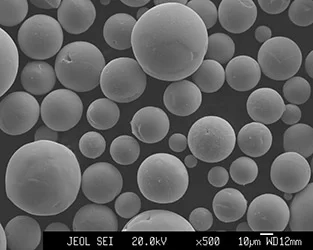
Description of Niobium 521 Powder
Niobium 521 powder, also known as Nb-5Zr-1Hf, is a niobium alloy with 5% zirconium and 1% hafnium. It features a high melting point of approximately 2,470°C and offers enhanced strength and oxidation resistance. This powder is used in aerospace components, nuclear reactors, and additive manufacturing for high-temperature applications. Its properties make it ideal for creating complex, high-performance parts.
Princeton Powder is a leading supplier of spherical Niobium 521 powder. We specialize in a comprehensive range of spherical powder products and possess extensive expertise in additive manufacturing (3D printing) industry. Niobium 521 spherical powder is for sale in bulk.
Chemical Composition
Poduct | Chemical Composition (%) | ||||||||||||
Nb521 | Nb | Mo | W | Zr | Al | Fe | Si | Other | |||||
balance | 1.9 | 4.76 | 0.99 | <0.01 | <0.01 | 0.01 | <0.05 | ||||||
Gas Impurities (%) | |||||||||||||
C | H | O | N | ||||||||||
0.05-0.12 | <0.005 | <0.02 | <0.01 | ||||||||||
Physical Properties | |||||||||||||
Apparent Density (g/cm3) | Tap Density (g/cm3) | Hall Flow Rate (s/50g) | |||||||||||
>5.5 | >6.5 | <10.0 | |||||||||||
Particle Size | 5-25μm, 15-45μm, 15-53μm, 45-75μm, 45-105μm, 75-150μm, or customized. | ||||||||||||
Particle Size distribution
0-15μm, 15-53μm, 45-105μm, 45-150μm. (Various particle sizes can be customized)
Nb521 vs. C103 Comparison
| Feature | Nb521 (Nb-5W-2Mo-1Zr) | C103 (Nb-10Hf-1Ti) |
|---|---|---|
| Composition | Nb-5W-2Mo-1Zr | Nb-10Hf-1Ti (Hf ~10%, Ti ~1%) |
| Density | 8.7–8.8 g/cm³ | 8.55 g/cm³ |
| Melting Point | ~2,630°C | ~2,500°C |
| RT Tensile Strength | 440–550 MPa | 400–480 MPa |
| 1,600°C Tensile Strength | 2–3× higher than C103 | Lower (baseline) |
| Long-Term Service Temp (coated) | Up to 1,550°C | 1,200–1,300°C |
| Strengthening Mechanism | W/Mo solid-solution + ZrC/Nb₂C precipitation | Hf/Ti solid-solution + HfO₂ dispersion |
| Formability | Good (hot/cold forming, spinning) | Excellent (more ductile) |
| Weldability | Good | Excellent |
| AM Printability | Promising (under development/evaluation) | Well-established |
| Best For | Ultra-high-temperature (1,400–1,600°C) load-bearing components | Moderate-temperature (≤1,300°C) nozzles, thrust chambers, thrust structures |
| Cost | Higher (W, Mo additions; more processing) | Lower |
Industrial Applications & Uses
Spherical niobium alloy Nb521 Powder for Aerospace:
- Used in aerospace components requiring high temperature and stress resistance, such as rocket nozzles and heat shields.
Spherical niobium alloy Nb521 Powder for Nuclear Industry:
- Nuclear reactor components: Nb521’s low neutron cross-section, high temperature strength, and compatibility with liquid metal coolants (lithium, sodium) make it suitable for advanced reactor internals.
- Space nuclear power systems: Thermoelectric converter hot-end components, heat pipes, and radiator structures for space fission power systems.
Spherical niobium alloy Nb521 Powder for Additive Manufacturing / 3D Printing:
- LPBF (Laser Powder Bed Fusion): Spherical Nb521 powder (15–53 μm) used to print complex aerospace components with internal cooling channels, lightweight lattice structures, and near-net-shape geometries
- DED (Directed Energy Deposition): Coarser powder (45–105 μm) for large-component repair, cladding, and near-net-shape deposition of rocket nozzle sections.
- EBM (Electron Beam Melting): Vacuum-based EBM is well-suited to refractory metals like niobium — no oxidation concern, excellent powder reuse.
- Binder Jetting / MIM: Nb521 powder can be used in metal injection molding (MIM) and binder jetting for high-volume, complex small components.
- R&D and qualification: Powder compositions, particle size distributions, and print parameters are under active qualification by aerospace primes and national labs
FAQ
Q: What is Nb521? What does the “521” mean?
A: Nb521 is a Chinese aerospace-grade niobium alloy with the nominal composition Nb-5W-2Mo-1Zr — approximately 5% tungsten, 2% molybdenum, 1% zirconium, balance niobium. The “521” designation directly encodes these three key alloying additions: 5W-2Mo-1Zr. It is a solid-solution and precipitation-hardened refractory niobium alloy developed for extreme high-temperature aerospace service.
Q: What particle size should I use for additive manufacturing?
- LPBF (Laser Powder Bed Fusion / Selective Laser Melting): 15–53 μm is the industry standard. This narrow PSD provides good spreadability, consistent layer thickness (20–60 μm), and high packing density.
- DED (Directed Energy Deposition / Laser Cladding / WAAM): 45–105 μm (or 53–150 μm) is standard. Coarser powder feeds reliably through nozzles at high deposition rates.
- EBM (Electron Beam Melting): 45–105 μm is typical (EBM operates in vacuum, suited to refractory metals).
- MIM / Binder Jetting: Fine powder (<25 μm) or custom PSD. If you are starting a new LPBF program, we recommend the 15–53 μm standard grade.
Q: What is the oxygen content requirement for AM-grade Nb521 powder? A: Oxygen is the most critical impurity in niobium alloy powder for AM:
- Standard AM grade: ≤1,500 ppm (0.15%) oxygen
- Premium / fatigue-critical grade: ≤1,000 ppm (0.10%) oxygen Excess oxygen embrittles niobium (interstitial oxygen solid-solution strengthening without ductility) and degrades AM part fatigue life and impact toughness. Our powder is produced by PREP or VIGA under vacuum/inert gas to maintain low oxygen.