
Chitosan Powder CAS Number 9012-76-4
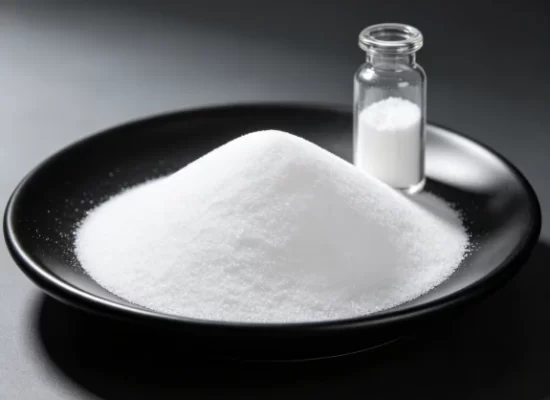
Chitosan is a linear polysaccharide composed of randomly distributed β-(1→4)-linked D-glucosamine (deacetylated unit) and N-acetyl-D-glucosamine (acetylated unit), produced by deacetylation of chitin — the second most abundant natural polymer, found in the exoskeletons of crustaceans (shrimp, crab, lobster) and fungal cell walls. With CAS Number 9012-76-4, our Chitosan is supplied as a white to off-white flake or fine powder with ≥85% deacetylation degree (DD) (higher DD grades 90%/95% available), controlled viscosity (low/medium/high), and moisture ≤10%. It is insoluble in water and most organic solvents but soluble in dilute aqueous acidic solutions (pH < 6.5, e.g., 1% acetic acid), forming a clear viscous solution. Chitosan’s unique properties — biocompatibility, biodegradability, antimicrobial activity, film-forming ability, and cationic charge — make it a versatile industrial ingredient used across dietary supplements (weight management, cholesterol support), cosmetics and personal care (film-forming, moisturizing), water treatment (flocculant, heavy metal chelator), agriculture (seed coating, plant defense elicitor), and pharmaceuticals (drug delivery, wound dressing). As a direct bulk manufacturer and supplier, we offer competitive wholesale pricing, reliable large-scale production, full CoA documentation, ISO/Halal/Kosher certification.
Technical Specifications
| Parameter | Specification |
|---|---|
| Product Name | Chitosan |
| CAS | 9012-76-4 |
| Source | Shrimp/crab shells (fungal/vegetarian available on request) |
| Deacetylation Degree (DD) | ≥85% (90%, 95% grades available) |
| Viscosity (1% in 1% acetic acid) | Low: <100 mPa·s; Medium: 100–500 mPa·s; High: >500 mPa·s (customizable) |
| Appearance | White to off-white flake or fine powder |
| Moisture | ≤10% |
| Ash | ≤1.0% |
| Insolubles | ≤1.0% |
| pH (1% solution in 1% acetic acid) | 6.0–8.0 |
| Particle Size | Flake / 40–80 mesh powder (customizable) |
| Heavy Metals | ≤10 ppm |
| Microbiological | TPC ≤1000 CFU/g; Yeast&Mold ≤100 CFU/g; Salmonella negative |
| Grade | Food / Supplement / Cosmetic / Industrial grade |
What Is Chitosan?
Chitosan is produced by alkaline deacetylation of chitin. The deacetylation degree (DD) is the key quality parameter — higher DD means more free amino groups, greater cationic charge, better solubility in acid, and stronger biological activity.
Industrial Applications & Uses
- Dietary supplements: weight management, cholesterol support, fat-binding capsules/tablets
- Cosmetics & personal care: film-forming agents, moisturizers, hair care, anti-aging products, after-sun care
- Water treatment: flocculant/coagulant, heavy metal chelation (Cu, Cd, Pb, Hg), dye removal, wastewater treatment
- Agriculture: seed coating, plant growth promoter, antifungal/antibacterial agent, fruit preservation coating
- Food industry: edible coatings, preservatives, food packaging films, clarifying agent (juice/wine)
- Pharmaceuticals: drug delivery systems, wound dressings, surgical sutures, nasal delivery
- Textiles: antimicrobial fabric treatment
- R&D: biomaterial development, nanoparticle synthesis
Packaging, Storage & Shelf Life
- Packaging: 1kg/5kg/10kg polyethylene bag; 25kg woven bag with inner PE liner
- Storage: Cool, dry, well-ventilated; protect from moisture (hygroscopic)
- Shelf life: 24 months in original sealed packaging
- MOQ: 1kg (sample); 25kg (bulk standard)
Frequently Asked Questions
Q: What is the CAS number for Chitosan?
A: 9012-76-4.
Q: What is deacetylation degree (DD)?
A: DD is the percentage of glucosamine units (deacetylated) vs. N-acetylglucosamine units (acetylated) in the polymer chain. Higher DD = more free amino groups = stronger cationic charge, better acid solubility, and greater biological activity. Standard is ≥85% DD.
Q: Is chitosan water soluble?
A: Chitosan is insoluble in neutral water but soluble in dilute acidic solutions (pH < 6.5, e.g., 1% acetic acid, citric acid, lactic acid). For water-soluble formulations, consider carboxymethyl chitosan or chitosan oligosaccharide.
Q: What is the source?
A: Standard is shrimp/crab shell chitin. Fungal (Aspergillus niger) and vegetarian sources available on request.
Q: Which viscosity grade should I choose?
A: Low viscosity for supplements and water treatment; medium for cosmetics and general use; high for thickening, film-forming, and drug delivery.