
Bovine Chondroitin Sulfate Sodium Powder — USP Grade Joint Health Cartilage Ingredient
Bovine chondroitin sulfate sodium (CAS 9082-07-9) is a sulfated glycosaminoglycan (GAG) extracted from bovine tracheal and septal cartilage, consisting of alternating N-acetylgalactosamine and glucuronic acid disaccharide units with a molecular weight typically ranging from 20,000 to 50,000 Da. As a major structural component of articular cartilage, chondroitin sulfate provides cartilage compressive resistance, joint lubrication, and water retention in the extracellular matrix, while also stimulating proteoglycan synthesis and inhibiting cartilage-degrading enzymes (matrix metalloproteinases, aggrecanases) and inflammatory mediators (IL-1β, TNF-α, COX-2). Human clinical trials (including the landmark GAIT study) demonstrate that oral bovine chondroitin sulfate (800–1200 mg/day) reduces osteoarthritis pain, improves joint function, slows cartilage space narrowing, and may delay disease progression — with efficacy comparable to NSAIDs but without gastrointestinal side effects. Our bovine chondroitin sulfate sodium is manufactured to USP/EP standards with assay ≥90% (high-purity grades ≥95% and ≥98%), low protein content (≤6%), and full traceability from BSE/TSE-free certified bovine sources. Available in powder and granule forms for dietary supplements, functional foods, eye drops, pharmaceuticals, and pet joint health. As a leading bulk chondroitin manufacturer, we provide full CoA documentation, custom grades, and competitive pricing for supplement brands and contract manufacturers worldwide.
Chondroitin Sulfate Sodium (Bovine) Technical Specifications
Items | Specification |
Appearance | White to off-white powder |
Identification | Infra Red Confirmed |
Sodium reaction | |
Assay | NLT90% |
Loss on drying | NMT10% |
Protein | NMT6.0% |
Heavy Metals | NMT20PPM |
PH (1% H2O Solution) | 5.5-7.5 |
Specific Rotation | -20°- – 30° |
Chloride | NMT 0.5% |
Sulfate | NMT 0.24% |
Residue on Ignition | 20%-30% |
Clarity (5% H2O Solution) | NMT0.35@420nm |
Organic volatile impurities | Meet the requirements |
Total Bacteria Count | NMT1000Cfu/g |
Yeast & Molds | NMT100Cfu/g |
Salmonella | Negative |
E.Coli | Negative |
Staphylococcus aureus | Negative |
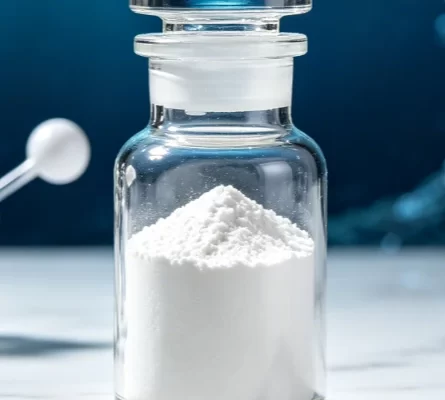
What Is Bovine Chondroitin Sulfate Sodium?
Bovine chondroitin sulfate sodium is the sodium salt of a sulfated glycosaminoglycan extracted from bovine (cow) tracheal cartilage, nasal septum, and articular cartilage. It is the most widely used and clinically studied source of chondroitin sulfate globally.
Chemical structure:
- Linear polysaccharide composed of repeating disaccharide units of D-glucuronic acid (GlcA) and N-acetyl-D-galactosamine (GalNAc)
- Sulfate ester groups at the 4-position (chondroitin-4-sulfate, CSA) and/or 6-position (chondroitin-6-sulfate, CSC) of GalNAc
- Bovine cartilage typically contains a mixture of 4-sulfated and 6-sulfated disaccharides (~40–60% 4-sulfate, ~40–60% 6-sulfate), providing a balanced sulfation profile
- Sodium counterions balance the negative charge of sulfate and carboxylate groups
- Molecular formula: (C₁₄H₁₉NO₁₄SNa₂)ₙ (variable, n = degree of polymerization)
- Molecular weight: 20,000 – 50,000 Da (typical for bovine cartilage extract)
- CAS: 9082-07-9
- Appearance: White to off-white / creamy white powder; odorless or slight characteristic odor
- Solubility: Freely soluble in water (forms viscous solutions); insoluble in ethanol, methanol, and most organic solvents
- pH (1% solution): 5.5 – 7.5
Why bovine source?
- Abundant and cost-effective: Bovine tracheal cartilage is a readily available byproduct of the beef industry, making bovine chondroitin the most affordable source
- Balanced sulfation profile: Bovine cartilage contains both 4-sulfate and 6-sulfate isomers, which is believed to provide broad biological activity
- Extensive clinical data: The majority of human clinical trials on chondroitin sulfate use bovine-sourced material
- Consistent quality: Standardized extraction and purification processes deliver consistent molecular weight and sulfation profiles batch-to-batch
- BSE/TSE safety: Sourced from BSE-free certified regions (e.g., Australia, New Zealand, South America, certified EU herds) with full traceability
Chondroitin Sulfate Sodium Benefits —Joint Health, Cartilage Repair & Anti-Inflammation
1. Cartilage Structural Support & Lubrication
- Chondroitin sulfate is a major component of articular cartilage extracellular matrix, where it attaches to aggrecan core proteins to form large proteoglycan aggregates that give cartilage its compressive resistance and water-holding capacity
- Provides joint lubrication by retaining water in the cartilage matrix, reducing friction between articulating surfaces
- Supports synovial fluid viscosity, improving shock absorption and joint mobility
2.Eye health:
- Chondroitin sulfate is used in artificial tears and eye drops for dry eye syndrome, providing lubrication and corneal protection. It is also studied for corneal wound healing and glaucoma.
3. Skin health:
- Topical chondroitin sulfate supports skin hydration, elasticity, and wound healing (via fibroblast stimulation and glycosaminoglycan synthesis in the dermis).
4. Cardiovascular health:
- Chondroitin sulfate may support vascular health by inhibiting LDL oxidation and reducing atherosclerotic plaque formation (preclinical evidence).
5. Pet joint health:
- Widely used in canine and feline joint supplements for osteoarthritis and hip dysplasia.
FAQ
Bovine vs shark chondroitin
- Bovine is more affordable, balanced 4-/6-sulfate profile, most clinical data. Shark has higher 6-sulfate content, higher purity, higher cost, MSC sustainability options.
What molecular weight is best?
- 20–50 kDa is standard for joint health (balances absorption with cartilage binding affinity). Low MW (<10 kDa) for enhanced bioavailability and skincare.
Is bovine chondroitin safe from BSE?
- Yes — sourced from BSE-free certified regions, processed with alkaline/enzymatic steps that inactivate prions, with full traceability documentation.
Can vegetarians/vegans use bovine chondroitin?
- No — bovine is animal-derived. For vegan/vegetarian products, use plant-based chondroitin from marine algae (see our product Plant-Based Chondroitin from Marine Algae).