
Platinum Coated Niobium Mesh Anode for Electrochemical Chlorine Evolution
Princeton Powder is a trusted supplier of platinum coated niobium (Pt/Nb) mesh anodes engineered for demanding electrochemical chlorine evolution applications. Our platinized niobium mesh electrodes combine a high-purity platinum coating with an ASTM B392 niobium substrate to deliver exceptional corrosion resistance, high current density capability, and long service life — particularly in fluoride-containing electrolytes where titanium-based anodes fail.
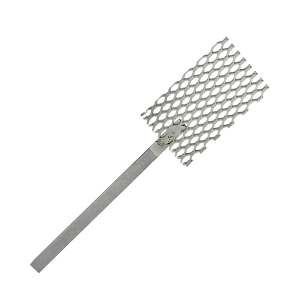
High-purity platinum-coated niobium mesh, Featuring a durable titanium handle and a precision platinum coating, this niobium mesh ensures long service life and stable performance in harsh environments. Platinum-coated niobium mesh with a titanium handle offers superior corrosion resistance and conductivity for demanding electrochemical applications. This high-performance electrode is ideal for electroplating, water treatment, and impressed current cathodic protection systems.
Material | Platinum Coated Niobium Mesh |
Base metal | Niobium |
Standard | ASTM B392 |
Color/Appearance | Gray, Metallic |
| Properties | long servicing life |
Handle | Customized |
Dimensions | Customized |
Surface Treatment | Pickling or Polishing |
Related Products:
PEM Electrolyzer Platinum Plated Titanium Mesh — Pt/Ti expanded mesh anodes for hydrogen production, chlor-alkali, and water treatment
- Iridium-Coated Titanium Anode Basket — MMO-coated Ti baskets for electroplating and electrophoretic coating applications
- Platinum Plated Titanium Rod & Bar Anodes — Solid Pt/Ti anodes for electroplating and cathodic protection
- MMO (Mixed Metal Oxide) Coated Titanium Anodes — IrO₂/RuO₂ coated anodes for oxygen evolution and industrial electrolysis
Description of Pt/Nb Mesh Electrode
Our platinum-coated niobium anode is manufactured using a precision electroplating process, ensuring the niobium substrate—specially treated for enhanced adhesion—is fully or partially coated with a uniform layer of high-purity platinum. The surface appears silver-white with a fine, durable coating, offering strong platinum-to-niobium bonding, high current output, excellent corrosion resistance, and an extended service life. This platinized niobium electrode is ideal for electroplating, cathodic protection, and water treatment, and is particularly suited for fluoride-containing electrolytes, such as those used in hard chrome plating of piston rings, valves, and other precision components.
Chemical Compositions of Platinum Electroplating Mesh
| Element | Grade I | Grade II |
|---|---|---|
| Iron (Fe) | 0.20% max. | 0.30% max. |
| Carbon (C) | 0.08% max. | 0.08% max. |
| Nitrogen (N) | 0.03% max. | 0.03% max. |
| Hydrogen (H) | 0.015% max. | 0.015% max. |
| Oxygen (O) | 0.18% max. | 0.25% max. |
| Titanium (Ti) | Remainder | Remainder |
Technical Properties of Long Service life platinum niobium mesh
| Parameter | Specification | Test Method / Standard |
|---|---|---|
| Base Material (Substrate) | Niobium R04200 (Grade I / Grade II) | ASTM B392 |
| Coating Material | 99.95% – 99.99% Pure Platinum (Pt) | ICP-OES |
| Coating Thickness | 1 – 5 µm (custom thicknesses available) | XRF / SEM cross-section |
| Coating Method | Precision electroplating | — |
| Appearance | Silver-white, gray metallic surface | Visual inspection |
| Mesh Thickness | 1.0 – 2.5 mm (custom available) | Micrometer |
| Handle Material | Customized titanium handle | ASTM B265 |
| Operating Voltage | ≤ 24 V (recommended max) | — |
| Current Density | ≤ 7,500 A/m² | — |
| pH Range | 1 – 12 | — |
| Working Temperature | < 60°C (recommended) | — |
| Chlorine Evolution Potential | ≤ 1.15 V (at 2,000 A/m², saturated NaCl, 25 ± 2°C) | Potentiostatic measurement |
| Chlorine Polarizability | ≤ 40 mV (200 / 2,000 A/m², saturated NaCl) | Galvanostatic step test |
| Platinum Consumption Rate | ~8 mg/A·year (typical) | Weight loss / thickness measurement |
| Coating Adhesion | No peeling or black marks | 3M tape test; 180° bend on Φ12 mm mandrel |
| Fluoride Ion Tolerance | < 50 mg/L (recommended) | — |
Why Niobium Instead of Titanium?
While platinum coated titanium anodes serve many electrochemical applications well, platinum coated niobium mesh anodes are the superior choice when operating conditions become aggressive. Here’s the direct comparison:
| Property | Pt/Nb (Niobium) Anode | Pt/Ti (Titanium) Anode |
|---|---|---|
| Anodic Breakdown Potential (in Cl⁻) | > 100 V | ~9 V |
| Max Current Density | 7,500 – 20,000 A/m² | ~2,000 A/m² |
| Fluoride Resistance | Excellent — withstands HF and fluoroborate baths | Poor — attacked by fluoride ions at >200 ppm |
| Service Life in Aggressive Media | Extended — resists pitting and passivation breakdown | Limited at elevated voltages and chloride levels |
| Cost | Higher substrate cost | More economical baseline option |
| Best For | Hard chrome plating with fluorides, high-voltage chlorine evolution, aggressive chloride electrolytes | Standard chlor-alkali, PEM electrolysis, moderate conditions |
Choose Pt/Nb when your application involves fluoride-containing electrolytes, operating voltages above 8–9 V, or high current density requirements. For applications without these specific challenges, our platinum plated titanium mesh anodes offer a more economical alternative.
Electroplated platinum niobium mesh Application
- Platinum niobium mesh is widely used for electroplating, electroforming, jewelry and decorative Plating.
- Niobium mesh with platinum coating can be also used as Electrolytic Cell Anodes and Corrosion-Resistant Electrode
- Deployed in impressed current cathodic protection (ICCP) systems for pipelines, marine structures, and reinforced concrete
- Offers long service life and resistance to passivation
Quality Assurance & Manufacturing Standards
Material Standards
- Niobium Substrate: ASTM B392 compliant Grade I or Grade II niobium with full material certification
- Platinum Coating: 99.95% minimum purity platinum source, verified by ICP-OES analysis
- Titanium Handle: ASTM B265 Grade 1 or Grade 2 titanium
- Traceability: Complete batch documentation from raw materials to finished electrode
Quality Control Testing
- Coating Thickness Verification: X-ray fluorescence (XRF) spectroscopy and SEM cross-sectional analysis
- Adhesion Testing: 3M tape test and 180° bend test on Φ12 mm mandrel — zero peeling or black marks required
- Electrochemical Performance: Chlorine evolution potential and polarizability verified per industry standards
- Dimensional Inspection: Full geometric verification of mesh dimensions, handle alignment, and overall electrode assembly
- Surface Quality: Visual inspection for uniform platinum coverage and absence of uncoated areas or nodules
Performance Testing Standards
- Chlorine Evolution Potential: ≤ 1.15 V at 2,000 A/m² in saturated NaCl at 25 ± 2°C
- Chlorine Polarizability: ≤ 40 mV between 200 and 2,000 A/m²
- Accelerated Life Testing: Available upon request for qualification of new electrode designs
FAQ platinum niobium mesh electrode
What is platinum-coated niobium mesh?
A platinum-coated niobium mesh is a high-performance electrode made from a niobium (Nb) substrate electroplated or PVD-coated with a thin layer of platinum (Pt). It combines niobium’s corrosion resistance with platinum’s superior conductivity, making it ideal for electroplating, water treatment, and cathodic protection.
What applications is it best suited for?
Hard chrome plating (e.g., piston rings, hydraulic rods)
Precious metal electroplating (gold, rhodium, silver)
Seawater cathodic protection (offshore platforms, ship hulls)
Ozone generation (water purification systems)
Is it compatible with fluoride solutions?
Yes! Pt/Nb mesh is one of the few anodes that resist:
- Hydrofluoric acid (HF)
- Fluoroborate baths (e.g., hard chrome plating electrolytes)