
Hydroxypropyltrimonium Hyaluronate Powder — Cationic HA for Rinse-Resistant Hair & Skin Care
Hydroxypropyltrimonium hyaluronate, commonly known as cationic HA or quaternized hyaluronic acid, is a chemically modified derivative of sodium hyaluronate in which positively charged quaternary ammonium groups (hydroxypropyltrimonium chloride) are grafted onto the HA backbone. This converts the naturally anionic (negatively charged) HA into a cationic (positively charged) polymer, enabling it to strongly adsorb onto the negatively charged surfaces of hair and skin — and crucially, to remain deposited even after rinsing. Unlike regular HA, which is largely washed away in rinse-off products like shampoos and cleansers, cationic HA delivers sustained moisturization, hair conditioning, anti-static benefits, and damaged hair repair that persist through washing. With a molecular weight of 500–800 kDa and excellent film-forming properties, our cosmetic-grade cationic HA is ideal for shampoos, conditioners, hair masks, body washes, and facial cleansers. As a leading bulk supplier and manufacturer, we provide high-purity powder with full documentation and competitive pricing for personal care formulators worldwide.
Technical Specifications
| Parameter | Specification |
| INCI Name | Hydroxypropyltrimonium Hyaluronate |
| Common Names | Cationic HA, Cationic Hyaluronic Acid, Quaternized HA, HA-QA |
| CAS Number | Not separately assigned (HA derivative; refer to parent HA CAS 9004-61-9 for regulatory filing) |
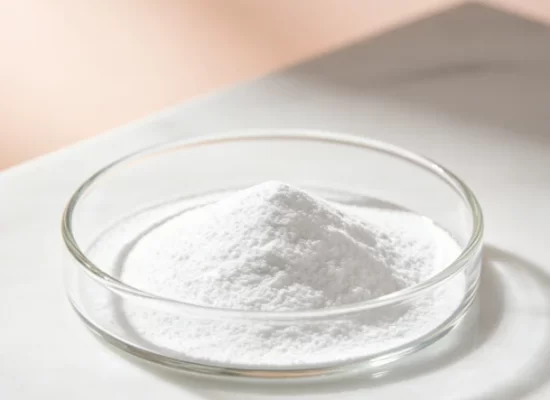
| Appearance | White to off-white powder or granules |
| Cationic Degree / Degree of Substitution | ≥ 80% of available carboxyl/hydroxyl sites modified (customizable) |
| pH (0.1% solution) | 5.0 – 7.5 |
| Loss on Drying | ≤ 10.0% |
| Residual GTMAC (epoxy monomer) | ≤ 1.0 μg/g (ppm) |
| Heavy Metals | ≤ 10 ppm (Pb, As, Hg, Cd) |
| Total Plate Count | ≤ 100 CFU/g |
| Yeast & Mold | ≤ 10 CFU/g |
| Specific Pathogens | E. coli, P. aeruginosa, S. aureus — absent |
| Charge Density | Positive (cationic) at pH 3.0–8.0 |
| Origin | Microbial fermentation (Streptococcus equi), vegan, non-GMO |
What Is Hydroxypropyltrimonium Hyaluronate (Cationic HA)
Hydroxypropyltrimonium hyaluronate (INCI: Hydroxypropyltrimonium Hyaluronate), commonly known as cationic HA, cationic hyaluronic acid, or quaternized HA, is a functional derivative of hyaluronic acid engineered to carry a net positive electrical charge.
The chemistry: Native sodium hyaluronate is an anionic polymer — its glucuronic acid carboxyl groups carry negative charges at cosmetic pH. In cationic HA, a portion of these carboxyl or hydroxyl groups is esterified/etherified with 2,3-epoxypropyltrimonium chloride (also known as glycidyltrimethylammonium chloride, GTMAC), introducing permanent positively charged quaternary ammonium pendant groups along the HA backbone. The resulting polymer carries both the native HA moisturizing structure and a net cationic charge.
Why the charge matters:
- Human hair and skin carry a net negative surface charge (especially damaged hair, where the cuticle is raised and exposes more negatively charged sites).
- Regular (anionic) HA is repelled by these negative surfaces and, in rinse-off products, is easily washed away with water flow.
- Cationic HA is electrostatically attracted to hair and skin, depositing strongly and resisting rinsing. This is the same mechanism that makes cationic surfactants (e.g., behentrimonium chloride) and cationic polymers (e.g., Polyquaternium-10) effective hair conditioners — but cationic HA adds HA’s intrinsic moisturizing and film-forming benefits on top.
Applications — Hair Care & Rinse-Off Skincare Formulations
| Product Type | Recommended Usage Level | Key Benefit |
|---|---|---|
| Shampoos (clear & pearlescent) | 0.1% – 0.5% | Rinse-resistant moisturization, improved wet combability, anti-static, reduced post-wash dryness |
| Conditioners & Hair Rinses | 0.2% – 1.0% | Enhanced conditioning, cuticle smoothing, shine, damaged hair repair, softness |
| Hair Masks & Deep Treatments | 0.3% – 1.5% | Intensive hydration, repair of severely damaged/bleached hair, elasticity improvement, anti-frizz |
| Leave-In Conditioners & Hair Serums | 0.2% – 0.8% | All-day moisture, anti-static, heat protection support, shine, detangling |
| Dry Shampoo | 0.1% – 0.3% | Conditioning residue between washes, reduced static, softer hair feel |
| Facial Cleansers & Face Washes | 0.1% – 0.5% | Post-cleanse hydration, no tight/dry feeling, barrier support, gentle moisturizing residue |
| Body Washes & Shower Gels | 0.1% – 0.5% | Rinse-resistant body hydration, soft skin feel, reduced post-shower dryness |
| Hand Washes & Soap Bars | 0.1% – 0.3% | Preventing hand dryness from frequent washing, moisturizing residue |
| Scalp Treatments & Scalp Serums | 0.1% – 0.5% | Scalp hydration, soothing, barrier support for dry/itchy scalp |
| Shaving Creams & Gels | 0.1% – 0.5% | Lubrication, post-shave hydration, reduced irritation |
| Hair Color & Perm Products | 0.2% – 0.8% | Protecting hair during chemical processing, reducing damage, improving post-treatment condition |
Frequently Asked Questions Cationic HA
Q: What is the difference between cationic HA and regular HA?
A: Regular sodium hyaluronate is anionic (negatively charged) and does not adhere well to hair or skin. In rinse-off products like shampoos and body washes, regular HA is mostly washed away and provides little residual benefit. Cationic HA (hydroxypropyltrimonium hyaluronate) is chemically modified to carry a positive charge, so it electrostatically adsorbs to the negatively charged surfaces of hair and skin. It resists rinsing, providing long-lasting moisturization, hair conditioning, anti-static benefits, and damaged hair repair — even in wash-off products.
Q: Can cationic HA be used in shampoos with anionic surfactants (SLES/SLS)?
A: Yes, but at the recommended low levels (0.1–0.5%). At these concentrations, cationic HA can form soluble coacervates with anionic surfactants that actually enhance deposition on hair during rinsing — this is the same mechanism used in conditioning shampoos with Polyquaternium-10. However, at higher concentrations or with very strong anionic surfactant systems, precipitation or viscosity changes may occur. Always pre-test compatibility in your specific formulation. We recommend adding cationic HA to the water phase before surfactant addition, with good mixing.
Q: Is cationic HA safe for daily use? Will it build up on hair?
A: Yes, cationic HA is safe for daily use. Unlike heavy silicone oils (dimethicone, amodimethicone) that can accumulate and weigh hair down over time, cationic HA forms a thin, water-sensitive film that is gradually removed with subsequent washing. The HA backbone is biodegradable and naturally occurring in the human body. At the recommended usage levels (0.1–1.0%), build-up is not a concern. If you observe any accumulation with very high MW grades at high usage levels, simply reduce the concentration or alternate with a clarifying shampoo.
Q: Can cationic HA be used in skincare products, or is it only for hair care?
A: Cationic HA is suitable for both hair care and skincare. In skincare, its primary value is in rinse-off products — facial cleansers, body washes, hand washes, and shaving products — where regular HA would be washed away. Cationic HA deposits on the skin during cleansing and remains after rinsing, preventing post-cleanse dryness and supporting the skin barrier. It can also be used in leave-on skincare products (moisturizers, serums) for its film-forming and moisturizing properties, though regular HA or AcHA may be preferred for leave-on facial products where a cationic charge is unnecessary.