
CoCrW Sputtering Target (Stellite-type) — Cobalt Chromium Tungsten for Wear-Resistant Hard Coatings
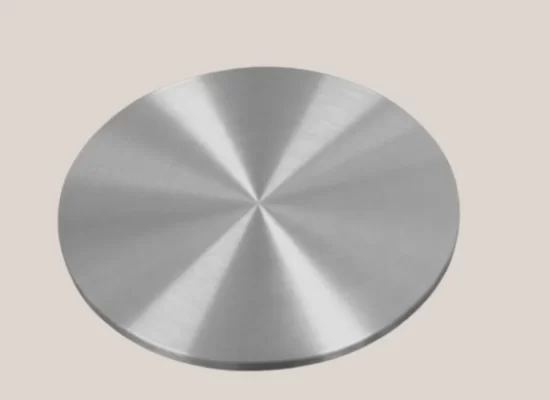
Our Stellite‑type cobalt‑chromium‑tungsten sputtering target is high‑grade metallurgical material built for magnetron PVD wear‑resistant hard coating deposition. Featuring balanced Co‑Cr‑W stoichiometry typical of Stellite alloys, this target possesses high density, homogenized microstructure and restrained inclusions to sustain steady sputtering efficiency and uniform thin‑film distribution. Sputtered CoCrW coatings deliver exceptional hardness, outstanding anti‑abrasion performance and robust oxidation resistance under elevated temperatures. Widely deployed to protect cutting tools, mechanical moving parts and industrial components against friction and erosion. Advanced powder metallurgy processing guarantees tight compositional tolerance, low gaseous impurities and solid batch‑to‑batch repeatability to satisfy demanding high‑volume industrial coating production.
Technical Specifications
| Product | CoCrW Sputtering Target — Cobalt–Chromium–Tungsten alloy (Stellite-type) for wear-resistant hard coatings |
| Composition | Co base, Cr 26.5–29%, W 7–9% (Stellite-type) | sputtered Stellite-type Co:Cr:W:C = 68:26:5:1 |
| Component Elements | Cobalt (Co, Z=27) + Chromium (Cr, Z=24) + Tungsten (W, Z=74) |
| CAS | Co 7440-48-4 / Cr 7440-47-3 / W 7440-33-7 (alloy — no single CAS) |
| Purity Grades | 99.95% (3N5) | ≥99.9% (3N) |
| Density | ~9.0 g/cm³ |
| Melting Point | ~1,285–1,395°C (Stellite 6 range) |
| Crystal Structure | γ(fcc) Co matrix + carbide precipitates (Cr₇C₃ / M₆C / M₇C₃) — hard phase dispersion |
| Key Property | High hardness, excellent wear resistance, high-temperature oxidation resistance |
| Grain Size | <100 μm (typical for consolidated sputtering targets) |
| Target Forms | Planar round, planar rectangular, rotary targets, bonded assemblies |
| Backing Plate | OFHC Copper / Ti backing — indium bonding, elastomer bonding, or solder bonding |
| Manufacturing | Vacuum melting / powder metallurgy → HIP → machining → inspection |
Product Overview
CoCrW sputtering targets — also known as cobalt chromium tungsten sputtering targets or Stellite sputtering targets — are high-purity cobalt–chromium–tungsten alloy consumable cathode materials used in magnetron sputtering to deposit wear-resistant hard coatings. Princeton Powder supplies Stellite-type compositions (Co base, Cr 26.5–29%, W 7–9%, with a sputtered Stellite-type ratio of Co:Cr:W:C ≈ 68:26:5:1) at purities of ≥99.9% (3N) to 99.95% (3N5). CAS: Co 7440-48-4 / Cr 7440-47-3 / W 7440-33-7.
CoCrW (Stellite-type) alloys are the industry benchmark for wear-resistant, high-temperature oxidation-resistant coatings: the hard carbide phases dispersed in the ductile cobalt matrix give them exceptional resistance to galling, abrasion, and corrosion at elevated temperatures. As a CoCrW sputtering target supplier with ISO 9001:2015 certification, Princeton Powder delivers bonded CoCrW sputtering targets on OFHC copper or titanium backing plates, plus planar and rotary configurations. Whether you need a custom CoCrW sputtering target for a turbine component line or a small R&D target for tribology research, our team adjusts the Cr/W ratio and carbide distribution to your deposition recipe. Buy CoCrW sputtering targets directly from the manufacturer with application-specific process guidance included.
Manufacturing Process & Quality Control
Manufacturing Process
Every Princeton Powder CoCrW alloy sputtering target is manufactured through a controlled sequence designed to achieve the composition accuracy and homogeneous carbide dispersion that reproducible wear-resistant deposition demands:
- Raw Material Selection: High-purity cobalt (≥99.9%), chromium (≥99.9%), and tungsten (≥99.9%) feedstock is sourced, verified against CoA, and precisely weighed to the target composition (±0.5 wt% tolerance).
- Vacuum Melting / Powder Metallurgy: The Co, Cr, and W charge is consolidated under vacuum to eliminate dissolved gases and achieve uniform alloying. Vacuum processing minimizes oxide and carbide defects that would otherwise create spitting and arcing during sputtering.
- Hot Isostatic Pressing (HIP): The consolidated material is HIP'd at elevated temperature and pressure to close porosity and achieve high density with uniform carbide distribution.
- Machining: CNC precision-machining to final target dimensions with tight tolerances (diameter ±0.1 mm, thickness ±0.05 mm).
- Inspection & Packaging: 100% dimensional verification, ICP-OES full composition analysis, C-scan bond inspection (for bonded assemblies), and vacuum-sealed packaging with desiccant. Each target is individually serialized for full traceability.
Available Target Forms
| Form | Description | Typical Applications |
|---|---|---|
| Planar Round Targets | Circular discs, standard Ø25–300 mm. Monolithic CoCrW or bonded to Cu/Ti backing. | R&D magnetrons, tribology prototyping, university research |
| Planar Rectangular Targets | Rectangular plates, custom W×L. For large-area sputtering systems. | Tooling and die coating production lines |
| Rotary Targets | Cylindrical targets for rotating magnetron cathodes. >70% material utilization. | High-volume hard coating lines |
| Bonded Assemblies | CoCrW target bonded to OFHC Cu or Ti backing plate. C-scan verified. | High-power sputtering requiring thermal dissipation |
Applications
CoCrW for Aerospace & Turbine — High-Temperature Wear & Oxidation Resistance
CoCrW for aerospace and turbine applications exploits the alloy's unique combination of wear resistance and high-temperature oxidation resistance. Stellite-type coatings are applied to turbine blades, valve seats, and other components that experience metal-to-metal wear, galling, and oxidation at elevated temperatures. Sputtered CoCrW hard coatings protect these surfaces without the thickness and distortion penalties of weld overlay, preserving dimensional accuracy on precision components.
The carbide-reinforced cobalt matrix is what makes Stellite the industry standard for this class of application: research on Stellite 6 coatings confirms their sliding wear resistance across thermal processing methods. Princeton Powder's CoCrW sputtering targets bring that same wear-resistant Stellite composition to thin-film deposition, enabling conformal hard coatings on complex aerospace geometries. Compare with CoCrMo targets for applications requiring biocompatibility alongside wear resistance.
CoCrW for Cutting Tools, Dies & Wear Parts — Abrasion & Galling Resistance
For cutting tools, forming dies, and wear parts, the CoCrW sputter target deposits hard, abrasion-resistant coatings that extend tool life and reduce friction. The dispersed chromium and tungsten carbides give the coating high hardness, while the ductile cobalt matrix resists brittle fracture and spalling under impact — a balance that pure ceramic coatings cannot match.
Tribological research on Stellite 6 (Surface and Coatings Technology, 2017) quantified its sliding wear resistance, and recent high-temperature tribology studies (Surface Technology, 2024) extended this to elevated-temperature behavior. These studies validate the wear resistance that makes CoCrW coatings the standard for tooling and wear-part protection. Pair CoCrW with our chromium targets for adhesion and corrosion-resistant interlayers.
CoCrW for Biomedical, Dental & Chemical Processing — Corrosion + Wear Resistance
Beyond aerospace and tooling, the CoCrW sputter target serves biomedical, dental, and chemical processing applications where corrosion resistance must be combined with wear resistance. Stellite-type coatings protect dental instruments, surgical tools, valve trim, and pump components that operate in corrosive or body-fluid environments while undergoing repeated mechanical contact.
The same chromium content that forms hard carbides also forms a protective oxide layer, giving CoCrW coatings their characteristic corrosion resistance. Historically, Co-Cr-W-C thin films have also been studied for magnetic recording media (IEEE Transactions on Magnetics, 1987), reflecting the alloy family's versatility across industrial and functional coating applications. Princeton Powder supplies research-format targets (1″–3″ diameter) with full CoA and ICP-OES verification for systematic composition studies. Browse our full sputtering target catalog.
Why Choose Princeton Powder CoCrW Sputtering Targets
- Custom CoCrW Composition — Stellite-type Standard, Any Cr/W Ratio on Request: From the standard Stellite-type (Co base, Cr 26.5–29%, W 7–9%) to custom Cr/W ratios, Princeton Powder engineers the exact composition for your wear-resistance target. ±0.5 wt% tolerance verified by ICP-OES.
- Homogeneous Carbide Dispersion — Reproducible Hardness: Vacuum melting and HIP ensure uniform carbide distribution, so every sputtered coating inherits consistent hardness and wear resistance.
- Bonded CoCrW Sputtering Targets — C-Scan Verified: Indium or elastomer bonding to OFHC copper or titanium backing plates for optimal thermal management, with C-scan inspection to guarantee bond quality.
- Validated Wear Performance — Backed by Published Data: CoCrW (Stellite 6) coatings' sliding wear resistance is documented in peer-reviewed tribology research (Surface and Coatings Technology, 2017; Surface Technology, 2024) — real performance, not marketing claims.
- Direct Engineering Support — No Distributor Middleman: Application engineers who understand CoCrW superalloy metallurgy and tribology help you optimize composition, backing, and target form.
Frequently Asked Questions About CoCrW sputtering target
What is a CoCrW sputtering target used for?
A CoCrW (cobalt–chromium–tungsten) sputtering target is used in magnetron sputtering to deposit wear-resistant hard coatings for three main applications: (1) aerospace / turbine — high-temperature wear and oxidation protection for blades, valve seats, and precision components; (2) cutting tools, dies, and wear parts — abrasion and galling resistance to extend tool life; and (3) biomedical, dental, and chemical processing — corrosion resistance combined with wear resistance.
How is a CoCrW sputtering target made?
CoCrW sputtering targets are made by vacuum melting or powder metallurgy of precisely weighed high-purity cobalt, chromium, and tungsten feedstock, followed by hot isostatic pressing (HIP) to close porosity and achieve uniform carbide distribution, then CNC machining to final dimensions. Vacuum processing is essential to minimize oxide and carbide defects that cause spitting and arcing during sputtering. Every target ships with a full CoA and ICP-OES composition report.
What is Stellite?
Stellite is a family of cobalt-chromium superalloys known for their exceptional wear resistance, developed for hardfacing and cutting applications. Stellite 6, the most common grade, contains roughly Co base with 26.5–29% Cr and 7–9% W (plus minor carbon). The CoCrW sputtering target supplies this same Stellite-type composition for thin-film hard coating deposition via PVD.
What is the composition of CoCrW?
The Stellite-type CoCrW composition is cobalt base with 26.5–29% chromium and 7–9% tungsten. A commonly cited sputtered Stellite-type ratio is Co:Cr:W:C ≈ 68:26:5:1. Chromium provides oxidation/corrosion resistance and forms hard carbides, while tungsten strengthens the matrix. Custom Cr/W ratios are available from Princeton Powder to tune hardness against toughness.
How hard is CoCrW / Stellite 6?
Stellite 6 exhibits high hardness, typically around 40 HRC in the as-deposited condition, work-hardening to higher values under deformation. The hardness comes from chromium and tungsten carbides dispersed in the cobalt matrix — a structure that resists abrasion and galling while retaining toughness. The exact hardness is controlled by the Cr and W content and the carbide dispersion.
What CoCrW composition do I need for wear-resistant coating?
The standard choice is Stellite 6 (Co base, Cr 26.5–29%, W 7–9%), which balances hardness, toughness, and oxidation resistance for the broadest range of wear applications. Higher chromium content improves oxidation/corrosion resistance, while higher tungsten content increases hardness and high-temperature strength. Princeton Powder's engineering team can recommend the optimal Cr/W ratio for your specific wear environment.
Research & Technical References
The following peer-reviewed research validates the wear resistance and coating performance of CoCrW (Stellite-type) alloys. Princeton Powder CoCrW targets deliver the same Stellite composition in sputtering-target form for thin-film deposition.
Microstructure and sliding wear properties of HVOF sprayed, laser remelted and laser clad Stellite 6 coatings
Surface and Coatings Technology, 2017 (Houdková et al.) — Quantified the sliding wear resistance of Stellite 6 (Co-Cr-W) coatings deposited by multiple thermal methods, confirming the material's benchmark wear performance. Practical takeaway: Stellite-type CoCrW is a proven wear-resistant composition; Princeton Powder targets enable its deposition as a thin film.
Co-Cr-W-C alloy thin films for perpendicular recording media
IEEE Transactions on Magnetics, 1987 — Investigated Co-Cr-W-C alloy thin films, demonstrating the CoCrW alloy family's suitability for functional thin-film applications. Practical takeaway: CoCrW can be reliably sputtered into thin films, extending its use from bulk weld overlay to PVD coatings.
Microstructure and High-temperature Tribological Properties of HVOF Sprayed CoCrWSi and Stellite-6 Coatings
Surface Technology, 2024 — Characterized the high-temperature tribological behavior of Stellite 6 and CoCrWSi coatings, confirming wear resistance at elevated temperature. Practical takeaway: CoCrW coatings retain wear resistance at high temperature — critical for turbine and hot tooling applications.
Note: These references document Stellite-type CoCrW coating performance primarily via thermal spray methods; the same alloy composition is sputtered as a thin film for conformal, dimensionally-accurate hard coatings. Contact our technical team for the complete reference list and to discuss CoCrW alloy sputtering target specifications for your deposition process.