
Mo/Nb Sputtering Target (MoNb5/MoNb10) — Molybdenum Niobium for Superconducting & Diffusion-Barrier Thin Films
Our Mo‑Nb alloy sputtering targets (MoNb5, MoNb10) are high‑density metallurgical materials tailored for magnetron PVD superconducting and diffusion‑barrier thin‑film deposition. Alloyed with 5 wt% and 10 wt% niobium respectively, molybdenum‑niobium blends excellent thermal stability, mechanical strength and low resistivity. The refined homogeneous microstructure grants steady sputtering yield, uniform film coverage and reduced particle generation. Deposited Mo‑Nb films act as reliable diffusion barriers preventing element inter‑diffusion in microelectronic circuitry, while exhibiting notable superconducting characteristics for quantum‑related device fabrication. Strict impurity control and batch‑to‑batch consistency support high‑volume semiconductor, cryogenic component and advanced thin‑film manufacturing workflows.
Molybdenum Niobium Alloy Sputtering Target Technical Specifications
| Product | Mo/Nb Sputtering Target — Molybdenum–Niobium alloy for superconducting & diffusion-barrier thin films |
| Composition | MoNb5 (~95% Mo / 5% Nb), MoNb10 (~90% Mo / 10% Nb) standard | custom Mo80Nb20, Mo70Nb30, Mo85Nb15 |
| Component Elements | Molybdenum (Mo, Z=42) + Niobium (Nb, Z=41) |
| CAS | Mo 7439-98-7 / Nb 7440-03-1 (alloy — no single CAS) |
| Purity Grades | 99% (2N) | 99.9% (3N) | 99.99% (4N) | 99.999% (5N) |
| Density | 9.2–9.4 g/cm³ (alloy) | MoNb10 ≥9.90 g/cm³ |
| Melting Point | ~2,296°C (alloy) | Mo ~2,620°C / Nb ~2,477°C (elements) |
| Crystal Structure | bcc solid solution (Mo and Nb are fully miscible) |
| Key Property | Refractory, tunable superconducting transition temperature (Tc 100–200 mK), corrosion-resistant |
| Grain Size | <100 μm (typical for consolidated sputtering targets) |
| Target Forms | Planar round, planar rectangular, rotary targets, bonded assemblies |
| Backing Plate | OFHC Copper / Ti backing — indium bonding, elastomer bonding, or solder bonding |
| Manufacturing | Powder metallurgy → spark plasma sintering (SPS) / HIP → machining → inspection |
Product Overview
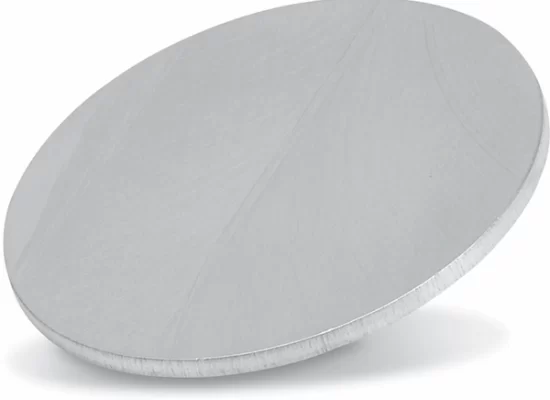
MoNb sputtering targets — also known as molybdenum niobium sputtering targets — are high-purity molybdenum–niobium alloy consumable cathode materials used in magnetron sputtering to deposit refractory superconducting and diffusion-barrier thin films. Princeton Powder supplies the standard compositions MoNb5 (~95% Mo / 5% Nb) and MoNb10 (~90% Mo / 10% Nb) — plus custom Mo80Nb20, Mo70Nb30, and Mo85Nb15 ratios — at purities from 99% (2N) to 99.999% (5N). CAS: Mo 7439-98-7 / Nb 7440-03-1.
MoNb is a refractory bcc solid-solution alloy whose superconducting transition temperature (Tc) can be tuned across the 100–200 mK range by adjusting the Nb content — a property that makes it essential for low-temperature superconducting films in transition-edge sensors (TES) and bolometers for astrophysics and quantum detectors. The same refractory, corrosion-resistant character makes MoNb films valuable as diffusion barriers and electrode layers in semiconductor and display devices. As a MoNb sputtering target supplier with ISO 9001:2015 certification, Princeton Powder delivers bonded MoNb sputtering targets on OFHC copper or titanium backing plates, plus planar and rotary configurations. Whether you need a custom MoNb sputtering target for a specific Tc or a small R&D target for detector research, our team adjusts the Mo/Nb ratio to your deposition recipe. Buy MoNb sputtering targets directly from the manufacturer with application-specific process guidance included.
Applications
MoNb for Superconducting Films — Transition-Edge Sensors & Bolometers
MoNb for superconducting thin films is the flagship application: the alloy's superconducting transition temperature (Tc) can be tuned across the 100–200 mK range by adjusting the niobium content, making it ideal for transition-edge sensors (TES) and bolometers used in astrophysics, X-ray and cosmic-microwave-background detectors, and emerging quantum technologies. By selecting a MoNb target with the precise Mo/Nb ratio, researchers match the film's Tc to the operating temperature of their detector.
Peer-reviewed research confirms this behavior: "Synthesis and Characterization of Mo–Nb Films Superconducting at 100–200 mK" (Journal of Low Temperature Physics, 2019) demonstrated the tunable low-temperature superconductivity of Mo–Nb films. Princeton Powder's MoNb sputtering targets deliver the composition accuracy and impurity control that reproduce these superconducting properties in deposited films. Pair MoNb with pure niobium targets for higher-Tc superconducting layers.
MoNb for Semiconductors & Electronics — Diffusion Barriers & Electrodes
For semiconductor and electronics applications, the MoNb sputter target deposits refractory diffusion-barrier and electrode layers. The bcc MoNb alloy's high melting point and chemical stability make it an effective barrier against metal diffusion and electromigration in advanced interconnects, displays, and thin-film transistor (TFT) backplanes.
Research on spark-plasma-sintered Mo10Nb targets (2025) demonstrated that nanopowder-based targets enhance both sputtering process efficiency and the resulting thin-film properties — directly relevant to high-volume semiconductor and display manufacturing. Princeton Powder supplies Mo10Nb sputtering targets produced by this validated route. Compare with pure molybdenum targets for lower-resistivity electrode applications.
MoNb for Corrosion-Resistant Coatings, Displays & Solar Cells
Beyond superconducting and semiconductor uses, the MoNb sputter target deposits corrosion-resistant coatings for displays, solar cells, and optical devices. The refractory bcc alloy's excellent corrosion resistance and chemical stability protect surfaces in aggressive environments, while its tunable properties support functional layers in photovoltaic and optoelectronic devices.
The full miscibility of Mo and Nb in the bcc lattice gives MoNb films a single-phase, defect-tolerant structure that is mechanically and chemically robust — a key advantage for protective and functional coatings. Princeton Powder supplies research-format targets (1″–3″ diameter) with full CoA and ICP-OES verification for systematic composition and property studies. Browse our full sputtering target catalog.
Frequently Asked Questions About MoNb (molybdenum–niobium) sputtering target
What is a MoNb sputtering target used for?
A MoNb (molybdenum–niobium) sputtering target is used in magnetron sputtering to deposit refractory superconducting and diffusion-barrier thin films for three main applications: (1) superconducting films — transition-edge sensors (TES) and bolometers with tunable Tc (100–200 mK) for astrophysics and quantum detectors; (2) semiconductors / electronics — diffusion barriers and electrode layers; and (3) corrosion-resistant coatings, displays, and solar cells.
How is a MoNb sputtering target made?
MoNb sputtering targets are made by powder metallurgy: high-purity molybdenum and niobium powders are uniformly blended, then consolidated by spark plasma sintering (SPS) or hot isostatic pressing (HIP) to close porosity and achieve high density, then CNC-machined to final dimensions. SPS of nanopowders has been shown to enhance both sputtering efficiency and thin-film properties of Mo10Nb targets. Every target ships with a full CoA and ICP-OES composition report.
What is the composition of MoNb?
The standard compositions are MoNb5 (~95% Mo / 5% Nb) and MoNb10 (~90% Mo / 10% Nb). Custom ratios such as Mo80Nb20, Mo70Nb30, and Mo85Nb15 are also available. Because Mo and Nb are fully miscible, the bcc solid solution forms across all compositions, and the Mo/Nb ratio directly controls the film's superconducting transition temperature.
Why is MoNb superconducting?
MoNb is a bcc solid-solution alloy whose superconducting transition temperature (Tc) is tunable across the 100–200 mK range. Both molybdenum and niobium are superconducting elements, and alloying them lets designers tune Tc to a specific value: higher niobium content raises Tc toward pure niobium, while lower niobium content lowers it toward pure molybdenum. This tunability is what makes MoNb ideal for transition-edge sensors matched to a detector's operating temperature.
What is the superconducting transition temperature of MoNb?
The superconducting transition temperature of MoNb films can be tuned across 100–200 mK by adjusting the niobium content. Research published in the Journal of Low Temperature Physics (2019) confirmed Mo–Nb films superconducting in this range. The exact Tc for your application is set by choosing the appropriate Mo/Nb ratio.
What MoNb composition do I need for transition-edge sensors?
The choice depends on your target operating temperature. MoNb5 and MoNb10 are the standard starting points, with higher niobium content (e.g., Mo70Nb30, Mo80Nb20) raising the Tc. Princeton Powder's engineering team can recommend the optimal Mo/Nb ratio to match your detector's Tc requirement, and can supply custom compositions to ±0.5 wt% accuracy.
Research & Technical References
The following peer-reviewed research validates the superconducting and thin-film performance of MoNb alloy. Princeton Powder MoNb targets meet or exceed the material specifications used in these studies.
Synthesis and Characterization of Mo–Nb Films Superconducting at 100–200 mK
Journal of Low Temperature Physics, 2019 — Synthesized and characterized Mo–Nb films with tunable superconducting transition temperatures in the 100–200 mK range, confirming the alloy's role in low-temperature superconducting detectors. Practical takeaway: MoNb's Tc is tunable by Nb content — Princeton Powder targets deliver the composition control to hit a specific Tc.
Enhancing sputtering process efficiency and thin-film properties of Mo10Nb targets through spark plasma sintering of nanopowders
ScienceDirect, 2025 — Demonstrated that spark plasma sintering (SPS) of nanopowders improves both the sputtering process efficiency and the resulting thin-film properties of Mo10Nb targets. Practical takeaway: Princeton Powder's SPS nanopowder route produces higher-density Mo10Nb targets with superior film properties.
Contact our technical team for the complete reference list and to discuss MoNb alloy sputtering target specifications for your specific deposition process.