
NiMn Alloy Sputtering Target (Ni50Mn50) — Nickel Manganese for Antiferromagnetic Pinning Layers in Spin Valves
Our Ni50Mn50 nickel‑manganese alloy sputtering target is engineered for magnetron PVD deposition of antiferromagnetic pinning layers in spin‑valve sensor structures. With a balanced 50 wt% nickel and 50 wt% manganese composition, it features high material density, fine homogeneous grain structure and minimal inclusions to secure stable sputtering rate and uniform thin‑film distribution. After proper post‑deposition annealing, deposited Ni‑Mn films develop robust antiferromagnetic properties, delivering effective exchange bias to pin adjacent ferromagnetic layers. Mainly used for magnetic read heads, MRAM and magnetic sensor devices. Rigorous metallurgical production ensures low gas impurity and outstanding batch consistency, supporting high‑volume semiconductor and spintronics manufacturing requirements.
NiMn Aloy Sputtering Target Technical Specifications
| Product | NiMn Alloy Sputtering Target — Nickel–Manganese (Ni50Mn50) for antiferromagnetic pinning layers in PVD thin-film deposition |
| Composition | Ni50Mn50 (50/50 at%) standard | Ni40Mn60, Ni47Mn53, Ni25Mn75, Mn30Ni70 and fully custom ratios on request |
| Component Elements | Nickel (Ni, Z=28) + Manganese (Mn, Z=25) |
| CAS | Ni 7440-02-0 / Mn 7439-96-5 (alloy — no single CAS) |
| Purity Grades | 99.9% (3N) | 99.95% (3N5) | up to 99.99% (4N) |
| Density | ~8.0 g/cm³ (equiatomic, composition-dependent) |
| Melting Point | ~1,200–1,300°C (alloy-dependent) |
| Crystal Structure | fcc (as-deposited) → L1₀ ordered tetragonal θ-phase (after annealing) |
| Key Magnetic Property | Antiferromagnetic (AFM) with blocking temperature ~360–450°C; exchange coupling field ~620–650 Oe |
| Grain Size | <100 μm standard |
| Target Forms | Planar round, planar rectangular, rotary targets, bonded assemblies |
| Backing Plate | OFHC Copper (standard) — indium bonding, elastomer bonding, or solder bonding |
| Manufacturing | Vacuum melting → HIP / sintering → forging → rolling → annealing → machining → inspection |
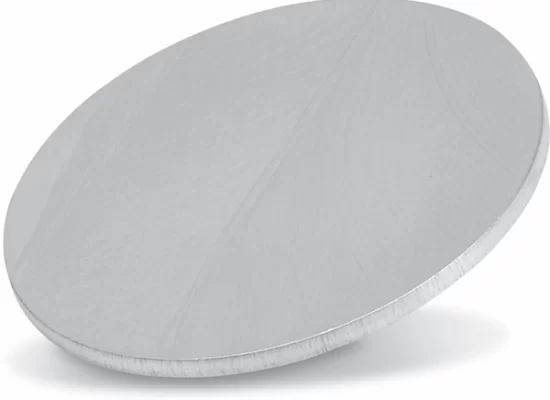
Product Overview
NiMn alloy sputtering targets — also known as nickel manganese alloy sputtering targets — are high-purity nickel–manganese alloy consumable cathode materials used in physical vapor deposition (PVD), primarily DC/RF magnetron sputtering and ion beam sputtering, to deposit antiferromagnetic (AFM) pinning layers in spin-valve and magnetic thin-film devices. Princeton Powder supplies the standard Ni50Mn50 sputtering target (50/50 atomic percent) — along with Ni40Mn60, Ni47Mn53, Ni25Mn75, and fully custom ratios — at purities of 99.9% (3N) to 99.95% (3N5), with up to 99.99% (4N) available. CAS: Ni 7440-02-0 / Mn 7439-96-5.
NiMn (Ni50Mn50) is the high-blocking-temperature antiferromagnetic pinning material of choice for magnetic recording and spintronic applications: in the ordered L1₀ tetragonal θ-phase, it delivers a blocking temperature of ~360–450°C, superior corrosion resistance, and a larger exchange-bias field than the conventional Fe50Mn50 pinning alloy. As a NiMn alloy sputtering target supplier with ISO 9001:2015 certification, Princeton Powder delivers bonded NiMn sputtering targets on OFHC copper backing plates for optimal thermal management, plus planar and rotary configurations. Whether you need a custom NiMn alloy sputtering target for a spin-valve sensor line or a small R&D target for magnetic thin-film research, our team adjusts composition and microstructure to your exact deposition recipe. Buy NiMn sputtering targets directly from the manufacturer with application-specific process guidance included.
NiMn Alloy Sputtering Target applications
NiMn for Spin Valves — Antiferromagnetic Pinning Layers in GMR/TMR Read Heads
NiMn for spin valve applications is the primary use case for Ni50Mn50 sputtering targets: depositing the antiferromagnetic pinning layer that exchange-couples and pins the magnetization of an adjacent ferromagnetic layer in GMR (giant magnetoresistance) and TMR (tunnel magnetoresistance) read heads. In the ordered L1₀ θ-phase, NiMn provides a high exchange coupling field (~620–650 Oe) and high blocking temperature (~380°C) that maintain sensor stability through high-temperature processing and long-term operation — performance that drove NiMn to replace Fe50Mn50 as the pinning material of choice in high-density hard disk read heads.
Peer-reviewed results validate NiMn's industrial performance: ion beam sputtered NiMn-pinned spin valves achieved a giant magnetoresistance ratio above 4% with a pinning field of about 650 Oe, remaining constant up to ~180°C with a blocking temperature around 380°C; DC magnetron sputtered NiMn spin valves showed an exchange coupling field of 620 Oe and blocking temperature around 380°C after annealing. Multi-layer NiMn pinning structures (e.g., 43Ni-57Mn / 50Ni-50Mn) further improved thermal stability and corrosion resistance. Princeton Powder's Ni50Mn50 targets deliver the composition accuracy and purity that reproduce these results in production. Pair NiMn pinning targets with our NiFe (permalloy) ferromagnetic targets for complete spin-valve stacks.
NiMn for Magnetic Thin Films — Sensors, Spintronics & Exchange Bias
NiMn for magnetic thin film applications extends beyond read heads to the broader magnetic sensor and spintronics ecosystem. Any device that relies on exchange bias — the unidirectional magnetic anisotropy induced by coupling a ferromagnet to an antiferromagnet — can use NiMn as its pinning layer, including magnetic field sensors, current sensors, magnetoresistive memory (MRAM) research, and spin-valve-based angular and position sensors. The NiMn sputter target is the source material that determines the antiferromagnet's composition, and therefore its blocking temperature, pinning strength, and thermal stability.
Research on Ni81Fe19/Ni50Mn50/Ni81Fe19 trilayers (Thin Solid Films, 2020) showed that the exchange-bias field depends on pinned uncompensated moments in the Ni50Mn50 antiferromagnetic layer — meaning the exact Mn content and microstructure of the sputtered film directly control device performance. This makes target composition accuracy a first-order design parameter, not a secondary detail. Off-stoichiometric NiMn with controlled excess Mn can promote formation of the antiferromagnetic equiatomic phase through Mn diffusion with reduced thickness and shorter annealing times. Browse our full sputtering target catalog for matching ferromagnetic and protective targets.
NiMn for R&D — Phase Transformation & Antiferromagnetic Ordering Studies
For academic and industrial laboratories, the NiMn sputter target is a standard tool for studying antiferromagnetic phase transformations in thin films. As-deposited NiMn films are typically amorphous, nanocrystalline, or metastable fcc, and the ordered antiferromagnetic L1₀ tetragonal θ-phase forms only after thermal annealing — a well-documented phase transformation (Thin Solid Films, 2004) that researchers use to investigate ordering kinetics, exchange bias, and antiferromagnet–ferromagnet interfaces.
Because the antiferromagnetic phase and its blocking temperature depend sensitively on composition and annealing conditions, custom NiMn alloy sputtering targets with precise, verified Mn content are essential for reproducible experiments. Princeton Powder supplies small research-format targets (1″–3″ diameter) with full CoA and ICP-OES composition verification, enabling combinatorial studies across the 40–60 at% Mn range where the antiferromagnetic equiatomic phase is most readily formed. Explore our pure Mn sputtering targets for co-sputtering composition libraries.
Frequently Asked Questions About NiMn sputtering targetr
What is a NiMn sputtering target used for?
A NiMn (nickel–manganese alloy) sputtering target is used in physical vapor deposition (PVD) — primarily DC/RF magnetron sputtering and ion beam sputtering — to deposit antiferromagnetic (AFM) pinning layers in magnetic thin-film devices. Its primary application is the spin-valve GMR/TMR read heads in hard disk drives, where the NiMn layer exchange-couples and pins an adjacent ferromagnetic layer. It is also used in magnetic sensors, spintronic devices, and magnetic thin-film research. In its ordered L1₀ phase, NiMn provides a high blocking temperature (~360–450°C) and large exchange-bias field that outperform the earlier Fe50Mn50 pinning alloy.
How is a NiMn alloy sputtering target made?
NiMn alloy sputtering targets are manufactured by vacuum melting (vacuum induction or vacuum-arc melting) of precisely weighed high-purity nickel and manganese feedstock, followed by hot isostatic pressing (HIP) or vacuum sintering to close porosity, forging and rolling to refine grain structure, annealing, and CNC machining to final dimensions. Vacuum processing is essential because manganese oxidizes readily — atmospheric contamination would degrade purity and inhibit the L1₀ antiferromagnetic ordering that gives NiMn its pinning properties. Every target ships with a full Certificate of Analysis and ICP-OES composition report.
NiMn vs FeMn sputtering target: which is better for pinning?
Choose NiMn (Ni50Mn50) when you need a high blocking temperature (~360–450°C), superior corrosion resistance, and a larger exchange-bias field — the requirements of modern high-density magnetic recording heads and sensors that must survive high-temperature processing. Choose FeMn (Fe50Mn50) for lower-cost, lower-temperature applications where its ~150°C blocking temperature is sufficient and its simpler processing (no extensive annealing required) is advantageous. NiMn's trade-off is that it requires post-deposition annealing (~250–280°C) to form the ordered antiferromagnetic phase, which can complicate fabrication.
What is the blocking temperature of NiMn?
The blocking temperature of ordered NiMn (Ni50Mn50) antiferromagnetic films is typically ~360–450°C, with published spin-valve results reporting around 380°C. Some multi-layer NiMn pinning structures achieve blocking temperatures ≥450°C. This is substantially higher than Fe50Mn50 (~150°C), which is why NiMn maintains exchange-bias pinning through high-temperature processing and is preferred for demanding magnetic recording and sensor applications.
Why does NiMn need annealing after deposition?
As-deposited NiMn films are typically amorphous, nanocrystalline, or metastable fcc — not yet in the antiferromagnetic state. The useful ordered L1₀ tetragonal θ-phase (antiferromagnetic) forms only after post-deposition thermal annealing at ~220–280°C, often for several hours. This annealing drives the atomic ordering that produces the exchange-bias pinning field. The exact annealing temperature and time depend on film composition, thickness, and the desired pinning strength.
What composition of NiMn target do I need for spin valve?
The standard composition is Ni50Mn50 (50:50 at%), which forms the antiferromagnetic equiatomic phase after annealing. However, the useful antiferromagnetic range spans roughly 40–60 at% Mn. Off-stoichiometric compositions with controlled excess Mn (e.g., Ni40Mn60, Ni47Mn53) can promote formation of the antiferromagnetic equiatomic phase through Mn diffusion with reduced thickness and shorter annealing times — though excess Mn can degrade the adjacent ferromagnetic layer, so a nano-oxide interface layer is sometimes used. Princeton Powder's engineering team can recommend the optimal composition for your specific device architecture and annealing budget.
Research & Technical References
The following peer-reviewed research validates the performance of NiMn alloy sputtering targets and NiMn thin films in spin-valve, magnetic sensor, and antiferromagnetic pinning applications. Princeton Powder NiMn targets meet or exceed the material specifications used in these studies.
The effect of pinned uncompensated moments on the exchange bias in Ni81Fe19/Ni50Mn50/Ni81Fe19 trilayers
Thin Solid Films, 2020 — Investigated how exchange bias depends on pinned uncompensated moments in the Ni50Mn50 antiferromagnetic layer of NiFe/NiMn/NiFe trilayers. Trilayers exhibited a smaller exchange bias than bilayers, attributed to fewer pinned uncompensated moments in the Ni50Mn50 layer and thickness-dependent effects of the ferromagnetic layers. Practical takeaway: the exact composition and microstructure of the Ni50Mn50 sputtered film directly control device pinning performance — Princeton Powder's composition-verified targets let you reproduce these results.
Phase transformations in sputter deposited NiMn thin films
Thin Solid Films, 2004 — Characterized the phase evolution of sputter-deposited NiMn films, showing as-deposited films are amorphous/nanocrystalline or metastable fcc, with the ordered antiferromagnetic L1₀ tetragonal θ-phase forming only after thermal annealing. Practical takeaway: NiMn's antiferromagnetic phase is annealing-dependent — target purity and composition control determine how reliably this ordering occurs in your process.
High Exchange Coupling Field and Thermal Stability of Antiferromagnetic Alloy NiMn Spin Valve Films
Journal of Magnetics, 2000 — Reported ion beam sputtered NiMn-pinned spin valves with a giant magnetoresistance ratio above 4%, a pinning field of about 650 Oe, and a blocking temperature around 380°C, remaining stable up to ~180°C. Practical takeaway: NiMn targets deliver the high pinning field and high blocking temperature that magnetic recording and sensor applications require.
Contact our technical team for the complete reference list and to discuss NiMn alloy sputtering target specifications for your specific deposition process — including composition selection, annealing parameters, and target form optimization.