
TiZr Alloy Sputtering Target (Ti50Zr50) — Titanium Zirconium Alloy for Medical Implant & PVD Coating Applications
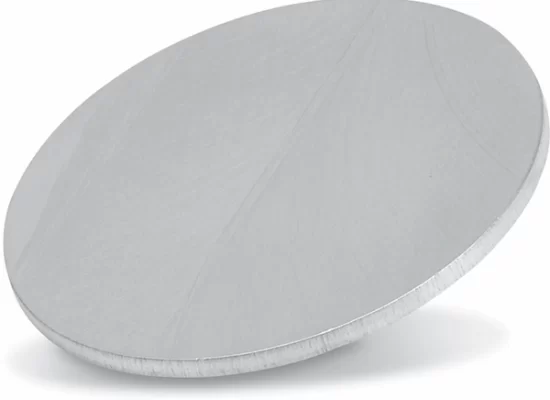
Our Ti50Zr50 titanium‑zirconium alloy sputtering target is precision‑manufactured for high‑performance PVD thin‑film deposition. Composed of 50 wt% titanium and 50 wt% zirconium, this alloy merges titanium’s biocompatibility with zirconium’s excellent corrosion resistance, delivering stable sputtering performance, uniform film formation and low impurity content. It serves as a premium coating material widely adopted for medical implant surface modification, enhancing biocompatibility, wear resistance and osseointegration of surgical and dental implants. Besides biomedical fields, it fits decorative coating, functional barrier film and semiconductor‑related PVD processes. Strict metallurgical control guarantees consistent microstructure, high density and reliable batch‑to‑batch repeatability for industrial‑scale magnetron sputtering production.
Technical Specifications
| Product | TiZr Alloy Sputtering Target — Titanium–Zirconium Alloy (Ti50Zr50 and custom ratios) for PVD Thin Film Deposition |
| Composition | Ti50Zr50 (50/50 at%) standard | Ti40Zr60, Ti60Zr40, and fully custom ratios on request |
| Component Elements | Titanium (Ti, Z=22) + Zirconium (Zr, Z=40) |
| CAS | Ti 7440-32-6 / Zr 7440-67-7 (alloy — no single CAS) |
| Purity Grades | 99.9% (3N) High Purity | 99.95% (3N5) Ultra-High Purity |
| Density | ~5.5 g/cm³ (Ti50Zr50, composition-dependent) |
| Melting Point | ~1,600°C (alloy-dependent, between Ti 1,668°C and Zr 1,855°C) |
| Crystal Structure | Hexagonal close-packed (hcp, α-phase) + body-centered cubic (bcc, β-phase) |
| Grain Size | <100 μm standard (adjustable via annealing) |
| Key Properties | Biocompatible (ISO 10993), self-passivating 2–5 nm oxide layer, excellent corrosion resistance, lower elastic modulus than pure Ti, higher hardness than pure Ti |
| Target Forms | Planar (round, rectangular), rotary targets, bonded to Cu backing plate |
| Backing Plate Options | OFHC Copper (standard), stainless steel — indium bonding, elastomer bonding, or solder bonding |
| Manufacturing Process | Vacuum Induction Melting (VIM) → HIP → Forging → Rolling → Annealing → Machining → Inspection → Packaging |
Product Overview
TiZr alloy sputtering targets — also known as titanium zirconium alloy sputtering targets — are high-purity titanium–zirconium alloy consumable cathode materials used in physical vapor deposition (PVD) processes, including DC/RF magnetron sputtering, reactive sputtering, and cathodic arc evaporation, to deposit biocompatible, corrosion-resistant thin films for medical implants and functional coatings. Princeton Powder supplies the standard Ti50Zr50 sputtering target (50/50 atomic percent composition) — along with Ti40Zr60, Ti60Zr40, and fully custom ratios — at purities of 99.9% (3N) to 99.95% (3N5). The alloy unites titanium's proven bio-integration, low density, and elastic-modulus match with bone, together with zirconium's superior corrosion passivation and mechanical strength, producing a target that outperforms pure titanium in aggressive physiological and industrial environments. CAS: Ti 7440-32-6 / Zr 7440-67-7.
As a Ti/Zr alloy sputtering target supplier with ISO 9001:2015 certification and 15+ years of thin-film material expertise, Princeton Powder delivers bonded TiZr sputtering targets on OFHC copper backing plates for optimal thermal management during high-power sputtering, plus planar and rotary configurations to match any magnetron system. Whether you require a custom Ti/Zr alloy sputtering target for a dental implant coating line, a high-throughput rotary target for architectural glass, or a small R&D target for combinatorial biomaterial screening, our engineering team adjusts composition, grain size, and microstructure to your exact sputtering recipe. Every target ships with a full Certificate of Analysis (CoA), ICP-OES chemical report, and dimensional inspection record. Buy TiZr sputtering targets directly from the manufacturer with application-specific process guidance included.
TiZr Alloy Material Properties & Technical Specifications
| Property | Specification |
|---|---|
| Chemical Formula | TiZr alloy (Ti50Zr50 standard, custom ratios available) |
| Component Elements | Titanium (Ti, Z=22, Group 4) + Zirconium (Zr, Z=40, Group 4) |
| CAS Number | Ti 7440-32-6 / Zr 7440-67-7 (alloy — no single CAS) |
| Crystal Structure | Hexagonal close-packed (hcp, α-phase) + body-centered cubic (bcc, β-phase); phase fraction is composition- and process-dependent |
| Density | ~5.5 g/cm³ at Ti50Zr50 (Ti: 4.51 g/cm³; Zr: 6.52 g/cm³ — interpolated by composition) |
| Target Density | ≥99% theoretical density (typical); ≥99.5% available for demanding applications |
| Melting Point | ~1,600°C (alloy-dependent, between Ti 1,668°C and Zr 1,855°C) |
| Boiling Point | Ti 3,287°C / Zr 4,409°C |
| Grain Size (Standard) | <100 μm — verified by ASTM E112 linear intercept method; finer grain (<50 μm) available on request for improved film uniformity |
| Vickers Hardness | Higher than pure Ti — Zr addition increases solid-solution hardening; exact value composition-dependent |
| Elastic Modulus | ~80–100 GPa — lower elastic-modulus mismatch with bone than pure Ti (~110 GPa), reducing stress-shielding in implants |
| Biocompatibility | Non-cytotoxic; passes ISO 10993 in-vitro evaluation (L929 fibroblast proliferation, cytotoxicity & genotoxicity) |
| Corrosion Resistance | Self-passivating oxide layer (2–5 nm); stable in physiological saline, Hank's solution, body fluid, and chloride-containing media |
| Sputtering Compatibility | DC magnetron sputtering (standard); RF sputtering (insulating substrates); reactive sputtering with N₂ produces (TiZr)N; with O₂ produces TiZr-oxide |
| Available Forms | Planar round (1″–14″ diameter), planar rectangular (custom W×L up to 2000 mm), rotary targets, bonded assemblies |
| Backing Plate Options | OFHC Copper (C10100/C10200) — standard for high-power sputtering; Stainless Steel — for high-temperature or corrosive environments. Bonding: indium, elastomer, or solder. Bond integrity verified by C-scan ultrasonic inspection (void rate <2%). |
| Composition Options | Ti50Zr50 (standard) | Ti60Zr40 (higher Ti bio-integration) | Ti40Zr60 (enhanced corrosion passivation) | custom ratios for combinatorial R&D |
| Purity Grade Options | 3N (99.9%) — standard; 3N5 (99.95%) — medical & precision. Impurity control: O, N, H, C, Fe — each controlled to ppm levels per grade. |
| Certification | ISO 9001:2015; Certificate of Analysis (CoA) with every target including GDMS or ICP-OES full metals analysis, density measurement, grain size metallography, and C-scan bond inspection (for bonded targets) |
Key Material Characteristics for Sputtering Performance
TiZr occupies a distinctive position in the sputtering materials landscape: it delivers the biocompatibility of titanium — the gold-standard metal for load-bearing implants — combined with the superior corrosion passivation of zirconium — the metal of choice for chemical and nuclear environments. The dual-phase (hcp + bcc) microstructure provides a favorable balance of strength and ductility that neither pure metal alone can achieve, and the ~80–100 GPa elastic modulus is closer to cortical bone (~10–30 GPa) than pure Ti (~110 GPa), reducing stress-shielding in orthopedic devices. For sputtering, TiZr's metallic conductivity supports DC magnetron operation without the RF complications of insulating targets, while its stable self-passivating oxide layer ensures the film surface resists corrosion immediately upon deposition. The grain-size-controlled (<100 μm) microstructure produces uniform erosion profiles and homogeneous, low-particle films across the full target life — a decisive advantage for both medical-device batch coating and large-area PVD lines.
Manufacturing Process & Quality Control
7-Step Manufacturing Process
Every Princeton Powder TiZr alloy sputtering target is manufactured through a controlled sequence of metallurgical processing steps designed to achieve the density, grain structure, composition accuracy, and homogeneity that reliable thin-film deposition demands:
- Raw Material Selection: High-purity titanium (≥99.9%) and zirconium (≥99.9%) feedstock is sourced, verified against CoA, and precisely weighed to the target atomic ratio (±0.5 at% tolerance).
- Vacuum Induction Melting (VIM): The Ti and Zr charge is melted under high vacuum to eliminate dissolved gases (O, N, H) and volatile impurities. Vacuum melting is critical because both Ti and Zr have high affinity for oxygen and nitrogen — atmospheric contamination during melting would irreversibly degrade target purity and film quality.
- Hot Isostatic Pressing (HIP): The vacuum-melted ingot is hot-isostatically pressed at elevated temperature and pressure to close residual porosity and achieve ≥99% theoretical density with uniform density distribution throughout the target volume.
- Forging & Rolling: The consolidated billet is forged and rolled to refine the as-cast grain structure into a fine, equiaxed, randomly oriented microstructure — eliminating the coarse columnar grains that produce anisotropic sputtering and non-uniform film thickness.
- Annealing: Controlled annealing adjusts grain size (target <100 μm) and relieves residual stress, producing a uniform, stable microstructure for predictable erosion profiles and homogeneous films.
- Machining: CNC precision-machining to final target dimensions. Surface finish Ra ≤ 1.6 μm standard (Ra ≤ 0.8 μm on request). Tolerances: diameter ±0.1 mm, thickness ±0.05 mm, flatness ≤0.05 mm.
- Inspection & Packaging: 100% dimensional verification, GDMS or ICP-OES full chemical analysis, ASTM E112 grain size metallography, C-scan ultrasonic bond inspection (for bonded assemblies), and cleanroom (Class 10,000) vacuum-sealed packaging with desiccant and humidity indicator. Each target is individually serialized for full traceability.
Available Target Forms
| Form | Description | Typical Applications |
|---|---|---|
| Planar Round Targets | Circular discs, standard diameters 1″–14″ (25.4–355.6 mm), thickness 3–20 mm. Monolithic TiZr or bonded to Cu backing plate. | R&D magnetrons, medical implant batch coating, university research |
| Planar Rectangular Targets | Rectangular plates, custom W×L. Width 50–300 mm | Length 100–2000 mm | Thickness 3–20 mm. | Large-area architectural glass coating, continuous web coaters |
| Rotary Targets | Cylindrical targets for rotating magnetron cathodes. TiZr tube bonded over stainless steel or Cu backing tube. >70% material utilization vs. ~30% for planar. | High-volume coating lines, architectural glass, display coating |
| Bonded Assemblies | TiZr target bonded to OFHC Cu backing plate via indium, elastomer, or solder. C-scan verified (void rate <2%). | High-power sputtering requiring thermal dissipation |
TiZr Alloy Sputtering Targets applications
TiZr for Medical Implant Coating — Biocompatible Thin Films for Dental & Orthopedic Devices
TiZr sputtering targets for medical implant coating deposit thin films onto dental implants, orthopedic devices, and cardiovascular stents to enhance osseointegration, reduce ion release, and extend implant service life. TiZr thin films are biocompatible — passing L929 fibroblast cytotoxicity, proliferation, and genotoxicity evaluations under ISO 10993 — and form a stable, self-repairing 2–5 nm oxide passivation layer that resists corrosion in physiological saline, Hank's solution, and body fluid. Compared to pure titanium, TiZr offers higher hardness, lower elastic-modulus mismatch with bone, and superior corrosion passivation — properties that make it the preferred coating for load-bearing implant surfaces where both mechanical integrity and biological integration are critical.
Peer-reviewed research supports TiZr's medical superiority. A patented biocompatible multilayer coating (S/TiN/Ti/TiZr) deposited by magnetron sputtering demonstrated corrosion resistance in physiological solutions and biocompatibility in L929 cell proliferation and genotoxicity tests. Combinatorial screening of Ti-Zr thin-film libraries (40–70 at% Ti) mapped hardness, elastic modulus, and electrochemical properties in phosphate-buffered saline — revealing optimal implant candidate windows near 60 at% Ti. For dental applications specifically, a (TiZr)N coating on Ti50Zr alloy achieved 90% corrosion protection efficiency in fluoridated acidic artificial saliva (Rare Metals, 2021). Princeton Powder's TiZr targets deliver the composition control and purity that reproduce these validated results in production. Compare TiZr with our pure Ti sputtering targets for titanium-rich coating recipes.
TiZr for PVD Coating — Decorative & Protective Finishes
TiZr for PVD coating produces hard, adherent, corrosion-resistant films for watches, consumer electronics, sanitary ware, and architectural hardware. The alloy's excellent adhesion to metallic and ceramic substrates — combined with its controllable silvery-grey metallic appearance — delivers a premium decorative finish that resists tarnish, fingerprinting, and wear for years. When reactively sputtered with nitrogen, TiZr forms (TiZr)N hard coatings with hardness exceeding 20 GPa, providing both decorative color control and functional wear protection in a single deposition step.
TiZr's corrosion resistance makes it especially valuable for PVD protective coatings in aggressive environments. Research published in Surface and Coatings Technology (2017) demonstrated that TiZr nano-composite coatings on stainless steel outperformed TiN, ZrN, and CrN in sulfuric acid and chloride-containing media, with dramatically lower corrosion rates and reduced interfacial contact resistance. This makes TiZr the coating of choice for applications where both appearance and environmental durability are required — from luxury watch cases exposed to perspiration and seawater to architectural hardware subject to urban pollutants and salt spray. Explore our chromium sputtering targets for complementary DLC bonding layers.
TiZr Corrosion-Resistant Coatings — Marine, Chemical & Fuel-Cell Applications
TiZr thin films passivate spontaneously in aggressive environments, making TiZr sputter targets the material of choice for protective coatings on stainless steel bipolar plates, chemical-processing components, and marine hardware. The alternating Ti/Zr nano-composite structure impedes active corrosive-ion diffusion during anodic dissolution, while the dense, defect-reduced microstructure blocks pitting initiation — a decisive advantage for proton-exchange membrane (PEM) fuel cells and electrolyzers where both corrosion resistance and low interfacial contact resistance are required simultaneously.
Research demonstrates TiZr's industrial corrosion superiority: a 2017 study showed TiZr coatings on SS304 stainless steel achieved corrosion rates far below uncoated steel in H₂SO₄ (with and without fluoride ions) and NaCl solutions, and also outperformed bulk Ti25Zr75 alloy. Zr-rich alloy films (Zr-20%Ti) passivated well against HCl attack with dissolution rates below 0.5 μm/year. For marine and chemical-processing applications, TiZr's combination of spontaneous passivation, mechanical robustness, and stable oxide integrity delivers long-term protection in chloride, sulfate, and acidic environments where conventional coatings fail. Browse our full sputtering target catalog for matching alloy and compound targets.
Frequently Asked Questions About Ti/Zr alloy sputtering target
What is a TiZr sputtering target used for?
A TiZr (titanium–zirconium alloy) sputtering target is a high-purity alloy cathode used in physical vapor deposition (PVD) — primarily DC/RF magnetron sputtering and cathodic arc evaporation — to deposit biocompatible and corrosion-resistant thin films. TiZr targets serve three major application families: (1) medical implant coating — thin films for dental implants, orthopedic devices, and cardiovascular stents that enhance osseointegration and reduce ion release; (2) decorative and protective PVD coating — hard, adherent, tarnish-resistant finishes for watches, electronics, and hardware; and (3) corrosion-resistant industrial coating — protective films for stainless steel bipolar plates, chemical-processing components, and marine hardware that outperform TiN, ZrN, and CrN in aggressive media.
How is a Ti/Zr alloy sputtering target made?
TiZr alloy sputtering targets are manufactured through a controlled metallurgical sequence: high-purity titanium and zirconium feedstock are precisely weighed to the target atomic ratio, melted under vacuum induction (VIM) to eliminate gaseous impurities (O, N, H), hot-isostatically pressed (HIP) to close porosity, forged and rolled to refine grain structure, annealed to achieve a uniform grain size below 100 μm, then CNC-machined to final dimensions. The vacuum melting step is critical because both Ti and Zr have high affinity for oxygen and nitrogen — atmospheric contamination would irreversibly degrade target purity. Every target ships with full CoA, ICP-OES analysis, and dimensional inspection records.
TiZr vs Ti sputtering target: which should I choose?
The choice depends on your application's performance requirements. Choose pure Ti for maximum bio-integration, lighter films (lower density), and cost-sensitive decorative coating where titanium's golden TiN color is the primary requirement. Choose TiZr when you need higher hardness, superior corrosion passivation in aggressive (chloride, fluoride, acidic) media, and lower elastic-modulus mismatch with bone — properties that make TiZr (especially Ti50Zr50) the preferred choice for load-bearing orthopedic and dental implants, and for industrial coatings requiring both wear and corrosion protection. TiZr also outperforms pure Ti in sulfuric-acid and chloride-containing environments (Surface and Coatings Technology, 2017).
Is TiZr thin film biocompatible?
Yes. TiZr thin films are non-cytotoxic and pass ISO 10993 in-vitro evaluations — including L929 fibroblast proliferation, cytotoxicity, and genotoxicity tests. The biocompatibility stems from the stable, self-repairing 2–5 nm oxide passivation layer that forms on TiZr surfaces and the reduced ion release compared to nickel-containing alloys. Peer-reviewed research (Rare Metals, 2021) and patented medical coatings (S/TiN/Ti/TiZr) confirm TiZr's suitability for dental and orthopedic implant applications where long-term biological integration is critical.
What is the difference between TiZr planar and rotary targets?
The difference is in geometry, material utilization, and cost economics. Planar targets (round or rectangular discs) are ideal for R&D chambers, university research, and batch coating — they offer simple installation, lower upfront cost, and easy changeover, but achieve only ~30% material utilization because sputtering erosion is concentrated in a racetrack pattern. Rotary (tubular) targets rotate continuously during sputtering, distributing erosion uniformly around the circumference and achieving 70–85% material utilization — making them cost-effective for high-throughput continuous coating lines despite higher initial investment. For medical implant batch coating, planar is standard; for large-area architectural glass or display coating, rotary is preferred.
What purity of TiZr target do I need for medical implant coating?
For medical implant coating, 99.9% (3N) minimum is recommended, with 99.95% (3N5) preferred for critical devices where trace metallic and gaseous impurities must be minimized. Higher purity reduces impurity-driven defects in the deposited film that could compromise biocompatibility or corrosion resistance. Princeton Powder provides full CoA and ISO 10993 test data with every medical-grade target, and recommends 3N5 for load-bearing orthopedic implants and 3N for standard dental applications to balance performance and cost.
Research & Technical References
The following peer-reviewed research validates the performance of TiZr alloy sputtering targets and TiZr thin films in medical implant, decorative, and corrosion-resistant applications. Princeton Powder TiZr targets meet or exceed the material specifications used in these studies.
Characterization and corrosion resistance of TiZr coating on SS304 stainless steel using cathodic arc evaporation techniques
Surface and Coatings Technology, 2017 — Investigated an alternating Ti/Zr nano-composite coating (3.66 μm, hexagonal close-packed structure) deposited on SS304 stainless steel. The TiZr coating achieved corrosion rates far lower than uncoated SS304 in H₂SO₄ (with and without fluoride ions) and NaCl solution, and outperformed TiN/ZrN, CrN, TiN, TiN/CrN, and CrN/Ti coatings as well as bulk Ti25Zr75 alloy. The excellent corrosion resistance was attributed to the alternating Ti/Zr nano-composite hcp structure impeding active corrosive-ion diffusion during anodic dissolution, along with lower interfacial contact resistance. Practical takeaway: Princeton Powder's TiZr alloy targets enable superior corrosion protection for stainless steel bipolar plates and chemical-processing components.
Improved corrosion resistance of dental Ti50Zr alloy with (TiZr)N coating in fluoridated acidic artificial saliva
Rare Metals, 2021 — Examined a nanocrystalline (TiZr)N coating on dental Ti50Zr alloy exposed to fluoridated acidic artificial saliva (pH 3.9 with 0.15% NaF). The coated alloy showed decreased corrosion rate and increased electrochemical impedance compared to uncoated alloy, achieving 90% corrosion protection efficiency. The improvement was linked to the nanocrystalline (TiZr)N coating reducing micropores and crack defects, blocking corrosive-ion diffusion. Practical takeaway: Princeton Powder's Ti50Zr50 targets produce durable, biocompatible coatings that extend dental implant longevity in the oral environment.
Combinatorial property mapping of titanium–zirconium thin film libraries as screening for medical material candidates
Co-sputtered Ti-Zr thin-film library study (in-vitro screening) — Mapped hardness, elastic modulus, wettability, and electrochemical/oxide properties of co-sputtered Ti-Zr thin-film libraries (40–70 at% Ti) in phosphate-buffered saline, revealing notable property windows near 60 at% Ti for medical implant candidates. The combinatorial approach demonstrates how TiZr composition directly controls implant-relevant properties. Practical takeaway: Princeton Powder's custom-ratio TiZr targets support rapid combinatorial screening to accelerate your biomaterial development.
Contact our technical team for the complete reference list and to discuss TiZr alloy sputtering target specifications for your specific deposition process — including composition selection, reactive sputtering parameters, and target form optimization.