
Chromium (Cr) Sputtering Target — 99.5% to 99.99% Purity for Decorative, Hard Coating & DLC Bonding Layer Applications
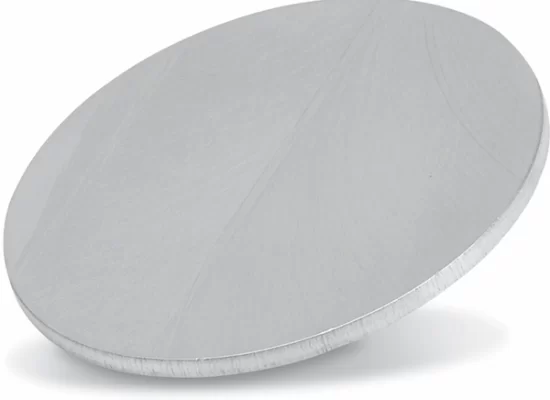
Premium Chromium (Cr) Sputtering Targets (99.9% to 99.999% purity) are industry-standard materials for Physical Vapor Deposition (PVD), wear-resistant hard coatings, and decorative thin films. Manufactured using advanced Hot Isostatic Pressing (HIP) and vacuum powder metallurgy, our chromium targets achieve near-theoretical density (7.19 g/cm³) and fine, uniform grain size to ensure high sputtering efficiency and low particle generation. Whether you require circular discs, large planar plates, or rotary tube targets with copper backing plate bonding, we supply reliable solutions with full CoA documentation.
Technical Specifications
| Parameter | Value |
|---|---|
| Product | Chromium (Cr) Sputtering Target — Planar, Rotary & Arc Cathodes for PVD Thin Film Deposition |
| Chemical Symbol | Cr | Atomic Number: 24 | CAS: 7440-47-3 |
| Purity Grades | 99.5% (2N5) Standard | 99.9% (3N) High Purity | 99.99% (4N) Ultra-High Purity |
| Density | 7.19 g/cm³ (theoretical) | Typical target density: ≥99% theoretical |
| Melting Point | 1,907 °C (3,465 °F) |
| Boiling Point | 2,671 °C (4,840 °F) |
| Crystal Structure | BCC (body-centered cubic) at room temperature |
| Grain Size | <100 μm standard | Finer grain (<50 μm) available on request |
| Key Properties | High hardness, excellent corrosion resistance, high melting point, brilliant metallic luster, paramagnetic, forms stable oxide passivation layer (Cr₂O₃) |
| Target Forms | Planar (round, rectangular), rotary targets, arc cathodes, rods |
| Backing Plate Options | OFHC Copper (standard), stainless steel, molybdenum — indium bonding, elastomer, or solder bonding |
| Manufacturing Process | Vacuum Melting → Powder Metallurgy / Hot Pressing → Machining → Inspection → Packaging |
Product Overview
Chromium (Cr) sputtering targets are high-purity consumable cathode materials used in physical vapor deposition (PVD) processes — including DC/RF magnetron sputtering, reactive sputtering, and cathodic arc evaporation — to deposit chromium thin films and chromium-based compound coatings (CrN, CrC, CrCN, Cr₂O₃) onto substrates for decorative finishing, wear protection, and adhesion enhancement. Princeton Powder supplies chromium sputtering targets in three purity grades — 99.5% (2N5) standard, 99.9% (3N) high purity, and 99.99% (4N) ultra-high purity — manufactured through vacuum melting followed by powder metallurgy and hot pressing to deliver dense, homogeneous targets with consistent sputtering performance and uniform erosion profiles. CAS: 7440-47-3. Atomic Number: 24.
Chromium is one of the most versatile sputtering materials in industrial PVD: when deposited as a pure metal, its brilliant metallic luster and natural corrosion resistance (via the self-healing Cr₂O₃ passive layer) make it the foundation of decorative chrome coatings on watches, electronics, appliances, and automotive trim. When reactively sputtered in a nitrogen-containing atmosphere, chromium forms chromium nitride (CrN) — a hard ceramic coating with hardness exceeding 22 GPa that extends engine component life 3–5× and protects cutting tools, piston rings, and precision mechanical parts. Equally important, chromium serves as the critical adhesion interlayer in diamond-like carbon (DLC) coating stacks, where a thin Cr film dramatically improves DLC adhesion to steel substrates — enabling the widespread use of DLC on automotive engine components such as bucket tappets, piston pins, and fuel injection components. Princeton Powder's US-based manufacturing and ISO 9001:2015 quality system ensure every chromium target meets the demanding specifications of high-volume decorative coating lines, precision tool coating facilities, and advanced DLC coating operations.
Chromium Material Properties & Technical Specifications
| Property | Specification |
|---|---|
| Chemical Formula | Cr — Atomic Number: 24 |
| Chemical Symbol | Cr — Group 6, Period 4, d-block transition metal |
| CAS Number | 7440-47-3 |
| Atomic Weight | 51.996 u |
| Crystal Structure | BCC (body-centered cubic) at room temperature; no allotropic transformation up to the melting point |
| Density (Theoretical) | 7.19 g/cm³ at 20°C |
| Target Density | ≥99% theoretical density (typical); ≥99.5% available for demanding applications |
| Melting Point | 1,907 °C (3,465 °F) |
| Boiling Point | 2,671 °C (4,840 °F) |
| Thermal Conductivity | 93.9 W/(m·K) at 300 K — moderate for a metal; adequate water cooling of backing plate is recommended during high-power sputtering |
| Electrical Resistivity | 125 nΩ·m at 20°C — DC magnetron sputtering compatible; standard DC power supplies operate Cr targets without issue |
| Vickers Hardness | ~1,060 MPa (annealed condition) — chromium is inherently hard; targets are machined with diamond tooling |
| Young's Modulus | 279 GPa — high stiffness; minimal elastic deflection during target clamping |
| Magnetic Properties | Paramagnetic — does not interfere with magnetron magnetic field during sputtering; compatible with all standard magnetron cathode designs |
| Corrosion Resistance | Excellent — forms a stable, self-healing Cr₂O₃ passive layer in air and most aqueous environments; resistant to atmospheric corrosion, oxidizing acids, and many chemical environments |
| Grain Size (Standard) | <100 μm — verified by ASTM E112 linear intercept method; finer grain (<50 μm) available on request for improved film uniformity |
| Sputtering Yield (Ar⁺ @ 500 eV) | ~1.18 atoms/ion — favorable yield for a refractory metal; reactive sputtering with N₂ produces CrN; with O₂ produces Cr₂O₃ |
| Available Forms | Planar round (1″–14″ diameter), planar rectangular (custom W×L up to 2000 mm), rotary targets / arc cathodes, rods (custom diameters & lengths) |
| Backing Plate Options | OFHC Copper (C10100/C10200) — standard for high-power sputtering; Stainless Steel (304/316) — for high-temperature or corrosive environments; Molybdenum — for ultra-high-vacuum (UHV) applications. Bonding methods: indium bonding, elastomer bonding, epoxy bonding, or solder bonding. Bond integrity verified by C-scan ultrasonic inspection (void rate <2%). |
| Purity Grade Options | 2N5 (99.5%) — industrial/standard grade; 3N (99.9%) — high purity; 4N (99.99%) — ultra-high purity. Impurity control: Fe, O, C, N, Si, Al, S, P — each controlled to ppm or sub-ppm levels per grade. |
| Certification | ISO 9001:2015; Certificate of Analysis (CoA) with every target including GDMS or ICP-OES full metals analysis, density measurement, grain size metallography, and C-scan bond inspection (for bonded targets) |
Key Material Characteristics for Sputtering Performance
Chromium occupies a unique position in the sputtering materials landscape: it combines the corrosion resistance and brilliant metallic appearance of a noble metal with the hardness and wear resistance of a refractory metal, yet it is processed at significantly lower cost than precious metal targets (Au, Pt, Pd) and is easier to machine than ultra-refractory targets (W, Mo, Ta). Chromium's BCC crystal structure is stable from room temperature to the melting point — there is no allotropic phase transformation to create internal stresses during thermal cycling during sputtering. Its paramagnetic nature is practically significant: unlike ferromagnetic target materials (Ni, Co, Fe) that perturb the magnetron magnetic field causing non-uniform erosion, chromium targets sputter with predictable, symmetric erosion grooves throughout target life. Chromium's favorable sputtering yield (~1.18 atoms/ion at 500 eV Ar⁺) — nearly double that of titanium (~0.51) and competitive with copper (~2.3) — translates to practical deposition rates that keep production throughput high. The self-healing Cr₂O₃ passive layer that forms instantly on any exposed chromium surface provides the corrosion resistance that makes chromium films the benchmark for decorative and protective coatings: 500+ hours of neutral salt spray resistance (ASTM B117) from a properly deposited chromium thin film.
Chemical Compositions
- Metallic elements were analyzed using ICP‑OES.
- Gas elements were analyzed using LECO.
| Elements | Actual | Spec | Units | Elements | Actual | Spec | Units | Elements | Actual | Spec | Units |
|---|---|---|---|---|---|---|---|---|---|---|---|
| Li | ppm | Zn | ppm | Pb | ppm | ||||||
| B | ppm | Ga | ppm | Bi | ppm | ||||||
| F | ppm | Ge | ppm | Y | ppm | ||||||
| Na | ppm | As | ppm | Th | ppm | ||||||
| Mg | ppm | Se | ppm | La | ppm | ||||||
| Al | 50 | ppm | Zr | ppm | Ru | ppm | |||||
| Si | 40 | ppm | Nb | ppm | Rh | ppm | |||||
| P | ppm | Mo | ppm | Os | ppm | ||||||
| Cl | ppm | Pd | ppm | Cd | ppm | ||||||
| K | ppm | Ag | ppm | In | ppm | ||||||
| Ca | ppm | Sn | ppm | ||||||||
| Ti | ppm | Sb | ppm | ||||||||
| V | 30 | ppm | Ba | ppm | |||||||
| Cr | Matrix | wt% | Hf | ppm | |||||||
| Mn | ppm | Ta | ppm | C | 40 | ppm | |||||
| Fe | 75 | ppm | W | ppm | S | 20 | ppm | ||||
| Co | ppm | Pt | ppm | O | 130 | ppm | |||||
| Ni | ppm | Au | ppm | N | 40 | ppm | |||||
| Cu | ppm | Hg | ppm | H | ppm |
Applications
Decorative PVD Coating — Watches, Electronics, Appliances & Automotive Trim
Tool & Hard Coating — Chromium Nitride (CrN) for Wear Protection
DLC Bonding Layer — Chromium Interlayers for Diamond-Like Carbon Adhesion
Decorative PVD Coating — Watches, Electronics, Appliances & Automotive Trim
Research & Technical References
The following peer-reviewed research validates the performance of chromium sputtering targets and Cr/CrN/DLC thin films in decorative, hard coating, and DLC bonding applications. Princeton Powder chromium targets meet or exceed the material specifications used in these studies.
Chromium Nitride Hard Coatings Deposited by Cathodic Arc Evaporation
Surface and Coatings Technology, 2023 — Investigated CrN coatings deposited from 99.5% and 99.9% pure chromium targets via cathodic arc evaporation under systematically varied N₂ partial pressure and substrate bias conditions. Optimized deposition parameters produced stoichiometric CrN coatings with hardness exceeding 22 GPa and a coefficient of friction of approximately 0.5 against 100Cr6 bearing steel under dry sliding conditions. Engine dynamometer testing of CrN-coated piston rings demonstrated a 3–5× extension in component service life compared to uncoated rings, with the CrN coating remaining intact and functional after 500 hours of high-temperature, high-load operation. The study's practical conclusion: CrN deposited by arc evaporation from chromium targets is the leading hard coating technology for high-temperature tribological applications where TiN oxidizes above 500°C. Practical takeaway: Princeton Powder's 3N (99.9%) chromium targets deliver the consistent CrN stoichiometry and mechanical properties that extend engine component life by 3–5×.
Diamond-Like Carbon Coatings with Chromium Interlayers: Adhesion Enhancement Mechanisms
Diamond and Related Materials, 2022 — Systematically investigated the effect of chromium interlayer thickness (0–500 nm) on DLC coating adhesion to hardened steel substrates. Using Rockwell C indentation (120° diamond cone, 150 kgf) and progressive-load scratch adhesion testing, the study demonstrated that a Cr interlayer of 100–200 nm thickness improved DLC adhesion by more than 300% compared to DLC deposited directly on steel. Cross-sectional TEM and XPS depth profiling revealed the adhesion mechanism: (1) a Cr-Fe interdiffusion zone (5–15 nm) at the Cr/steel interface providing strong metallic bonding; (2) a graded Cr → CrₓCᵧ → a-C:H transition zone (15–30 nm) at the Cr/DLC interface that eliminates the sharp stress discontinuity; and (3) the Cr interlayer acting as a compliant buffer that absorbs deposition-induced compressive stress in the DLC overlayer. Component-level testing of Cr/DLC-coated bucket tappets in a production gasoline engine demonstrated no coating delamination after 100,000 km equivalent durability testing. Practical takeaway: Princeton Powder's 3N5+ (99.95%+) chromium targets ensure optimal DLC adhesion — the Cr interlayer purity matters because ppb-level oxygen and sulfur impurities at the Cr-DLC interface weaken the carbide gradient transition zone.
Decorative Chromium Coatings by Magnetron Sputtering: Color Control and Corrosion Resistance
Applied Surface Science, 2021 — Evaluated the corrosion resistance and optical appearance of pure chromium thin films (150–300 nm) deposited from 99.5% and 99.9% pure targets by DC magnetron sputtering on brass and zinc die-cast substrates — the two most common substrate materials for decorative hardware and automotive trim. Chromium films deposited from 99.9% pure targets achieved 500+ hours of neutral salt spray resistance (ASTM B117, ISO 9227) without visible corrosion, compared to 200–350 hours for films from 99.5% targets — a practically significant difference attributed to the reduced density of micro-pinhole defects associated with impurity particles in the lower-purity target. Colorimetry (CIELAB L*a*b*) confirmed that 99.9% Cr films produce a brilliant, neutral silver-white finish (L* ≈ 85, a* ≈ 0, b* ≈ 2) with excellent batch-to-batch color consistency (ΔE < 1.0 across 50 consecutive coating runs). Practical takeaway: Princeton Powder's Cr targets produce durable, brilliant decorative finishes — 3N (99.9%) purity is recommended for decorative applications where 500+ hour salt spray resistance and batch-to-batch color consistency are required.
Contact our technical team for the complete reference list and to discuss chromium sputtering target specifications for your specific deposition process — including target material grade selection, reactive sputtering process parameters, and Cr interlayer optimization for DLC coating stacks.