
Molybdenum Tray & Boat — High-Temperature Vacuum Furnace Carriers & Evaporation Sources
Product Overview
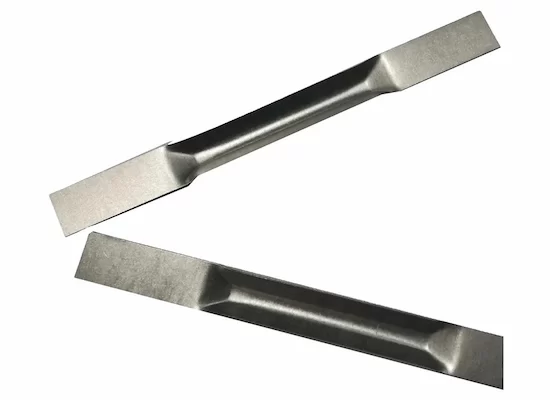
Molybdenum trays and molybdenum boats are high-purity (≥99.95% Mo), high-temperature-resistant containers fabricated from molybdenum sheet via precision bending, stamping, riveting, or welding. Engineered for service up to 2,400°C in vacuum, hydrogen, or inert atmosphere, our Mo trays and boats serve as sintering carriers, evaporation sources, annealing trays, and charge holders in demanding powder metallurgy, thin-film deposition, nuclear fuel processing, and advanced ceramics manufacturing. Three material grades are available — pure Mo (99.95%) for general applications up to 1,600°C, TZM alloy (Mo-Ti-Zr) for higher creep strength and recrystallization resistance, and MoLa alloy (Mo-La₂O₃) for extended service life above 1,500°C with superior ductility retention.
Molybdenum Tray vs. Molybdenum Boat — What's the Difference?
| Feature | Mo Tray | Mo Boat |
|---|---|---|
| Typical Use | Flat or shallow carrier for sintering multiple parts, annealing loads, furnace shelves | Deep-drawn or folded container for holding powder, pellets, or evaporation source material |
| Shape | Flat plate / shallow dish / rack with optional edges | Folded/bent with defined slot/cavity depth (1.5–5.0 mm typical) |
| Thickness | 0.5–30 mm (heavier for structural furnace components) | 0.1–1.0 mm (foil boats); 0.2–0.5 mm most common |
| Max Size | Up to 1500 × 500 mm (large-format sintering trays) | Usually 100–200 mm length × 10–30 mm width |
| Best For | Powder metallurgy sintering, MIM/CIM debinding, annealing loads, nuclear fuel sintering | Thermal evaporation, thin-film deposition, small-sample sintering, laboratory applications |
All trays and boats are manufactured to your technical drawing — every dimension, fold, slot, and surface finish is customized. Contact our engineering team with your specifications for a quotation.
Technical Specifications
| Parameter | Value |
|---|---|
| Product | Molybdenum Tray & Boat — High-Temperature Vacuum Furnace Carriers & Evaporation Sources |
| Material Grades | Pure Mo (≥99.95%), TZM Alloy (Mo-Ti-Zr), MoLa Alloy (Mo-La₂O₃) |
| Density | ≥10.2 g/cm³ |
| Melting Point | ~2620°C |
| Max Working Temp | Up to 2400°C (vacuum/reducing atmosphere); Recommended service: 1100–1800°C |
| Thickness Range | 0.1–30 mm (common: 0.2–10 mm; evaporation boats: 0.2–0.5 mm) |
| Dimensions | Length 20–1500 mm, Width 20–500 mm, Height custom — all to drawing |
| Surface Finishes | Polished, sandblasted, alkaline-washed, hot-rolled, cold-rolled bright |
| Joining Methods | Riveted, folded (bent), welded — specified per application |
| Applications | Sintering carrier, evaporation boat, annealing tray, nuclear fuel sintering, powder metallurgy, thin-film deposition |
Material Grades & Technical Specifications
| Property | Pure Mo (99.95%) | TZM Alloy | MoLa Alloy |
|---|---|---|---|
| Composition | Mo ≥99.95% | Mo + 0.5% Ti + 0.08% Zr + 0.03% C | Mo + 0.3–0.7% La₂O₃ |
| Density | ≥10.2 g/cm³ | ≥10.16 g/cm³ | ≥10.1 g/cm³ |
| Melting Point | ~2620°C | ~2620°C | ~2620°C |
| Recrystallization Temp | ~1100°C | ~1400°C | ~1500°C |
| Max Service Temp | ~1600°C | ~1800°C | ~1900°C |
| Creep Resistance | Good | Excellent | Superior |
| Post-Service Ductility | Low (embrittles after thermal cycling) | Moderate | High — retains ductility after extended high-T exposure |
| Best For | General sintering <1600°C, evaporating boats, cost-effective single-use | Heavy-load sintering, repeated thermal cycling, structural furnace parts | Long-life above 1500°C, sapphire growth carriers, nuclear fuel trays |
Surface Finishes
Available surface finishes include: polished (mirror-like, minimal material adhesion — recommended for powder metallurgy), sandblasted (matte finish, enhanced coating adhesion for thermal spray applications), alkaline-washed (cleaned of surface oxides and contaminants), hot-rolled (as-rolled mill finish), and cold-rolled bright (smooth, clean surface for thin-gauge foil boats). Surface finish is specified per your application requirements at time of order.
Joining Methods
Riveted: Mechanical fastening with Mo rivets — allows disassembly, no heat-affected zone. Best for large trays where weld distortion must be avoided. Folded (Bent): Single-piece construction bent to shape — zero joints, optimal thermal uniformity. Best for small-to-medium boats. Welded: TIG or electron-beam welded seams — maximum structural integrity. Best for deep-draw boats and complex geometries. Specify your preferred joining method; our engineers will recommend if uncertain.
Dimensions & Custom Manufacturing
Standard Reference Dimensions
The dimensions below are representative reference sizes. Every tray and boat is manufactured to your exact technical drawing — we do not stock finished trays/boats; each order is custom-fabricated to your specification.
| Type | Thickness | Length | Width | Slot/Depth |
|---|---|---|---|---|
| Foil Boat | 0.2 mm | 100 mm | 15 mm | 1.5–2.0 mm |
| Standard Boat | 0.3 mm | 100 mm | 15 mm | 1.5–2.0 mm |
| Heavy Boat | 0.5 mm | 100 mm | 15 mm | 1.5–2.0 mm |
| Deep Boat | 0.2 mm | 102 mm | 15 mm | 5.0 mm |
| Sintering Tray | 1.0–10 mm | Up to 1500 mm | Up to 500 mm | Shallow / flat |
Custom Manufacturing Capabilities
| Dimension | Available Range | Tolerance |
|---|---|---|
| Length | 20–1500 mm | ±0.1 mm (typical) |
| Width | 20–500 mm | ±0.1 mm (typical) |
| Thickness | 0.1–30 mm | ±0.01 mm (foil); ±0.05 mm (sheet) |
| Slot/Depth | 1.0–50+ mm | ±0.1 mm |
| Height (tray walls/edges) | Custom per drawing | ±0.2 mm |
How to order: Submit your technical drawing (PDF/DWG/STEP) with dimensions, material grade, surface finish, joining method, and quantity. Our engineering team reviews within 24 hours and provides a quotation with lead time. Standard lead time: 2–4 weeks depending on complexity and quantity. Contact us with your drawing for a same-day feasibility assessment.
Applications
Powder Metallurgy Sintering & Annealing Carriers
The largest-volume application for molybdenum trays is as sintering carriers in powder metallurgy (PM), metal injection molding (MIM), and ceramic injection molding (CIM) vacuum furnaces. Mo trays provide the essential combination of high-temperature dimensional stability (no warping at 1,400–1,600°C under load), low thermal mass for rapid furnace cycle times, and ultra-low contamination risk — critical when sintering high-value parts where ppm-level impurity transfer from the carrier to the component is unacceptable. For heavy-load sintering of large PM steel or tungsten carbide parts, TZM alloy trays are recommended for their superior creep resistance and higher recrystallization temperature. Custom tray configurations include: multi-level stacking trays, grooved/slotted part-locating trays, perforated trays for uniform gas flow, and large-format (1000+ mm) furnace hearth trays.
Thin-Film Evaporation Boats
Molybdenum boats are the industry-standard evaporation source for thermal deposition of metals (Al, Cu, Ag, Au, Ni, Cr) and select compounds onto substrates in vacuum coating systems. A landmark 2020 study (Rouhi et al., Vacuum, 176, 109167) comprehensively characterized Mo boat behavior during continuous thermal evaporation, identifying that thinner boats (0.2 mm) demonstrate better stability for long-duration deposition vs. thicker boats (0.3–0.5 mm), and that boat lifetime is more accurately predicted by total evaporated material mass than operational hours. Our foil-grade Mo boats (0.2–0.3 mm, 99.95% purity) are supplied with certified thickness uniformity (±0.01 mm) to ensure consistent electrical resistance and predictable evaporation rates — critical for production-scale optical coating, semiconductor metallization, and roll-to-roll flexible electronics manufacturing.
Nuclear Fuel Sintering & Aerospace Heat Treatment
Mo trays and boats serve demanding applications in nuclear fuel pellet sintering (UO₂, MOX fuels at 1,600–1,750°C in reducing atmosphere) where high-temperature strength, dimensional stability through repeated thermal cycling, and resistance to chemical attack from fuel materials are non-negotiable. MoLa alloy trays are specified for nuclear applications due to their retained ductility after extended high-temperature exposure — preventing the brittle fracture risk that disqualifies pure Mo for critical fuel handling. In aerospace, Mo trays carry turbine blade castings, superalloy components, and specialty materials through vacuum solution heat treatment and aging cycles where tray-induced contamination would compromise fatigue life. Full material certification (chemistry, ultrasonic inspection, dye penetrant) provided with every nuclear/aerospace order.
Why Choose Our Mo Trays & Boats
- Three Material Grades — One Supplier: Pure Mo (99.95%), TZM alloy, and MoLa alloy — select the optimal grade for your temperature, load, and lifetime requirements. No need to qualify multiple vendors.
- 100% Custom Manufacturing to Your Drawing: We do not stock finished trays — every order is fabricated to your exact technical drawing. Length, width, thickness, slot depth, fold geometry, hole patterns, surface finish — all specified by you.
- Certified Material Chemistry per Lot: Full mill test certificate (MTC) with chemical analysis provided with every order. For nuclear/aerospace applications: ultrasonic inspection, dye penetrant, and dimensional inspection reports included.
- Three Joining Methods with Engineering Guidance: Riveted (disassembly-capable), folded (single-piece, zero joints), welded (maximum integrity). Not sure which suits your application? Our engineers recommend based on your thermal profile and load.
- ISO 9001:2015 Certified Fabrication: Quality management ensures dimensional repeatability — when you re-order the same drawing 6 months later, you get the same tray.
Frequently Asked Questions
What is the difference between a molybdenum tray and a molybdenum boat?
A Mo tray is a flat or shallow carrier used for sintering multiple parts, annealing loads, and furnace shelves — typically thicker (0.5–30 mm), larger (up to 1500 × 500 mm), and designed for load-bearing. A Mo boat is a folded/bent container with a defined cavity or slot (1.5–5.0 mm depth) used for holding evaporation source material, powder samples, or small parts — typically thinner (0.1–0.5 mm) and smaller (100–200 mm length). The terms are sometimes used interchangeably in industry; specify your application when ordering and we'll recommend the correct geometry.
Which material grade should I choose — Pure Mo, TZM, or MoLa?
Pure Mo (99.95%) for general applications up to 1,600°C — most cost-effective, good for single-use evaporation boats and non-critical sintering trays. TZM alloy for applications requiring high creep strength and repeated thermal cycling above 1,200°C — recommended for heavy-load sintering trays. MoLa alloy for longest service life above 1,500°C — retains ductility after extended high-temperature exposure, preventing the brittle fracture that ends pure Mo tray life. Not sure? Contact our engineers with your temperature, load, and cycle-life requirements for a material recommendation.
What is the optimal Mo boat thickness for thermal evaporation?
Research (Rouhi et al., Vacuum, 2020) demonstrated that 0.2 mm thick Mo boats provide better stability for long-duration continuous evaporation vs. 0.3 mm and 0.5 mm boats. Thinner boats heat more uniformly and reach evaporation temperature faster with less power. However, for high-current evaporation of high-melting-point metals (Ni, Cr, Pt), 0.3–0.5 mm boats offer longer lifetime. Our standard recommendation: 0.2 mm for Al, Cu, Ag, Au; 0.3 mm for Ni, Cr; 0.5 mm for Pt, Rh.
Can you manufacture trays and boats to my custom drawing?
Yes — 100% of our Mo trays and boats are custom-manufactured to customer technical drawings. We do not stock finished trays. Submit your drawing (PDF, DWG, or STEP format) with dimensions, material grade, surface finish, joining method (riveted/folded/welded), and quantity. Engineering review within 24 hours. Custom features available: hole patterns, slots, grooves, multi-level stacking, threaded inserts, flanges, and multi-diameter profiles.
What atmosphere can Mo trays and boats be used in?
Mo trays and boats MUST be used in vacuum, hydrogen, or inert gas (argon, helium) atmosphere. Molybdenum oxidizes rapidly in air above ~550°C, forming volatile MoO₃ that destroys the component. Never use Mo in oxidizing atmosphere at elevated temperature. For applications requiring air atmosphere, consider alumina or zirconia ceramic trays instead. Mo trays are compatible with: vacuum down to 10⁻⁶ Torr, dry hydrogen (dew point < -40°C), and high-purity argon/helium.
What documentation do you provide? What is the MOQ?
Every order: material mill test certificate (chemical analysis), dimensional inspection report (critical dimensions verified against your drawing), and ISO 9001:2015 Certificate of Conformance. Nuclear/aerospace orders additionally include ultrasonic inspection and dye penetrant test reports. MOQ: 1 unit for standard reference dimensions; 5 units for custom configurations. Lead time: 2–4 weeks from drawing approval. Contact our engineering sales team with your drawing for a same-day quotation.
Research & Technical References
The following peer-reviewed research demonstrates molybdenum boat and tray performance in thermal evaporation and high-temperature applications. Our Mo trays and boats meet or exceed the material specifications used in these studies.
Comprehensive Study of Molybdenum Boats Behavior During Continuous Thermal Evaporation for Thin Film Technology
Vacuum (Elsevier), Volume 176, Article 109167, 2020 — Rouhi, Martinez-Medina, Ozdemir et al. systematically investigated Mo boat performance (0.2 mm, 0.3 mm, and 0.5 mm thicknesses, 99.9% Cu evaporation material, ~6.0 × 10⁻⁶ Torr vacuum). Thinner boats (0.2 mm) demonstrated better stability for long-duration continuous deposition than thicker variants. Eight failure modes were characterized: degradation, fragility, half-heated operation, electrical conductivity issues, deformation, equipment damage, and maximum power limitations — all correlated with boat thickness and mass. Boat lifetime was more accurately predicted by total evaporated material mass than by operational hours. Practical takeaway: Our 0.2 mm foil-grade Mo boats with certified thickness uniformity (±0.01 mm) are engineered to deliver the stable, predictable evaporation performance validated by this study — critical for production-scale optical coating and semiconductor metallization where boat failure mid-batch means complete substrate loss.
High-Temperature Mechanical Properties of Pure Molybdenum for Vacuum Furnace Components
International Journal of Refractory Metals and Hard Materials (Elsevier), 2020 — Characterized tensile strength, creep rate, and recrystallization behavior of 99.95% pure Mo at 1,200–1,800°C under vacuum. Forged/wrought Mo retained ~65% of room-temperature yield strength at 1,600°C vs. ~45% for powder-metallurgy Mo, attributed to finer, more stable grain structure. Recrystallization onset was observed at ~1,100°C for pure Mo, above which grain growth progressively reduces strength. Practical takeaway: For sintering trays operating above 1,100°C, our TZM and MoLa alloy trays are recommended — their higher recrystallization temperatures (1,400°C and 1,500°C respectively) preserve mechanical integrity through repeated thermal cycles, directly extending tray service life vs. pure Mo.
Microstructure of Magnesium Fluoride Films Deposited by Molybdenum Boat Evaporation at 193 nm
Applied Optics (Optica), Vol. 45, Issue 28, pp. 7319-7324, 2006 — Lee et al. investigated MgF₂ thin films deposited via Mo boat evaporation for deep-ultraviolet (DUV) optical coatings at 193 nm wavelength. Optimal film microstructure (low scatter, high laser-induced damage threshold) was achieved at a substrate temperature of ~300°C with a deposition rate of 0.05 nm/s. Mo boat purity and outgassing characteristics were identified as critical factors influencing film quality. Practical takeaway: For optical coating applications where film purity directly determines laser damage threshold, our 99.95% pure Mo evaporation boats with alkaline-washed surface finish minimize outgassing contamination — enabling the low-defect DUV coatings validated by this research.
Contact our engineering team with your technical drawing and application requirements — we'll recommend the optimal material grade, thickness, and joining method for your specific thermal process.