
Abstract
In the world of advanced hard coatings, selecting the right nitride ceramic is crucial to performance and durability under extreme conditions. Hafnium Nitride (HfN) and Titanium Nitride (TiN) are two leading contenders, both offering excellent wear resistance and high-temperature stability—but with distinct differences. Which one is better for your application depends on the specific demands of your process, environment, and substrate.
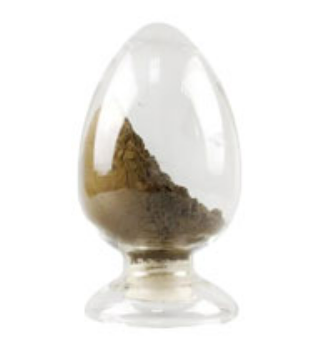

Hafnium Nitride powder VS Titanium Nitride Powder Properties
| Property | Hafnium Nitride (HfN) | Titanium Nitride (TiN) |
| Hardness | ~2200 HV | ~1800–2100 HV |
| Melting Point | ~3310°C | ~2950°C |
| Electrical Conductivity | High | High |
| Thermal Stability | Excellent (UHTC-rated) | Very Good |
| Color | Gray to dark gray | Golden yellow |
HfN and TiN Performance in Hard Coating Applications
Titanium Nitride (TiN) has been widely used for decades in cutting tools, drills, dies, and decorative coatings due to its excellent adhesion, moderate cost, and iconic gold appearance. It provides reliable protection against abrasion and oxidation up to ~600°C, making it a standard choice in general-purpose machining.
Hafnium Nitride (HfN), on the other hand, is gaining attention in extreme environment applications, particularly where higher thermal resistance, chemical inertness, and mechanical strength are needed. HfN performs better at temperatures exceeding 1000°C, maintains its structure under plasma exposure, and is ideal for aerospace, plasma-facing components, and high-temperature electronics.
HfN and TiN Deposition Compatibility
Both HfN and TiN can be deposited using:
Physical Vapor Deposition (PVD)
Chemical Vapor Deposition (CVD)
Reactive sputtering
However, HfN coatings may require higher temperatures or inert environments for optimal adhesion and stoichiometry. TiN is easier to deposit on a wide range of substrates using lower-cost equipment, which has contributed to its broader adoption in industrial coating lines.
Conclusion
Titanium Nitride remains the go-to for many standard industrial coatings due to its balance of cost and performance. But if your application involves high heat, reactive environments, or requires cutting-edge thermal and structural stability, then Hafnium Nitride is the superior choice. As demand grows for ultra-high-temperature ceramics (UHTCs) and plasma-facing materials, HfN is positioned as a next-generation material in advanced coatings.
Interested in Hafnium Nitride Powder for Coating Applications?
Princeton Powder offers high-purity HfN powder in nano and micron sizes, suitable for PVD, CVD, and plasma coating processes. Contact us to request a quote or datasheet.