
Abstracts:
In the world of ultra-high-temperature ceramics (UHTCs) and advanced functional materials, hafnium-based powders have carved out a critical role. With exceptional thermal, electrical, and chemical stability, compounds such as Hafnium Carbide (HfC), Hafnium Diboride (HfB₂), Hafnium Oxide (HfO₂), and Hafnium Silicide (HfSi₂) are now indispensable in demanding applications across aerospace, semiconductors, plasma technology, and defense systems.
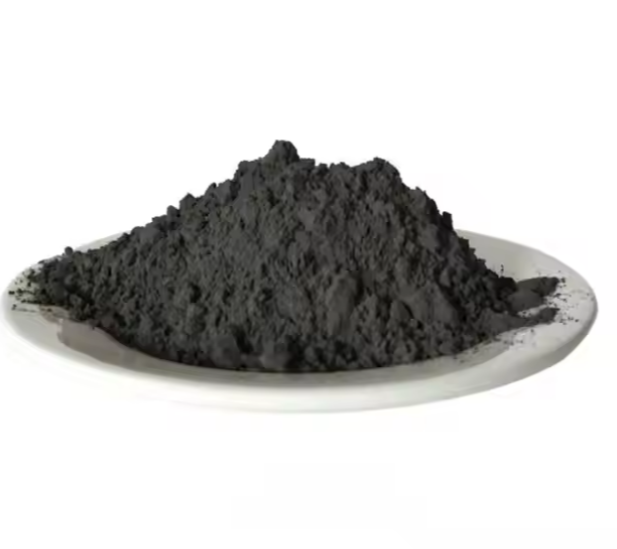
But which hafnium compound is best for your specific application? Let’s compare their properties, benefits, and use cases.
Hafnium Carbide (HfC): Extreme Heat Resistance Champion
Hafnium Carbide has one of the highest melting points of any known compound (~3900°C). It exhibits outstanding thermal conductivity, chemical inertness, and wear resistance, making it the go-to material for:
- Rocket nozzle inserts and nose cones
- Plasma-facing components in fusion reactors
- Refractory crucibles and liners
- Hard coatings and cutting tools
Idea for applications requiring extreme thermal resistance and durability under thermal shock.
Hafnium Diboride (HfB₂): High-Temperature Conductive Ceramic
Hafnium Boride HfB₂ is a UHTC with a melting point ~3250°C and notable electrical conductivity. It’s widely used in:
- Thermal protection systems (TPS) for hypersonic vehicles
- Plasma arc electrodes
- Conductive ceramic composites
- Oxidation-resistant coatings for turbines and reentry vehicles
Idea for high-temperature performance with electrical conductivity and oxidation resistance.
Hafnium Oxide (HfO₂): High-k Dielectric and Optical Layer
Hafnium Oxide HfO2 is a thermally stable dielectric ceramic known for its high dielectric constant (~25) and bandgap (~5.3 eV). It’s a core material in:
- CMOS devices and gate dielectrics
- DRAM capacitors
- Optical coatings and IR reflective layers
- Protective coatings for corrosion and insulation
Idea for Electrical insulation, semiconductor dielectric layers, and optical components.
Hafnium Silicide (HfSi₂): Oxidation-Resistant Intermetallic
Hafnium Disilicide HfSi₂ ceramic powder is a refractory intermetallic compound offering moderate conductivity, thermal stability, and excellent oxidation resistance due to the formation of a protective SiO₂ layer. Common uses include:
- Diffusion barriers in microelectronics
- High-temperature coatings
- Thermally stable composites
- Semiconductor and MEMS applications
Ideal for mid-range high-temperature applications (800-1200°C) requiring oxidation resistance and silicon substrate compatibility.
How to choose the Right Hafnium Powder
When selecting a hafnium-based ceramic or intermetallic compound, consider:
- Operating temperature
- Electrical requirements
- Exposure to oxidizing environments
- Integration with silicon or composite systems
- Form factor: spherical, submicron, or nano
At Princeton Powder, we supply high-purity HfC, HfB₂, HfO₂, and HfSi₂ powders in customized particle sizes, including nano, submicron, and spherical forms—engineered for precision manufacturing and extreme environments.