
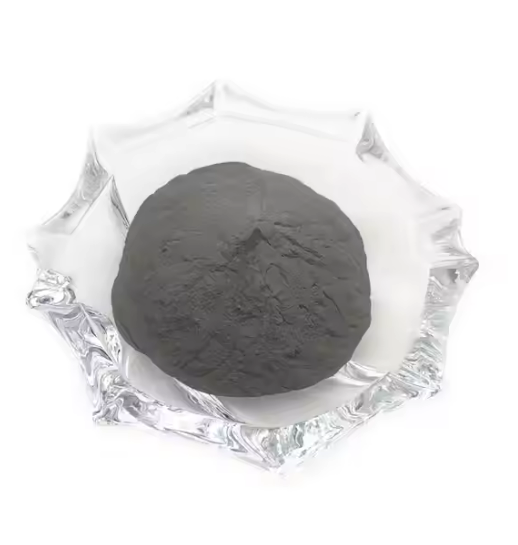
Unlocking the Potential of Spherical Nitinol Powder (15-53 um)
Keywords:
Nitinol powder, shape memory Niti alloy powder, nickel titanium alloy powder, Nitinol additive manufacturing powder, Nitinol 3D printing powder, SMA powder, superelastic nitinol alloy, Nitinol applications, buy Nitinol powder, Nickel titanium powder supplier, Superelastic Nitinol powder for AM, Medical grade Nitinol powder for implants
What Is Nitinol Powder?
Nitinol powder is a fine, metallic powder composed of approximately 55% nickel and 45% titanium. Known as a shape memory alloy (SMA), Nitinol exhibits two remarkable properties: shape memory effect and superelasticity. When processed as a powder, it opens new frontiers in additive manufacturing, medical device production, and precision engineering.
Nitinol’s unique characteristics stem from a solid-state phase transformation between martensite and austenite, allowing it to “remember” its shape and return to it when heated.
Why Is Nitinol Powder Gaining Popularity?
The growing interest in metal additive manufacturing (AM) and customized medical devices has fueled the demand for high-performance powders like Nitinol. Unlike conventional bulk materials, Nitinol powder enables:
- 3D printing of complex shapes with high precision
- Near-net-shape fabrication for minimal material waste
- Tailored microstructure and mechanical properties
- Reduced machining cost and lead time
Main properties of Nitinol Powder
Shape memory effect: Restores original form when heated
Superelasticity: Recovers strain without permanent deformation
Biocompatibility: Suitable for implants and stents
Corrosion resistance: Excellent for harsh environments
High fatigue strength: Ideal for dynamic applications
Manufacturing Methods for Nitinol Powder
Gas Atomization: Produces spherical Nitinol powder with excellent flowability—perfect for LPBF and binder jetting
Hydride-Dehydride (HDH): Cost-effective irregular powder, suitable for MIM and sintering
Plasma Atomization: High-purity spherical particles with narrow size distribution
Applications of Spherical Nitinol Powder
Medical Implants & Devices (Biomedical Applications)
Process:
3D Printing (SLM/DMLS): Spherical Nitinol powder is used in selective laser melting (SLM) or direct metal laser sintering (DMLS) to manufacture stents, orthodontic archwires, bone scaffolds, and cardiovascular implants.
Post-Processing: Printed parts undergo heat treatment (aging & shape-setting) to optimize phase transformation temperatures (Af, As) and mechanical properties.
Surface Finishing: Electropolishing or passivation improves biocompatibility and corrosion resistance for FDA-approved implants.
Key Parameters:
Powder Purity: ≥99.9% (low oxygen & carbon content)
Particle Size: 15-45 μm (for high-resolution printing)
Transformation Temp (Af): Adjustable between 0°C–100°C
Aerospace & Actuators (Smart Materials)
Process:
Laser Powder Bed Fusion (LPBF): Used to fabricate lightweight actuators, vibration dampers, and deployable satellite components.
Thermomechanical Training: Repeated heating/cooling cycles enhance fatigue resistance for long-term performance in extreme environments.
Final Machining: CNC machining or EDM (electrical discharge machining) achieves tight tolerances.
Key Parameters:
Superelastic Strain Recovery: Up to 8%
High-Cycle Fatigue Resistance: >1 million cycles
Microelectronics & MEMS (Micro-Electro-Mechanical Systems)
Process:
Injection Molding (MIM): Nitinol powder is mixed with a binder and molded into micro-sensors, micro-valves, or robotic grippers.
Debinding & Sintering: The green part is sintered in a vacuum furnace to achieve full density.
Shape Memory Programming: Electrical or thermal activation enables precise micro-actuation.
Key Parameters:
Powder Flowability: Hall Flowmeter <25 s/50g
Sintered Density: >98% theoretical density
Automotive & Robotics (Smart Actuation Systems)
Process:
Cold Spray Additive Manufacturing (CSAM): Nitinol powder is deposited at high velocity to repair or coat engine components and robotic joints.
Laser Cladding: Used for wear-resistant coatings on gears and bearings.
Functional Testing: Actuation performance is validated under thermal/mechanical stress.
Key Parameters:
Recovery Stress: 500-800 MPa
Corrosion Resistance: ASTM F2129 compliant
Conclusion
Spherical Nitinol powder enables high-precision, high-performance applications across industries. For optimal results, key factors include powder purity, particle size distribution, and post-processing treatments. Whether for biomedical implants, aerospace actuators, or MEMS devices, proper 3D printing parameters, sintering, and thermomechanical training ensure peak performance.
Nitinol Powder Scholar Articles
Development, characterisation, and modelling of processability of nitinol stents using laser powder bed fusion
Abstract: Additive manufacturing (AM) of customised vascular or peripheral stents is of great potential for surgeons and patients, enabling the patients to have customised stents and achieving better outcomes from stenting procedures, with further advantages of having a resource efficient manufacturing process. In this study, the potential for AM of superelastic NiTi-based shape memory alloy (Nitinol) stents was investigated. Two stent designs, which are used for the treatment of complex peripheral artery stenosis in the lower limbs, were studied. Laser Powder Bed Fusion (LPBF) of two stent designs was studied to investigate the impact of the process parameters on the stent geometry, strut size, structural integrity and the phase transformations.