
Hafnium Oxide (HfO₂) Powder — Micron & Nano Particles
Princeton Powder is a leading supplier of hafnium oxide fine powder, offering particle sizes ranging from nanometer to micron meter. Our HfO2 powder, with good flow ability, is used in various applications, including optical coatings, nuclear control rods, and advanced ceramics for high-temperature environments.
We provide a wide range of Hafnium powder products including Spherical Hafnium Hf Powder, Hafnium Carbide (HfC) Powder, Hafnium Nitride Powder, Hafnium Disilicide HfSi2 Powder, and Hafnium Boride powder.
Formula | Hafnium Oxide, HfO2 |
CAS Number | 12055-23-1 |
Purity | 99.9% -99.99% min |
Synonyms | Hafnium Oxide nano powder, Hafnium Oxide spherical powders, Hafnium Oxide microns powder |
Particle Sizes | 325 mesh or be customized |
Appearance | White Color |
Melting Point | 2758°C |
Boiling Point: | 5400°C |
Density | 9.68g/cm3 |
Shape | Spherical or irregular particle |
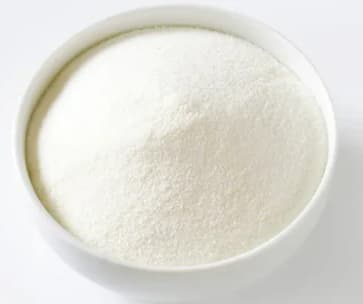
Hafnium Oxide Powder Description & Properties
Hafnium oxide (HfO₂) powder is a white, crystalline substance known for its high melting point and exceptional thermal stability. It exhibits a high dielectric constant, making it an important material in the semiconductor industry, particularly in advanced transistors and gate oxides. HfO₂ is also utilized in optical coatings, offering anti-reflective properties and low absorption in UV and infrared regions. Additionally, its chemical inertness and thermal resistance make it suitable for applications in thermal barrier coatings and refractory materials. Furthermore, hafnium oxide is employed in the nuclear industry for control rods due to its effective neutron absorption properties.
Chemical Composition & Purity Specifications
Product | Purity (%) | Impurities Content (ppm) | |||||||||||
HfO2 (+ZrO2) | Fe | Si | Ca | Al | Mg | Na | Nb | Zr | Ti | Cr | Cd | Ni | |
99.9 | 450 | 143 | 200 | 46 | 20 | 48 | 47 | 910 | <10 | 27 | <10 | <10 | |
99.99 | 29 | 18 | 23 | 11 | <10 | <10 | <10 | 1971 | <10 | <10 | <10 | <10 | |
Particle Size | 0.5 μm, -200 mesh, -325 mesh, nano size, or customized | ||||||||||||
Hafnium oxide powder Particle Size distribution
0.5 μm, -200 mesh, -325 mesh, nano size, or customized
Applications of Hafnium Oxide (HfO₂) Powder
Hafnium Oxide (HfO₂) Powder for Semiconductor & Microelectronics
High-purity Hafnium Oxide (HfO₂) powder for semiconductor and microelectronics. A leading high-k dielectric material used in advanced gate oxides and thin-film manufacturing. We provide high-quality, reliable HfO2 powder solutions to meet the demanding standards of modern electronic component production and high-tech industrial applications.
Hafnium Oxide (HfO₂) Powder for Optical Coatings & Laser Optics
High-purity Hafnium Oxide (HfO₂) powder for optical coatings and laser optics. Featuring a high refractive index and excellent thin-film properties, our HfO2 powder is engineered for precision optics and high-temperature applications. Reliable, high-performance material for industrial-grade optical manufacturing and advanced laser technology.
Hafnium Oxide (HfO₂) Powder for Thermal Barrier & Refractory Applications
Our high-purity Hafnium Oxide (HfO₂) powder is engineered for extreme thermal barrier and refractory applications. Featuring exceptional high-temperature stability and corrosion resistance, our HfO2 powder provides superior thermal insulation and structural integrity. It is the ideal material for refractory ceramics, aerospace shielding, and high-heat industrial components.
| Property | Hafnium Oxide (HfO2) | Zirconia (ZrO2) |
| Melting Point | ~2,758°C (Extremely High) | ~2,715°C (Very High) |
| Thermal Conductivity | Low (Excellent insulation) | Very Low (Industry Standard) |
| Density | High (~10.3 g/cm³) | Moderate (~5.68 g/cm³) |
| Chemical Stability | Superior (Highly resistant to corrosion) | Good (Can be reactive in certain acids) |
| Mechanical Strength | Exceptional at ultra-high temps | High (requires stabilization) |
| Cost-Effectiveness | Premium / High Cost | Economical / Moderate Cost |
| Common Applications | Aerospace, Molten Metal, High-Heat Refractories | Aerospace TBCs, Furnace Linings |
Hafnium Oxide (HfO₂) Powder for Nuclear Industry
High-purity Hafnium Oxide (HfO₂) powder for the nuclear industry. A key refractory material offering exceptional high-temperature stability and corrosion resistance. Ideal for nuclear reactor components, high-heat shielding, and advanced nuclear power applications. We provide reliable HfO2 powder solutions for high-safety and high-performance nuclear industrial needs.
Hafnium Oxide powder Technical Research & Publications
Studies on Optical and Electrical Properties of Hafnium Oxide Nanoparticles
- In this paper, the synthesis and physico-chemical properties of hafnium oxide nanoparticles (HfO2 NPs) are analyzed and reported. The synthesis was carried out by the precipitation route by using hafnium tetrachloride (HfCl4) as precursor material with potassium hydroxide (KOH) dissolved in Millipore water. In the precipitation technique, the chemical reaction is comparatively simple, low-cost and non-toxic compared to other synthetic methods.
Hafnium Oxide powder FAQ
What are the main applications of HfO₂ powder?
- Semiconductors: High-k dielectric in MOSFETs, DRAM, and advanced logic chips (replacing SiO₂).
- Optical Coatings: Anti-reflective and protective layers for lenses and laser optics.
- Thermal Barrier Coatings (TBCs): Used in aerospace and gas turbines.
- Nuclear Industry: Neutron absorber in control rods (due to Hf’s high neutron capture cross-section).
- Catalysis & Sensors: Support material for catalysts and gas sensors.
- Ceramics & Additives: Enhances hardness and thermal stability in composites.
How is HfO₂ powder synthesized?
Common production methods include:
- Hydrolysis of hafnium chloride (HfCl₄ + H₂O → HfO₂).
- Calcination of hafnium hydroxide (Hf(OH)₄ → HfO₂ + H₂O).
- Chemical Vapor Deposition (CVD) for thin films.
- Sol-gel processes for high-purity nanostructured powders.
Can HfO₂ be doped or alloyed?
Yes, doping modifies its properties for specific uses:
- Silicon-doped HfO₂ (HfSiO₄): Improved thermal stability in gate dielectrics.
- Yttria-stabilized HfO₂ (YSH): Enhanced ionic conductivity for fuel cells.
- Nitrogen-doped HfO₂: Adjusts bandgap for memory applications (e.g., RRAM).